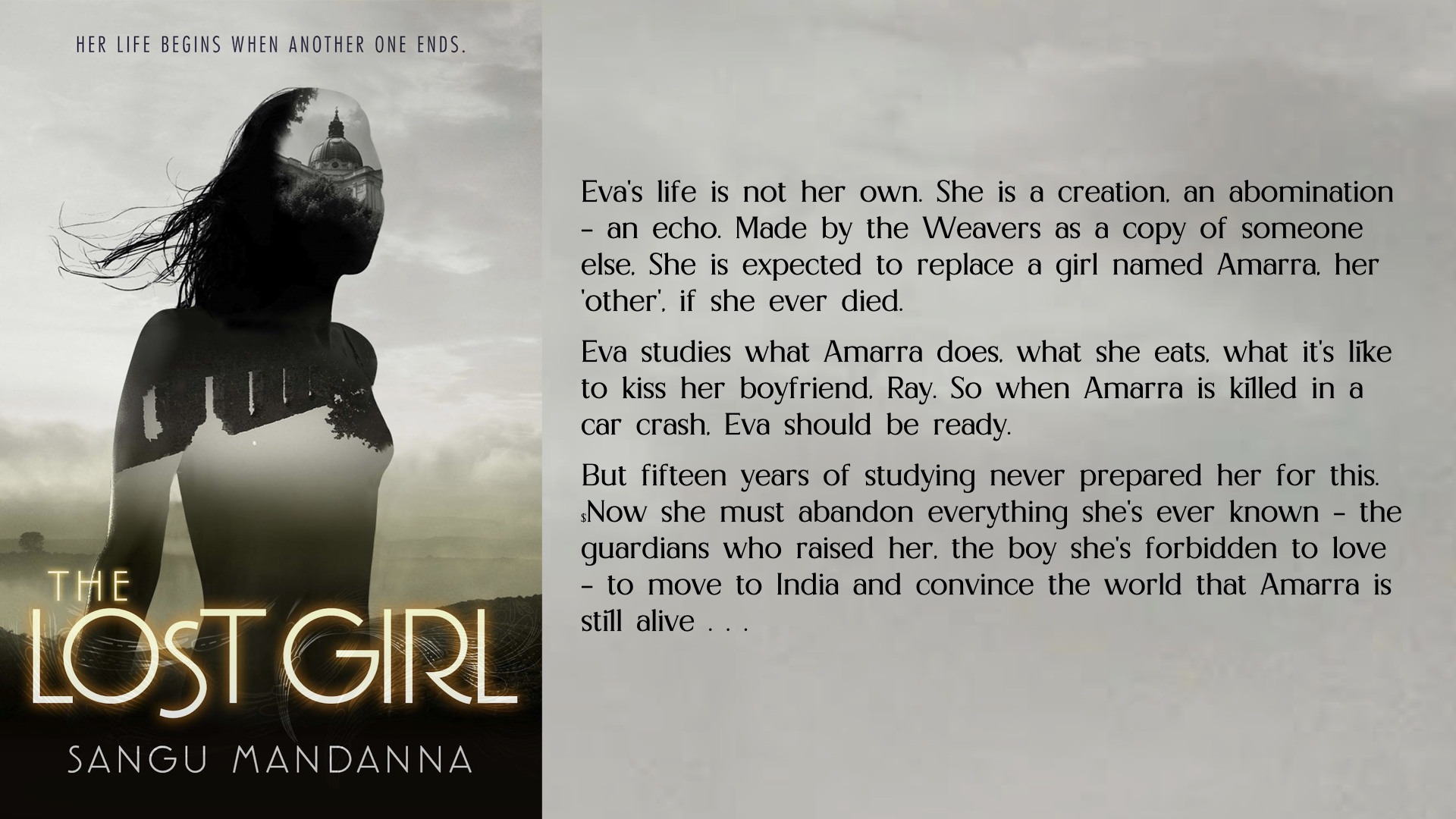
I picked up ‘The Lost Girl‘ because I’d enjoyed Sangu Mandanna’s novel, ‘The Very Secret Society Of Irregular Witches‘ (2022). It provided a wonderful comfort read that was optimistic and uplifting without being light and frothy. I loved that Sangu Mandanna made a story about preserving identity and community in the face of difference and exclusion feel so personal and relatable so I took a look at her back catalogue a picked out her debut novel, published ten years before ‘The Very Secret Society Of Irregular Witches‘ in 2012.
After reading the first few chapters, I was impressed and puzzled. Impressed at how compelling and immersive the book was. Puzzled at why it seems to be relatively unknown. By the end of the book, I was certain that ‘The Lost Girl’ deserves a much bigger audience.
It’s a kind of science fiction that I like: an exploration of what it means to be human and non-human that goes beyond a thought experiment into a lived experience that challenged me to consider what I would do in the same circumstances.
In a way, ‘The Lost Girl’ is a re-imagining of Mary Shelley’s ‘Frankenstein’ from the point of view of the Creature Frankenstein created and abandoned. Forget the Frankenstein’s Monster movie tropes and go back to the Mary Shelley original that showed Frankenstein as the one with an ego monstrous enough to believe he had the right to create life and who felt no qualms abandoning the Creature he’d created when it didn’t live up to his expectations. Now imagine being that Creature. What would you want from your creators?
Sangu Manna imagines two ‘lost girls’ in her novel: Amarra, a young woman living in Bangalore in India, loved by her family and her friends, who is lost to them in a fatal accident when she is sixteen years old, and Eva, an Echo commissioned by Amarra’s parents to be a receptacle for Amarra’s soul in the event of her death. From childhood, Amara has had to journal every moment of her life, every event, every photograph, every book and every friend and share it with an Echo of herself that she’s never met. Eva has spent sixteen years in the care of people who have trained her to memorise every aspect of Amarra’s life while Eva lives in seclusion in the English Lake District, with almost no life of her own, waiting to see if she’ll ever be needed.
The story is told from Eva’s perspective and after I’d read only ten per cent of the book, I was already heavily invested in Eva’s well-being, an investment that only increased after Eva moved to Bangalore and I saw her chances of survival decreasing day by day.
I loved how personal this book felt. I believed in and liked Eva. Which, of course, meant that I saw the man who created her and made her continued existence subject to the whims of others, as the inhuman one. Yet, Eva’s creator, Matthew is not an irredeemable narcissistic megalomaniac. He’s a genius who has had too much power for way too long until his empathy, never one of his strengths, has been almost completely eroded and his sense of entitlement knows no limits. And yet, he still takes an interest in Eva. His ‘interest’ might help her or doom her but it’s there.
Amarra’s family, who become Eva’s family and whom she has studied from afar via Amarra’s journals her whole life, was drawn with skill and empathy. I liked them and I hated the situation that they found themselves in.
I liked the idea that The Loom, the powerful and secretive London-based institution that ‘wove’ Eva and which makes and owns all Echoes worldwide, is two hundred years old and so would have come into being about the time that Mary Shelley published ‘Frankenstein’. That Echoes are illegal in India but legal in England was a nice touch, giving a nod to the imperial arrogance of the British.
The book spans a period of two years, at the start of which Eva is sixteen. She’s also led a very sheltered life with only supervised access to media and with her social contact limited mainly to her carers. Telling the story from her point of view gives the book a Young Adult feel but I don’t see this as a Young Adult book. I think it’s a piece of Speculative Fiction that would work for Young Adults but is also an immersive and challenging experience for people like me who’ve been adults for a long time.
The plot is well-structured, the world-building works, the ethical challenges are complex, there’s a strong sense of threat, a lot of tension and moments of high drama. When all of that is combined with characters that I care about, what’s not to like?
The ending of the book wasn’t the explosive finale that I’d been expecting. Like the rest of the book, it was believable and surprising and left me wondering what I would have done.
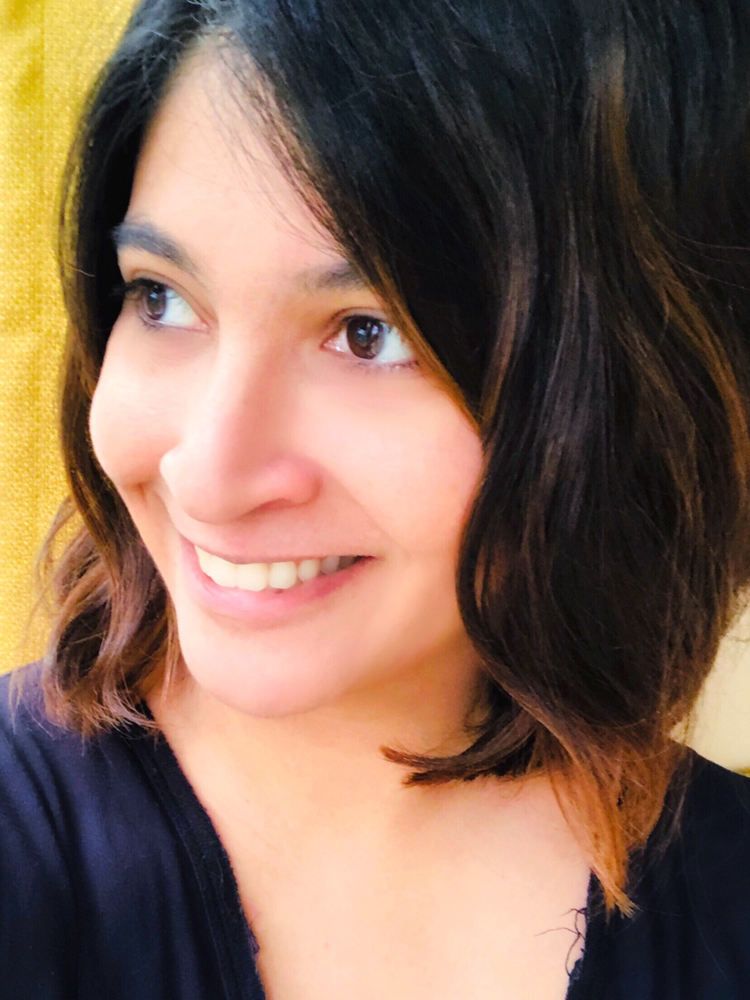
Sangu Mandanna was four years old when an elephant chased her down a forest road and she decided to write her first story about it.
Seventeen years and many, many manuscripts later, she signed her first book deal.
Sangu now lives in Norwich, a city in the east of England, with her husband and kids.
 Mike Finn's Fiction