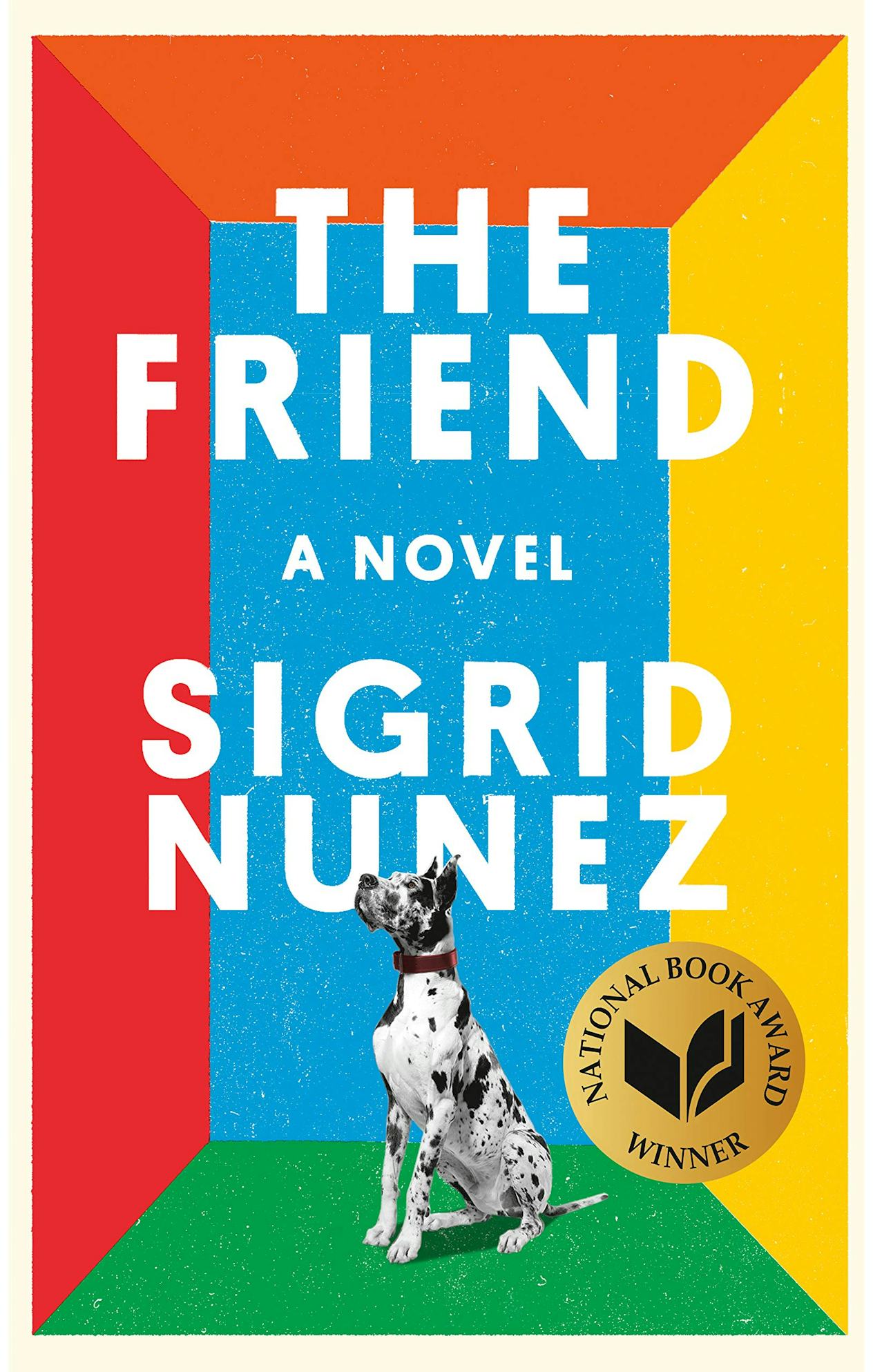
When a woman unexpectedly loses her lifelong best friend and mentor, she finds herself burdened with the unwanted dog he has left behind. Her own battle against grief is intensified by the mute suffering of the dog, a huge Great Dane, and by the threat of eviction: dogs are prohibited in her apartment building.
Isolated from the rest of the world, increasingly obsessed with the dog’s care, determined to read its mind and fathom its heart, she comes dangerously close to unravelling. But while troubles abound, rich and surprising rewards lie in store for both of them.
‘The Friend‘ was a remarkable listening experience. It’s an intimate six-hour long monologue, spoken to a dead friend. That probably sounds a little dull, perhaps even a bit of chore to listen to but that wasn’t my experience at all. To me it felt like one of those rare occaisions when you meet someone new and fascinating so you spend the whole day and long into the night listening to them talk, building a picture of them. lost in who they are becoming in your mind.
‘The Friend‘ is such a wonderful, effortless flow of remembrance and reflection that, at first, it hardly felt like grief, except that it was being spoken into a void, a presence lost and now, at best, imagined. I loved the narrator’s taken-for-granted erudition, her seamlessly integrated wit, and her self-awareness which refused to let self-deception hold sway but insisted on trying to say only what was true.
The premise of the story seems simple enough. A man dies and bequeaths his harlequin great dane not to his wife but to the narrator, a woman he has known for far longer than his (third) wife. A woman he knows to be a cat person. A woman he knows is not allowed to have a dog in her Manhattan apartment. A woman he knows loves him enough to take the dog anyway. The bequest transforms the woman’s life both by changing her here-and-now experience and by causing her to re-examine the truths embedded in her long-term relationship with the dead man.
In other hands, this could be the set-up for a Hallmark movie about a life redeemed by the love of a large dog. In Sigrid Nunez’s hands, it becomes an excavation of a life, of choices made and lived with, of people living complex, sometimes over-examined lives, of the effects of time and age on passion and friendship and on how our identity is shaped by our memory of the past and our expectations of the future.
I was immersed in the story mostly because it didn’t feel like a story. This wasn’t a linear narrative designed to lead the reader to a climax through a three-act plot. This was about being in the narrator’s head as she worked out what the man’s death meant to her. In the process, I learned as much, maybe more, about her than about him. I learned how she came to be who she is and how she sees herself. She is an academic, prone to analysis and used to using literary references to frame her understanding of situations. She has a dry wit that often keeps her at a distance from others. She is mired so deeply in grief that it taints every thought and every memory. She can’t forgive the dead man for being dead. She can’t imagine the path of her life, free from the gravitational pull of his personality.
Sigrid Nunez’s prose is wonderful. Not a word is wasted. Phrases that at first seem casual become charged with meaning as they are repeated or their context is revealed. I’ve already re-listened to the start of the book and I can see that the experience of the text, when you already know what the narrator knows, is different: richer, deeper but the truth of the narrative remains the same.
There was one section of the story that didn’t work for me. It was an extended discussion between the narrator and the dead man about literature an publishing, about cultural appropriation and self-censorship and so on. It was a good discussion but I found it jarring. It took me out of the flow. It also seemed like lecture notes reconfigured into dialogue. Fortunately, it was a short section.
I haven’t mentioned the dog. He is, of course, adorable. If you’ve lived with a dog as a family member you’ll recognise the emerging relationship and the emotional attachment.
At the end of the book, I found myself thinking about the title. It has the same complex simplicity as the story. It’s up to the reader to work out who the friend is and what being a friend means.
I recommend listening to the audiobook version of ‘The Friend‘. Hilary Huber’s narration perfectly captures the tone of the monologue. Click on the SoundCloud link below to hear a sample.
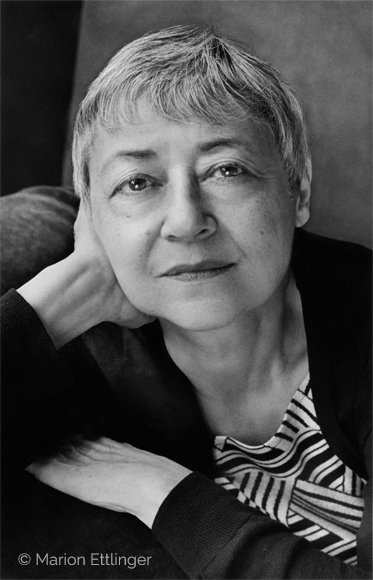
Sigrid Nunez has published nine novels, including A Feather on the Breath of God, The Last of Her Kind, The Friend, What Are You Going Through, and, The Vulnerables. The Friend won the 2018 National Book Award and was a finalist for the 2019 Prix du Meilleure Livre. It was also a finalist for the 2020 International Dublin Literary Award.
Nunez’s other honours include a Whiting Writer’s Award, a Berlin Prize Fellowship, the Rosenthal Family Foundation Award, the Rome Prize in Literature, and a Guggenheim Fellowship.
Nunez has taught at Columbia, Princeton, and the New School, and has been a visiting writer or writer in residence at Boston University, Amherst, Smith, Baruch, Vassar, Syracuse, and the University of California, Irvine, among others. She lives in New York City.
 Mike Finn's Fiction