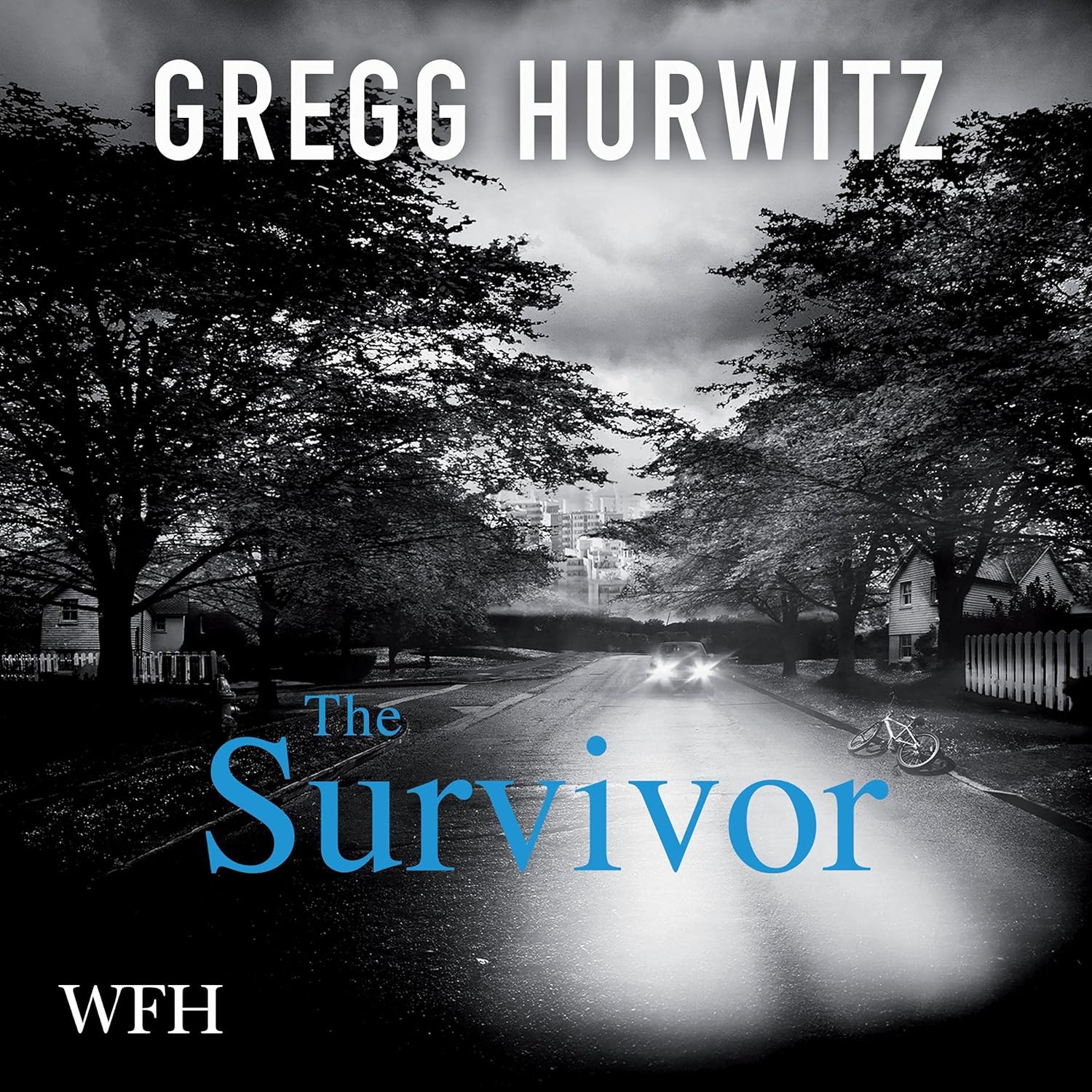
From the 11th storey of a Los Angeles high-rise, Nate looks out on the city – the traffic, the trees and the beach beyond. He breathes deeply. And then he moves one foot off the ledge and into thin air. But before he can jump, gunshots ring out from within the building. A robbery is in progress. And Nate, with nothing to lose but the life he was about to give up, decides to intervene. What happens next plunges Nate into mortal danger…and reunites him with the family he hasn’t known for years – a family he will do anything to protect.
‘The Survivor‘ was my second Gregg Hurwitz novel. The first was ‘Orphan X’, the thriller that made Gregg Hurwitz’s reputation and launched a hugely popular series. It was a well-written example of a male wish fulfilment fantasy, where the reader plays the tough, competent hero in a world where problems can be solved with violence and sacrifice, women need to be rescued and bad people need to be killed. ‘The Survivor‘, a standalone thriller published four years earlier, has some similar traits but the hero, while competent, is deeply damaged emotionally and it’s not nearly as well-written.
I loved how ‘The Survivor’ started. Our hero, Nate, is standing on the ledge of a tall building, summoning the courage to step off and fall to his death, when he hears gunshots and with, nothing left to lose, decides to intervene. The tension was high. The descriptions worked. I was hooked.
The initial action was followed by flashbacks to key moments in Nate’s life. They’d work well as a movie montage and had some original touches but the text felt a little thin – too much of précis of a life rather than a shared experience of it.
For me, the central problem with the novel was that the well-written, clever, action-packed, thrilling plot kept being sandbagged by poorly-written, annoyingly maudlin passages explaining what a mess Nate’s life was and how bad he felt about it all. I could see that Nate’s experiences should be what powered the story. They are what brought him to that ledge, ready to jump and what motivates him to risk his life when his family is threatened. Unfortunately, while there were flashes of things that felt real about Nate’s relationships, they were almost lost pace-killing passages when Nate wallowed in self-pity, grief and guilt. He had good reason to be self-pitying but I found the sentimental way in which the grief and guilt were treated annoying.
I kept reading because the plot was clever, the situation was unusual, the baddies were both scary and believable, the time pressure was tight and, nearly halfway through the book, I had no idea how Nate would save the day and whether he’d survive.
The problem was that I was reading to see how the plot would work out rather than because I cared about Nate. I ought to have been having fun. Instead, I was running the audiobook at x1.5 speed to get through the sentimentality and the clumsy descriptions of emotions.
I realised, five hours into the book, that I didn’t want to spend another eight hours wading through the prose to see how the plot worked, so I set the book aside.
When it comes to Gregg Hurwitz novels, I’ll stick to the Orphan X books from now on.
 Mike Finn's Fiction