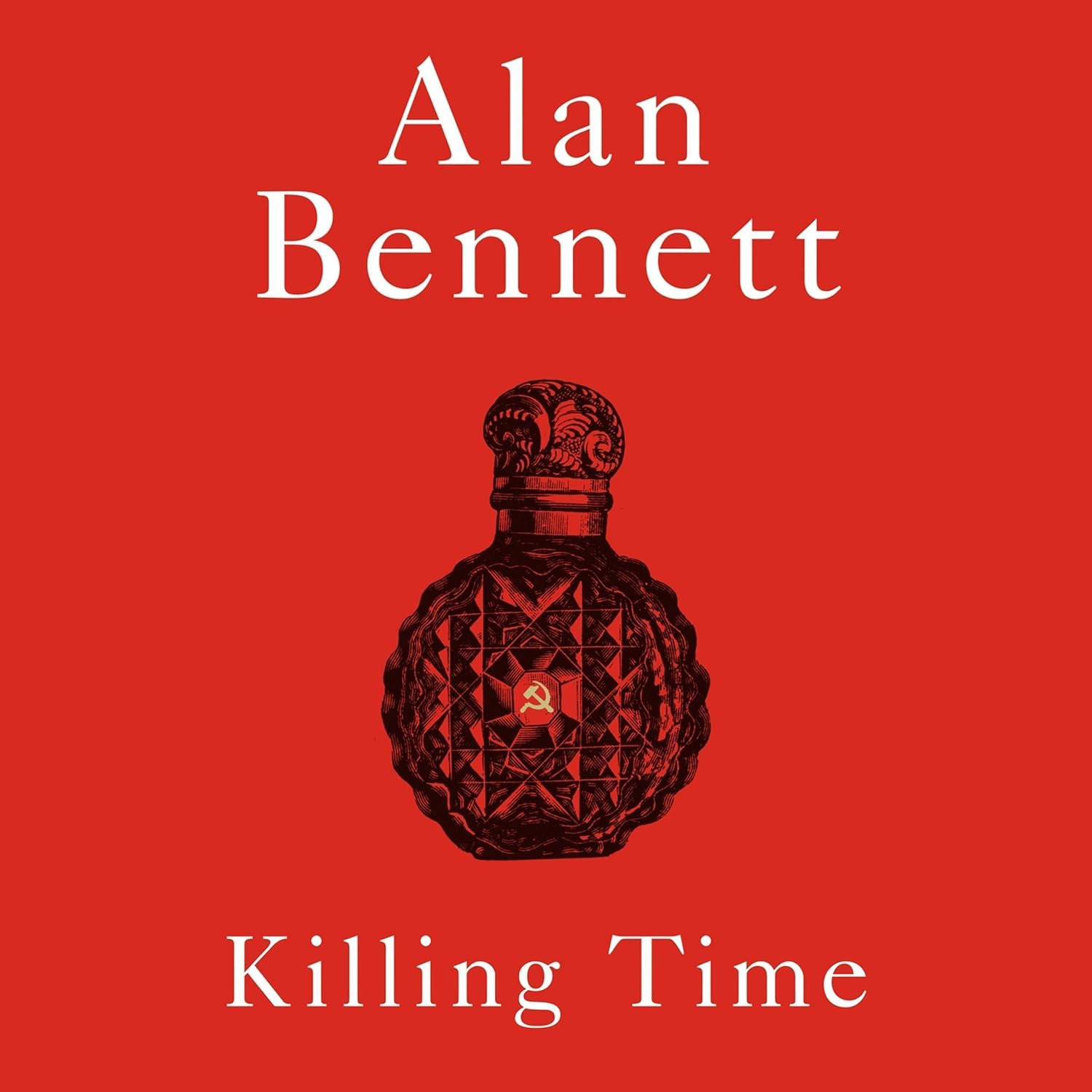
Presided over by the lofty Mrs McBryde, Hill Topp House is a superior council home for the elderly. Among the unforgettable cast of staff and residents there’s Mr Peckover the deluded archaeologist, Phyllis the knitter, Mr Cresswell the ex-cruise ship hairdresser, the enterprising Mrs Foss and Mr Jimson the chiropodist. Covid is the cause of fatalities and the source of darkly comic confusion, but it’s also the key to liberation. As staff are hospitalised, protocol breaks down. Miss Rathbone reveals a lifelong secret, and the surviving residents seize their moment, arthritis allowing, to scamper freely in the warmth of the summer sun.
I listened to ‘Killing Time‘ in a single sitting (it’s only sixty-nine pages / 119 minutes long). At the end, I was at a bit of a loss to describe what I’d been listening to. I knew what it wasn’t – a cutely humorous novella about old people in a council care home coping with the impact of COVID – but I had more trouble saying what it was.
I knew that I had been completely mislead by the publisher’s summary. This was not a joyful tale in which the surviving residents “…scamper freely in the warmth of the summer sun.” This was a matter-of-fact description of a set of old people whose lives are mostly behind them. Their identities have been reduced down to a few personality quirks garnished with a scattering of possessions that are like driftwood from who they used to be, beached with them when the tide of their lives ebbed and ran them aground in a council-run care home. This was not a cosy narrative It romanticised nothing. It didn’t set out to entertain or to push a message. It was a mostly dispassionate description of the people in the home and the impact of COVID on their lives.
There is a little bit of humour and a lot of undramatic, mostly ungrieved, deaths. The realities of being so old that you can no longer take care of yourself and mostly have no energy or motivation to take care of anyone else are well observed. There is a character who finally reveals things about her life that she’s previously kept secret but, while the disclosures are dramatic and historically interesting, it’s clear that the woman revealing them sees them as something that happened in another life. Who she was then and who she is now are linked only by memory and a recognition of decline.
‘Killing Time‘ is a rare thing – a book about being old written by someone who is very old – Alan Bennett was ninety when it was published. The details of the life in the care home felt real and unapologetically honest. The fatal impact of COVID was treated in a shrugging ‘Death happens’ way. The overall feeling I was left with was that, if you live long enough, there is so little left of who you used to be that who you were becomes either a story that you tell yourself and others or just another thing that you let go of because you don’t need it any more.
 Mike Finn's Fiction