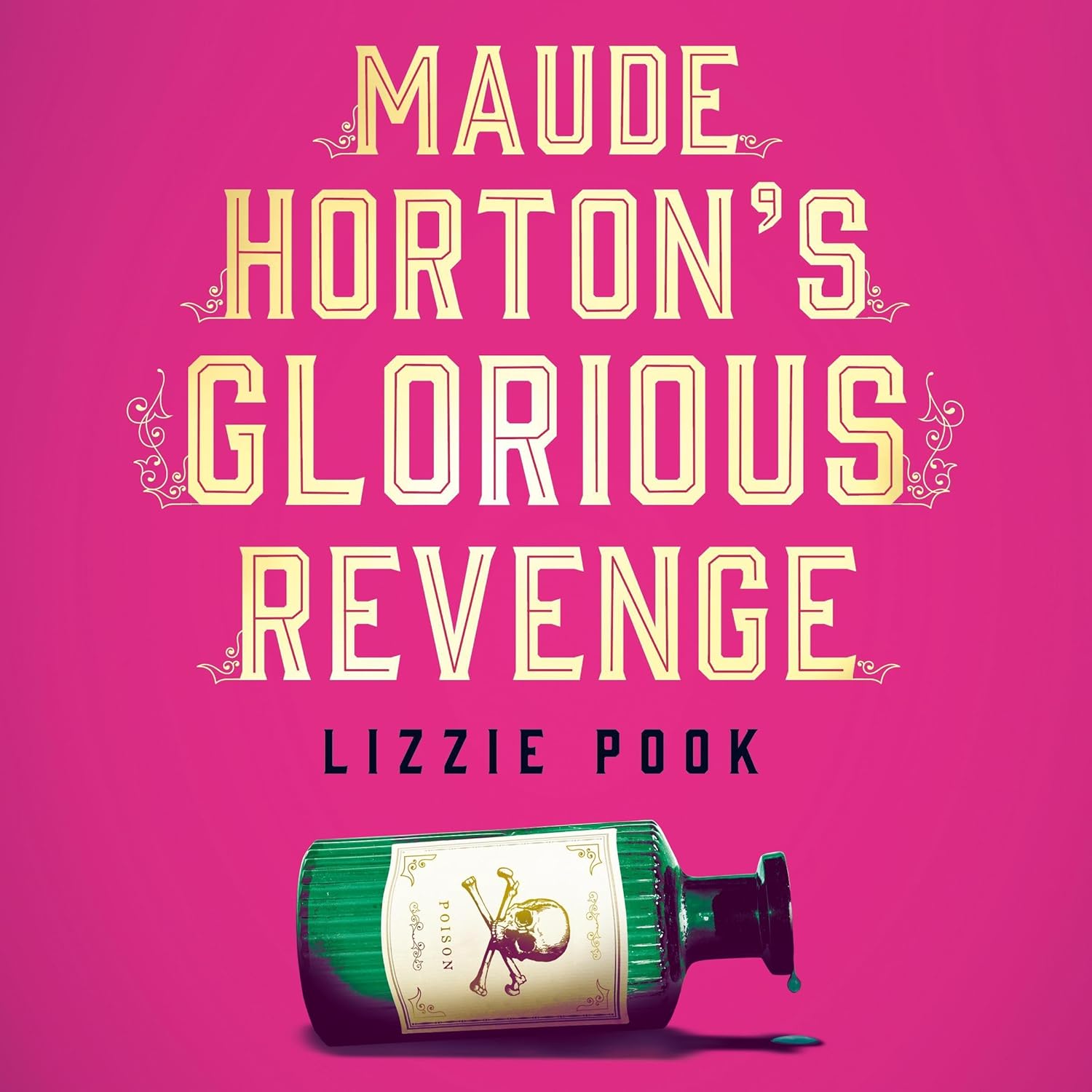
When Maude Horton receives a letter from the British Admiralty informing her of her younger sister’s death, her world is shattered. Bold and daring, Constance had run away from her life in Victorian London two years prior, disguising herself as a boy to board the Makepeace, an expedition vessel bound for the Arctic’s unexplored Northwest Passage. The admiralty claims Constance’s death was a tragic accident, but Maude knows when she is being deceived.
Armed with Constance’s diary from her time at sea and a fiery desire for justice, Maude sets her sights on the Makepeace’s former scientist, Edison Stowe, a greedy and manipulative man whom she suspects had a hand in her sister’s death. When she learns he has a new venture, a travel company that escorts spectators across the country to witness popular public hangings, she decides to join the latest tour, determined to extract the truth from Stowe and avenge her sister—no matter the risk to herself.
From the stark beauty of the Arctic to the teeming streets of Victorian London, Maude Horton’s Glorious Revenge is a mysterious, transportive tale about the unbreakable bond of sisterhood and the things we are driven to do by both love and greed.
I set ‘Maude Horton’s Glorious Revenge‘ (2024) aside at 33%.
The book was well written. I liked that there was no attempt to present it as if it were a novel that could have been published in 1850. The writing felt contemporary and so did most of the dialogue. I thought that made the book more entertaining and avoided it becoming a pastiche. The use of Constance’s first-person journal entries for the past and third-person reporting for the present helped stoke my curiosity and gave the story some variety.
The book was well researched. The historical details were fascinating without being burdensome. It brought 1850s London to life with enough detail to make me very glad not to have been born in that era and it describes life on a small naval ship in as an ordinary seaman, that makes it feel like something that could only be survived with the help of a lot of rum.
Despite all of that, after I’d read the first third of the book, I found myself reluctant to pick it up again. Why? The worlds described, London and the Makepeace voyaging through the Arctic ice, were unpleasant and oppressive. Edison Stowe, the bad guy in the story, has no redeeming attributes. He was the embodiment of Victorian venal entitlement. Constance, the dead sister was reckless and selfish. Maude, the live sister is about to turn to the dark side to get her revenge. It’s clear that there is nothing she won’t do to make Stowe pay. I can feel the bad things coming and I know they will be vivid, credible and vicious.
I don’t want all that nastieness in my head, especially if all I get is a story of self-destructive revenge, so I’ve set the book aside.
I would like to read more of Lizzie Pook’s work, so I’ll be giving her debut novel, ‘Moonlight and the Pearler’s Daughter‘ (2022) a try.

Lizzie Pook is a London-based travel writer and journalist whose work has taken her to some of the farthest-flung parts of the planet, from the trans-Himalayas—in search of elusive snow leopards—to the vast, uninhabited east coast of Greenland.
She has written for The Guardian, The Telegraph, The Times (London), Lonely Planet, and Condé Nast Traveler.
Lizzie is the author of Maude Horton’s Glorious Revengeand Moonlight and the Pearler’s Daughter.
Photo Credit: Magdalena Smolarska
 Mike Finn's Fiction