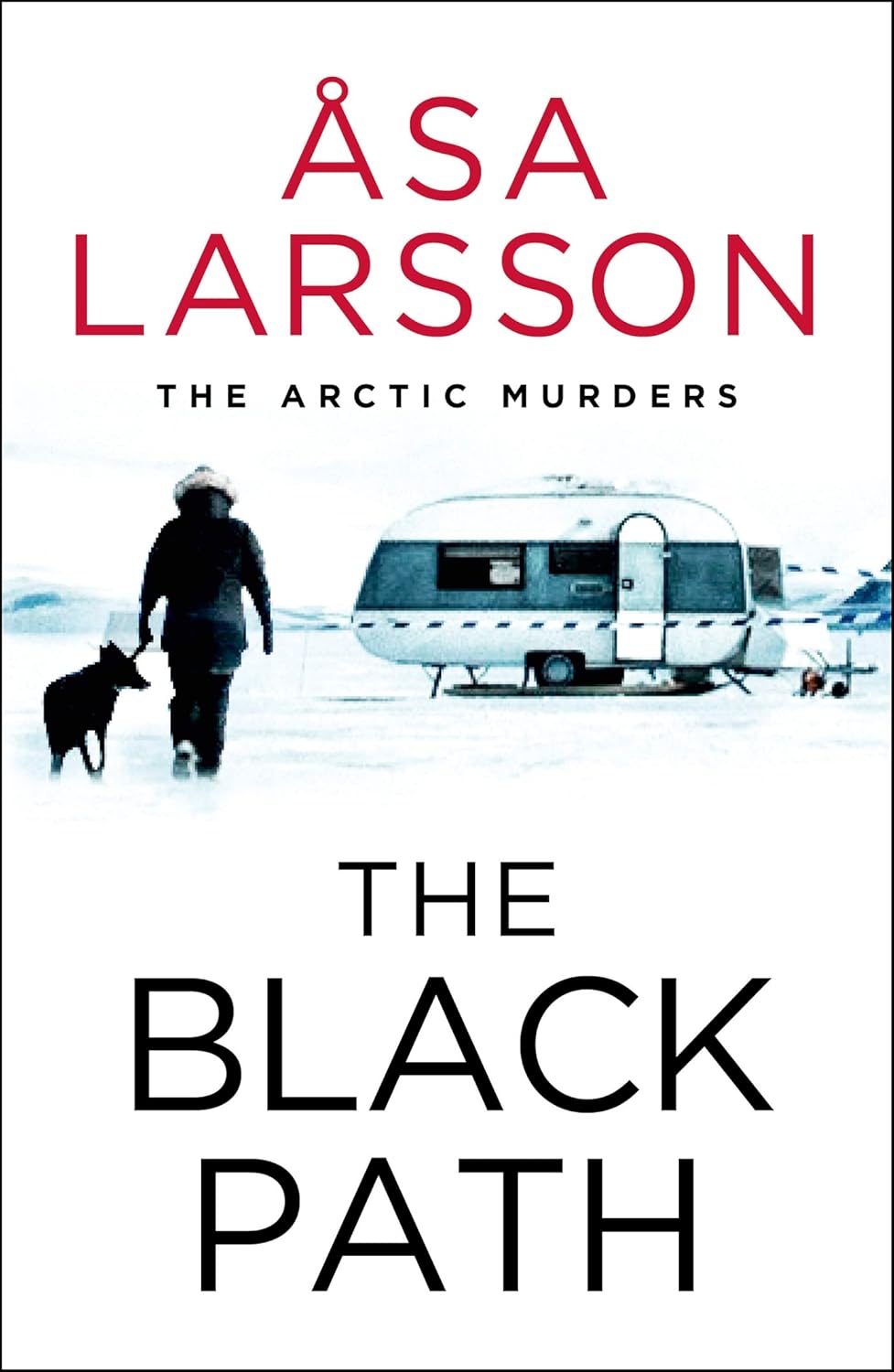
A woman’s body is found on a frozen lake, bearing the marks of grisly torture. Inspector Anna-Maria Mella knows she needs help with the case – the woman was a key player in a mining company whose tentacles reach across the globe. Lawyer Rebecka Martinsson is desperate to get back to work, to feel alive again after a case that almost destroyed her both physically and emotionally.
Soon she is delving into the affairs of the victim’s boss, the founder of Kallis Mining, whose relationship with the dead woman was complex and obsessive. Martinsson and Mella are about to uncover a dark and tangled drama of family secrets, twisted sexuality, and corruption on a massive scale.
IN A NUTSHELL
I loved how unexpected the book was. I don’t mean that it had plot twists. I mean that the narrative was focused not on the plot but on the people: who they are, who they have been, what they want.
The mental health of the characters in the book is fundamental to the story. Some of them have been through trauma that has affected how they relate to the world. Some have a family history that includes dealing with people whose behaviour and perceptions are seen as pathological. I liked that none of these things are trivialised or simplified and that the possibility that some types of divergent thinking are as much a gift as a curse.
‘The Black Path‘ took both happiness and sorrow seriously. It wove memory, reflection and action into a square of cloth for each character and used the plot to combine the squares into a quilt. The result was something that was about emotions and choices and how what we experience shapes who we are.
Other than to say that this is a superb read, I’ve found it hard to classify ‘The Black Path‘. It was a rich, complex, serious book that was also accessible, engaging, at times exciting.
The plot starts with the discovery of a murdered woman in a fishing arc on a frozen lake in the Arctic Circle. As we find out how the woman came to be murdered, we are introduced to family life as lived by Sweden’s rich and privileged and by rural Sámi people. We have high finance and we have art that borders on magic. We have a man born into poverty and abuse who has used his wits to become wealthy enough to move among and marry into Sweden’t elite without ever becoming one of them. We have a privileged, charismatic, sometimes manic, brother and sister who trade on their glamour. We have a young woman born of two mentally unstable parents, one Swedish and one Indian, adopted by a Sámi woman who was a gifted artist and raised to believe she has the sight.
The plot is relatively straightforward, made unusual only by taking place partly in the dangerous world of venture capitalists plying their trade in African war zones.
What makes the book special is how it pulls the reader into the minds of the characters. Larsson writes about people in a way that weaves memory and reflection, past and present, thought and action into a seamless rendering of a character’s consciousness. Normally, if I see that a writer is doing something new with form, I groan, knowing that the extra effort I have to put in as a reader is unlikely to be matched by an improvement in enjoyment yet Larsson requires nothing more of me as the reader than to enjoy the experience.
‘The Black Path‘ was enriched by continuing to discover more about the two main women in the series, Rebecka Martinsson and Anna-Maria Mella. Martinsson plays a role in solving the crime but the main focus is on her recovery after the traumas of the previous books overwhelmed her mental health. Mella, a tiny woman, is a powerhouse as an investigator who finds her strength and her renewal from her home life.
 Mike Finn's Fiction