
The first thing Vanessa Carvin does when she arrives on the island is change her name. To the locals, she is Willow Hale, a solitary outsider escaping Dublin to live a hermetic existence in a small cottage, not a notorious woman on the run from her past.
But scandals follow like hunting dogs. And she has some questions of her own to answer. If her ex-husband is really the monster everyone says he is, then how complicit was she in his crimes?
Escaping her old life might seem like a good idea but the choices she has made throughout her marriage have consequences. Here, on the island, Vanessa must reflect on what she did – and did not do. Only then can she discover whether she is worthy of finding peace at all.
IN A NURSHELL
Simply but beautifully written. Completely immersive. Compelling because it feels emotionally authentic. Filled with trauma and guilt but surprisingly uplifting.
The older I get the more selective I become about the Literary Fiction that I’ll read. I’m passed being impressed by experiements in form or elaborate abstact conceptual structures or mournful reflections on the human condition. I need my LIterary Fiction to be connected fo something real, to have characters with something to say worth listening to and writing that isn’t looking for applause but still wins my admiration. John Boyne’s novel ‘Water’ (2023) met all of those criteria and then upped the ante by pulling me into one woman’s world and making me care about her, probably more than she cared about herself..
I was a little hesitant to buy the book when I saw that it was the first in a four-book series, ‘The Elements’ (Water, Earth, Fire, Air). That sounded like it might be self-conciously worthy rather than interesting. My doubtls about the book vanished as soon as I read the first paragraph. Here it is:
“THE FIRST THING I do when I arrive on the island is change my name. I’ve been Vanessa Carvin for a long time, twenty-eight years, but I was Vanessa Hale for twenty-four years before that and there’s an unexpected comfort in reclaiming my birthright, which sometimes feels as if it was stolen from me, even though I was complicit in the crime. A few minutes later, I change it again, this time to Willow Hale. Willow is my middle name, and it seems prudent to take a further step in separating the woman I am now from the woman I once was, lest anyone here makes the connection. My parents were unremarkable, middle-class people – a teacher and a shop assistant – and there were some who thought them presumptuous in calling their daughter Vanessa Willow, which summons images of a Bloomsbury writer or a painter’s wan muse, but I was always rather pleased with it. I had notions about myself back then, I suppose. I don’t have them any longer.
In a single paragraph, I could hear this woman’s voice clearly enough to have a picture of her. Not a clear picture but one I was sure I’d enjoy seeing in more detail. I loved how the simple flow of the writing created an easy intimacy that seemed to offer honest reflection and a strong desite for change. I wanted to spend time with this woman as she found out who Willow Hale was going to be and tried to leave Vanessa Carvin behind.
Willow’s story is not a happy tale of second chances and escaping from past traumas. It’s tale about a woman who is uncertain about her own culpability in the trauma that she fled to the island to escape from. A woman who is pawing through the wreckage of her life trying to see if there is anything that can be salvaged, all the time wondering about how much of this wreckage she caused and whether she deserves anything other than penance.
I loved the description of how Wliiow – that woman from Dublin who didn’t bring a husband with her – is received by the small community on the island. The conversations she has with the woman from the farm next door, the Parish Priest, the mna who runs the new pub and the woman whose son the villager’s think may the lost at sea all seemed real to me. Each of them built my sense of the island community and each of them pushed Willow into defining something about herself – who she had been and who she was choosing to become.
I admired how seamlessly Willow’s memories were woven into the tale, making them into a fragmented, sometimes involuntary, conversation with herself while showing mthe nature of the life she’d lost.
The strongest, toughest parts of the story where those dealing with Willow’s relationship with her daughters (one dead and one estranged) and her husband (once famous, now imprisoned). There was nothing simple or certain here. This was the heart of Willow’s pain and guilt and doubt. It was also, probably. her only way forward.
I became completely immersed in Willow’s struggles and her small triumphs and I continued to admire John Boyne’s writing. I loved that the story remained grounded, avoiding melodrama or existential angst,
I already have John Boyne’s best known novel, ‘The Hearts Invisible Furies‘ on my shelves. I’ll be pulling it to the top of my TBR soon. In the meantime, I’ll be looking at the rest of his ‘The Elements‘ series.
Here’s John Boyne describes himself on GoodReads:
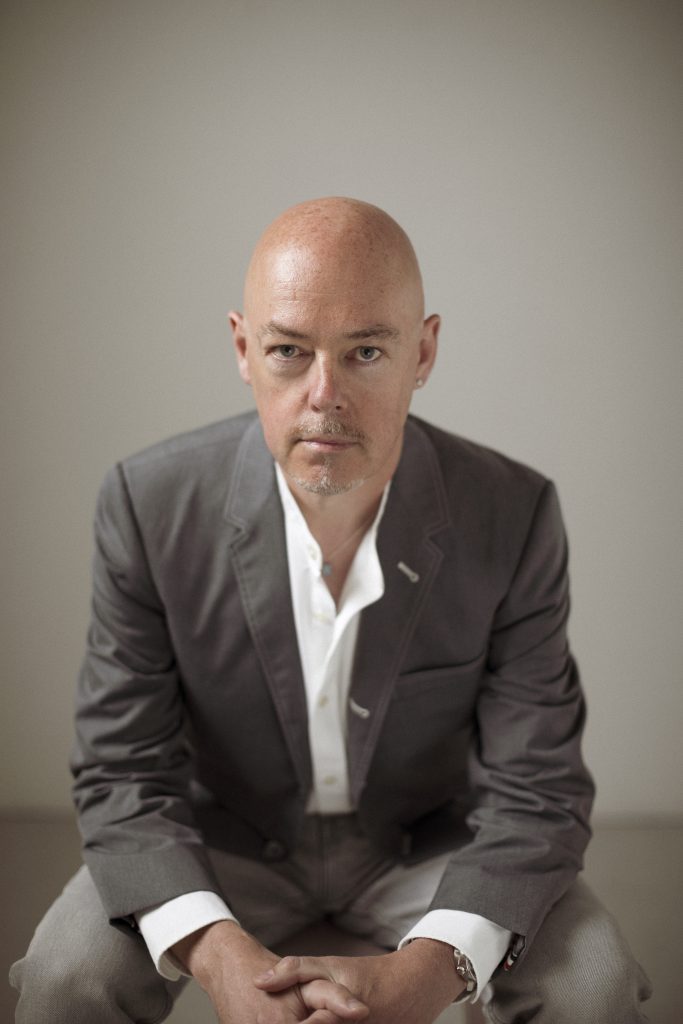
I was born in Dublin, Ireland, and studied English Literature at Trinity College, Dublin, and Creative Writing at the University of East Anglia, Norwich. In 2015, I was awarded an Honorary Doctorate of Letters by UEA.
I’ve published 14 novels for adults, 6 novels for younger readers, and a short story collection. The Boy In The Striped Pyjamas was a New York Times no.1 Bestseller and was adapted for a feature film, a play, a ballet and an opera, selling around 11 million copies worldwide.
Among my most popular books are The Heart’s Invisible Furies, A Ladder to the Sky and My Brother’s Name is Jessica.
I’m also a regular book reviewer for The Irish Times.
In 2012, I was awarded the Hennessy Literary ‘Hall of Fame’ Award for my body of work. I’ve also won 4 Irish Book Awards, and many international literary awards, including the Que Leer Award for Novel of the Year in Spain and the Gustav Heinemann Peace Prize in Germany. In 2015, I was awarded an Honorary Doctorate of Letters from the University of East Anglia.
 Mike Finn's Fiction
Nice post 🌅🌅
LikeLiked by 1 person