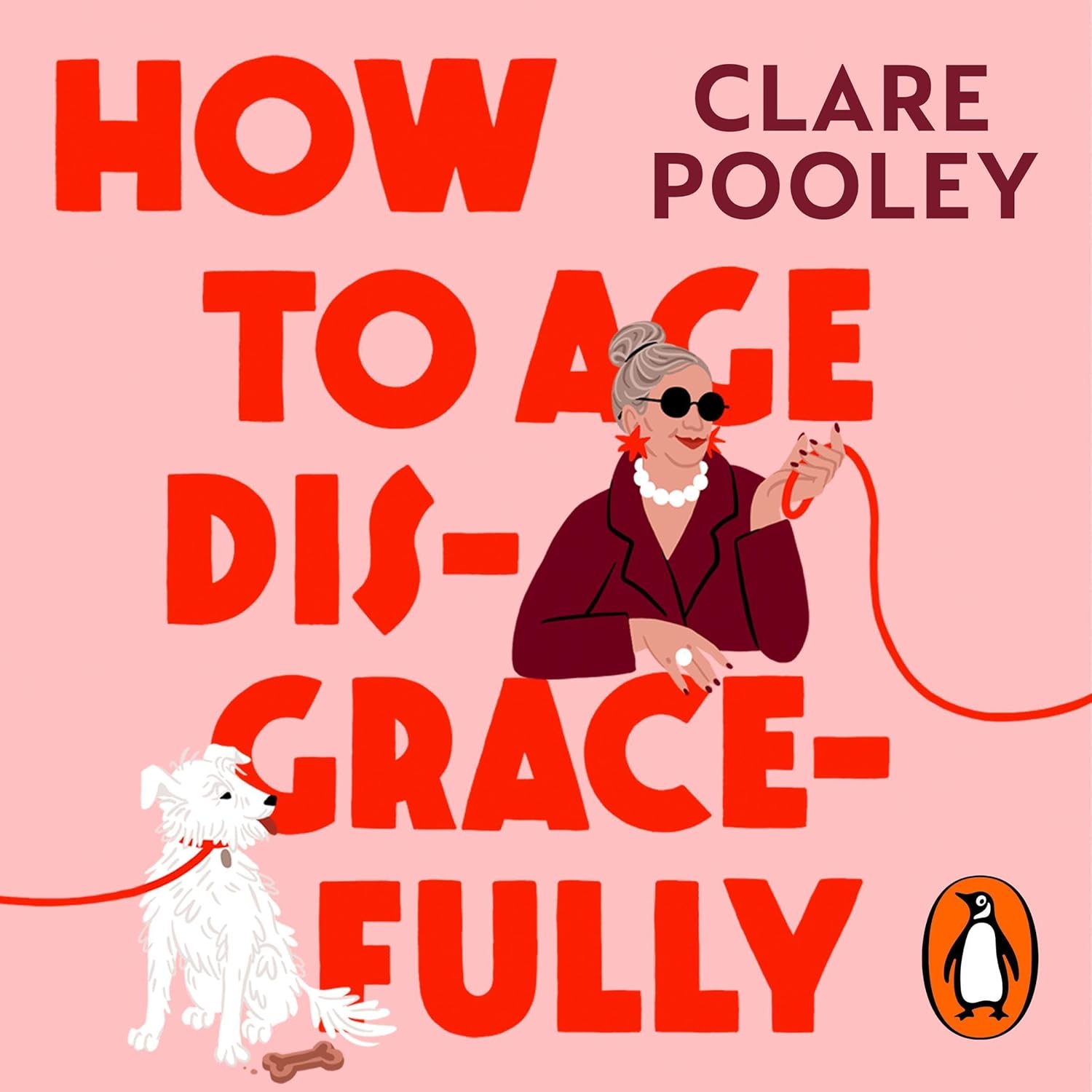
Lydia imagines her new job running a Senior Citizen’s Social Club three afternoons a week will involve drinking tea while playing gentle games of cards, listening to The Beatles and reminiscing about food rationing and The Blitz.
She does not expect to find a failed actor addicted to shoplifting, a woman who’s been hiding from a mysterious and very chequered past, and a prolific yarn-bomber. It turns out that their ideas about how to spend their afternoons are very different.
After a tragic accident means the council threatens to sell the community centre, the Social Club, aided by their friends in the nursery next door and a geriatric orphaned dog, set out to save it.
IN A NUTSHELL
‘How To Age Disgracefully‘ was a lot of fun. It was cute without being saccharin. It felt like my favourite kind of British feel-good Christmas movie: chaotic, mildly subversive but warm-hearted. The changing points of view and the mix of ages (from the very old to the very young) and personalities (from the so introverted that they never speak, to the so confident that they never doubt themselves) kept the story fresh. The humour was situational rather than slapstick, etching the characters more deeply. And it makes me smile at least once a chapter.
The humour in ‘How To Age Disgracefully’ worked wonderfully well for me. It lifted my mood and made me smile. It was the most fun I’ve had per page in a long time.
The book opens with a police car pulling over a bus filled with a mix of pensioners and very young children, almost all of whom assume the police officer is there to arrest them. When the police officer finally explains who they do want to arrest, it turns out that the police’s most-wanted is no longer on the bus. The book then flips back in time to show the events leading up to this bizarre scene.
This is a closely observed, character-driven story that draws its humour not just from the often larger-than-life personalities of the main characters but from the small but important differences in how people of different ages and social backgrounds see and respond to one another. The plot is driven by a sense of rebellion, slowly moving towards a simmering point. I loved the inexorable escalation of the anarchy and the freedom it seemed to promise. The choas seemed to fuel the development of the characters into more interesting and happier versions of themselves.
Most of the characters in the book are members of a local Senior Citizens Social Club. They’re old, often grumpy, as difficult to wrangle as cats and prone to taking potshots at one another. They don’t start to come together until they are presented with a common enemy. After an unfortunate (fatal but funny) incident, the Local Council decides to close down the Community Centre that the Senior Citiizen’s Social Club meets in. The oldsters respond by collaborating with the tiny tots from the nursery that meets in the same building, to shame the Council into keeping the Community Centre open by putting on a highly publicised nativity play. The result was as uplifting as it was chaotic.
My favourite character (the one I want to be when I grow up) was Daphne: a seventy-year-old with a dodgy past, an imperious manner, an ambitious To Do List and a looming deadline for disaster. She was a marvellous creation, but what really made the book a pleasure was that the people around her all brought their own little bits of anarchic magic to the plot.
 Mike Finn's Fiction