This week, my reading has been very fragmented as I’ve let my attention be pulled in different directions by a reading project and by a short story anthology but I’ve had a good time with it. It’s also been a good week for new releases.
Anyway, here’s what’s been happening this week and what’s up next.
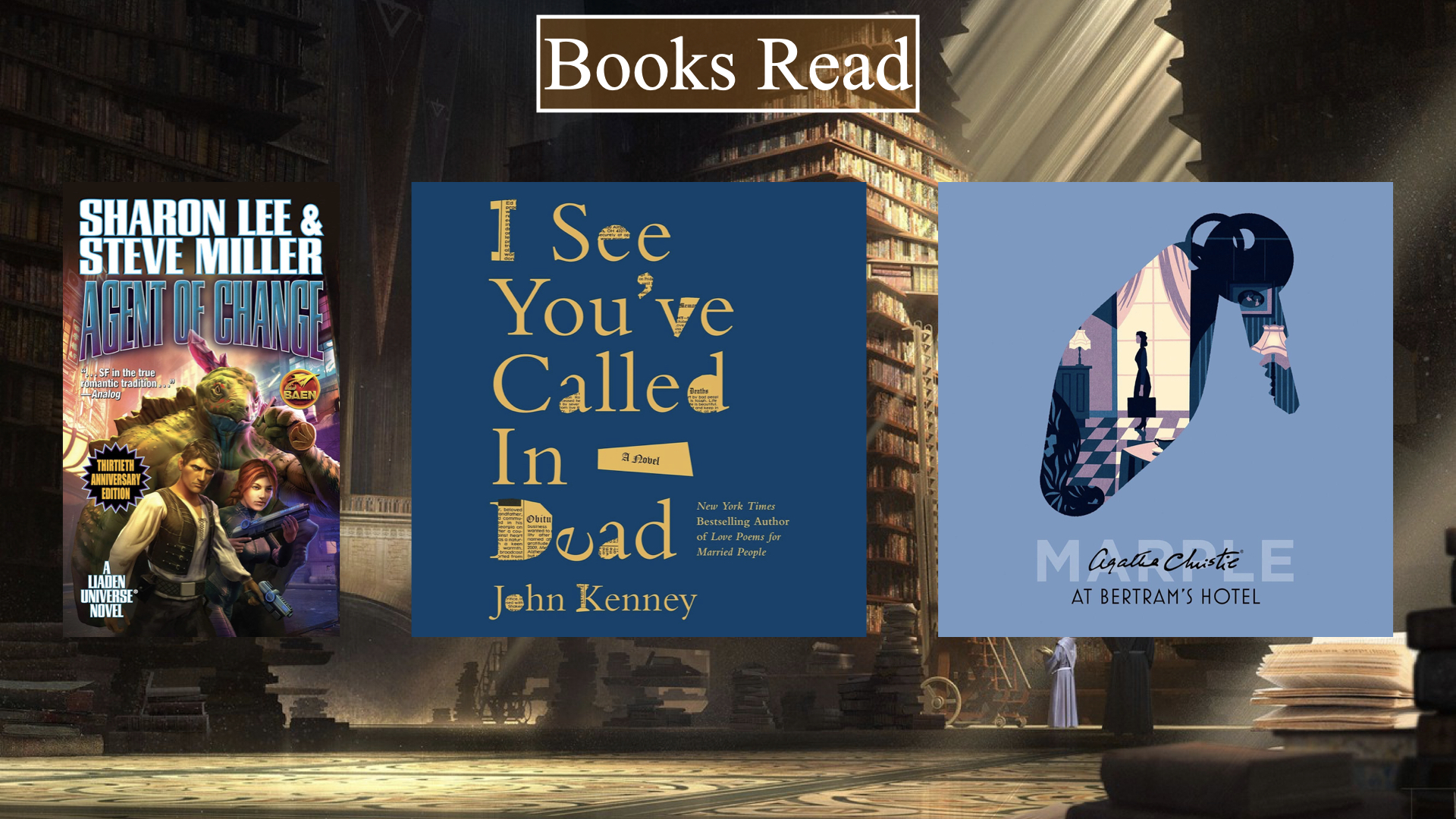
I’ve started more books than I’ve finished this week. The two I did finish were very entertaining. The one I set aside was just a misbuy on my part.
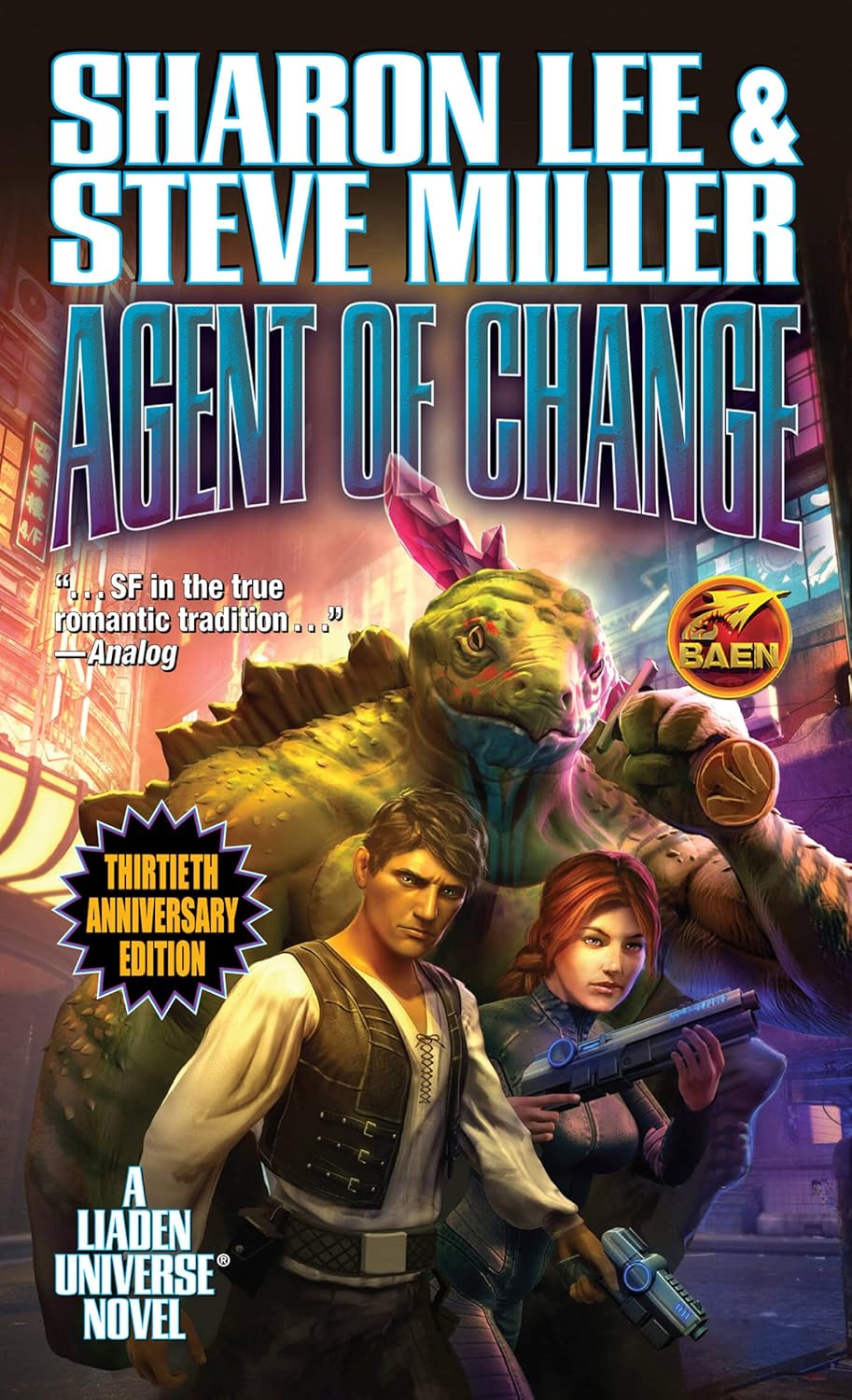
The Liaden Univers Science Fiction Series stands at twenty-seven books. It started in 1988 and the most recent book, ‘Diviner’s Bow‘ was published last month. Somehow, I’d remained unaware of the series until recently. I’m aware of it now and I know I have a lot of fun reading ahead of me,
I started with ‘Agent Of Change‘ because it was the first ‘Liaden Universe’ novel published. Plus, BAEN books are giving it away free HERE.
I’d forgotten how much fun rollicking adventures like this can be. Lots of action, mixed with a little wit and a little world-building. This was a fast-moving feel-good-but-not-cosy romp through space. It’s the kind of Science Fiction that’s there to entertain, not lecture or philosophise. Even though it’s thirty-seven-years-old, it still felt fresh and original
My review is HERE
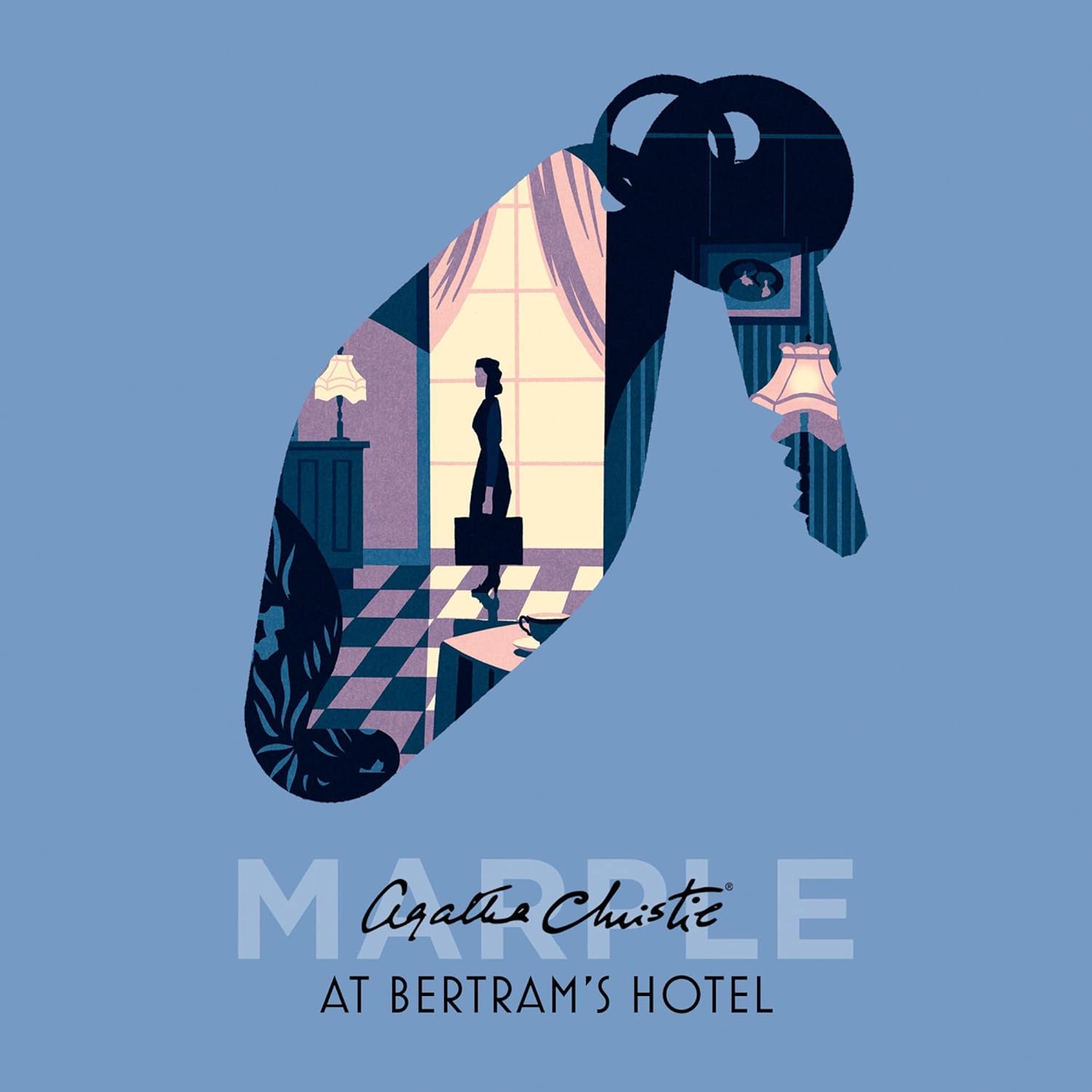
‘At Bertram’s Hotel‘ (1965) was a fasicinating Jane Marple mystery. I’m impressed with how well-written the later Jane Marple books are. I loved how Jane’s observations on the pull of nostalgia and the impossiblity of recapturing the past not only gave insight’s into how things look as we grow older but enabled Jane to see Bertram’s Hotel, which she’d last visited as a young girl, differently than everyone else. She knows that something isn’t right. Figuring out what that something in is the fun part.
I also liked that, while Jane is instrumental in solving the mystery, the heavy lifting is done by a very competent police Inspector. The mystery was clever, the people were engaging and the story was satisfying.
For me, this ranks as one of Agatha Christie’s best books.

‘I See You Called In Dead’ (2025) had an intriguing premise: a depressed forty-something obituary writer accidentally post his own obituary to his paper in a fit of druken incompetence. A firing offence. Except, how do you fire a dead man?
I’d been looking forward to an amusing read but I ended up setting this book aside almost as soon as it got started. My problem was that this is a story told in the first person by a person I have no desire to spend any time with.
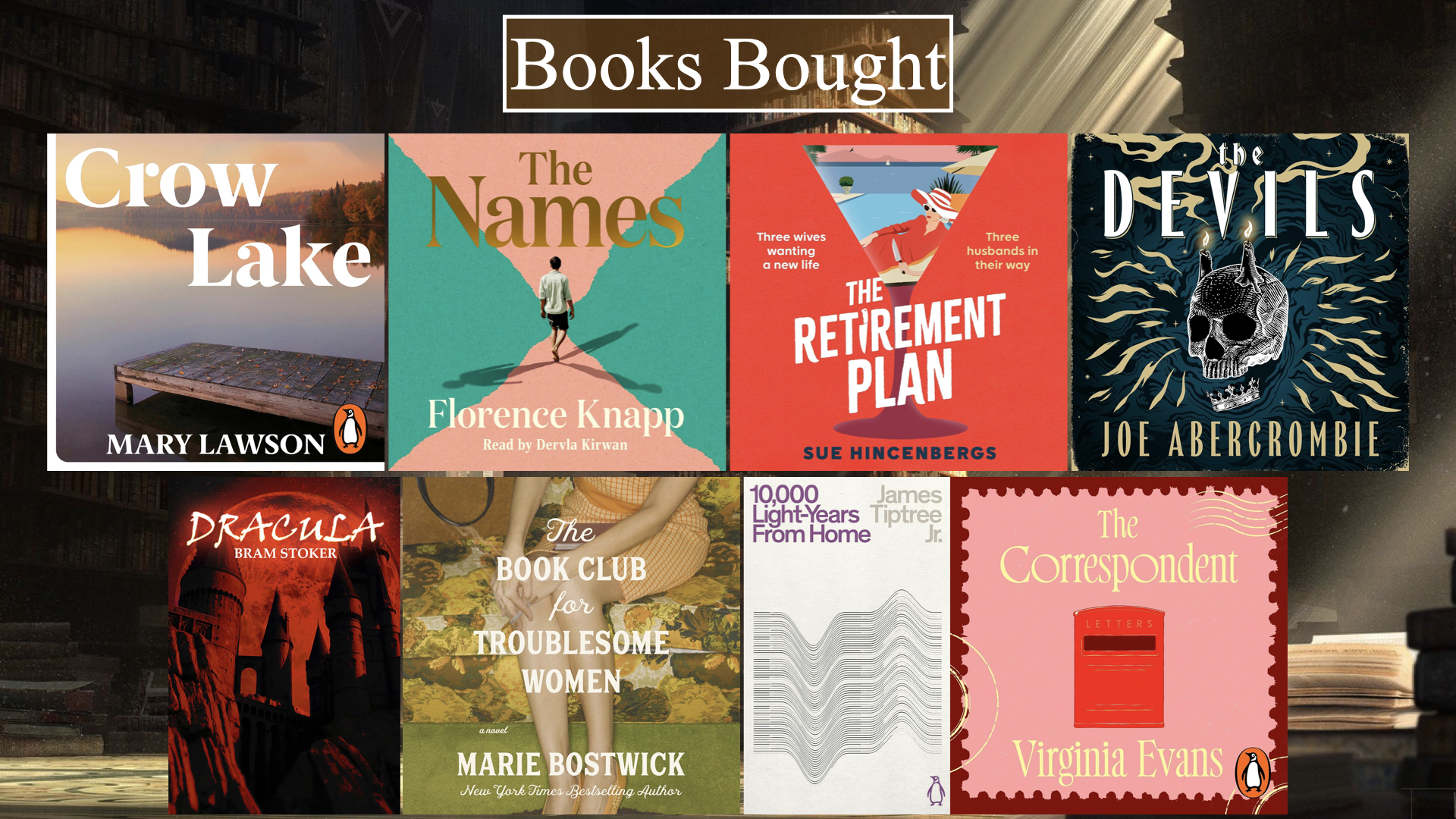
Yet again, I bought more books than a I read this week by quite a margin. Three of them are new releases that I’ve been waiting for, Three are mainstream books that I stumble across. One is a short story collection that I first read fifty years ago and one is part of a reading challenge. Now all I need to do is find the time to read them all.
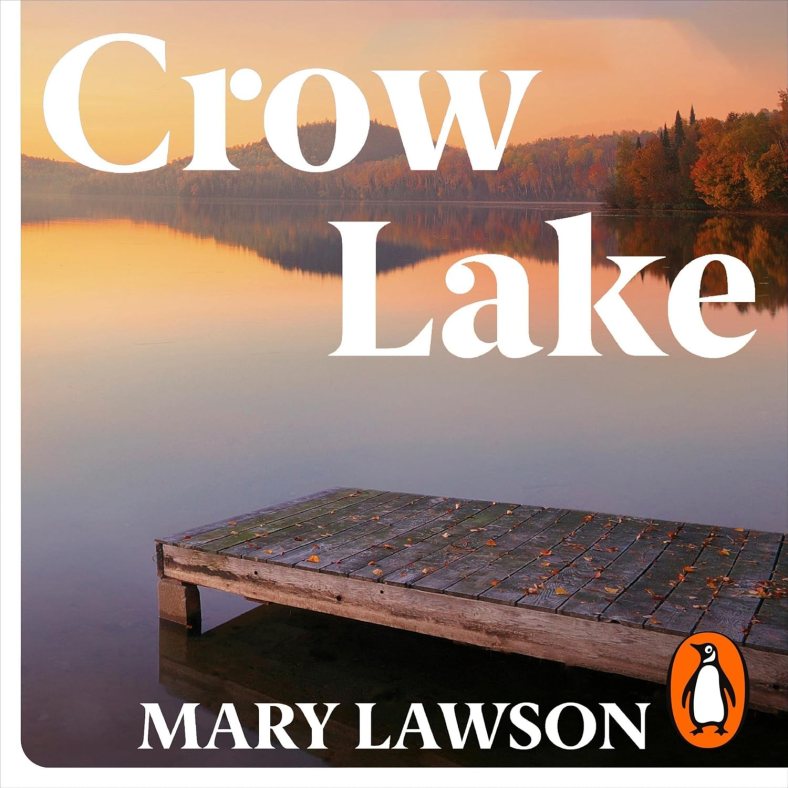
Orphaned young, Kate Morrison was her older brother Matt’s protégé, her curious fascination for pond-life fed by his passionate interest in the natural world. Now a zoologist, she can identify organisms under a microscope but seems blind to the tragedy of her own emotional life. She thinks she’s outgrown her family, who were once her entire world – but she can’t seem to outgrow her childhood or lighten the weight of their mutual past.?
I’d never heard of ‘Crow Lake’ (2002) even though it’s a New York Times Notable Book and won the McKitterick Prize (2003), ALA Alex Award (2003), Amazon.ca First Novel Award (2002) and the OLA Evergreen Award (2005). i found it on a list of books about Canada written by Canadians, tried the first chapter and decided that it was my kind of book. Amazingly, it was a debut novel. Between 2002 and now, Mary Lawson has published three more novels. the most recent being ‘A Town Called Solace’ (2021) which was on the 2022 Booker Prize Longlist.
Here’s the audiobook sample:
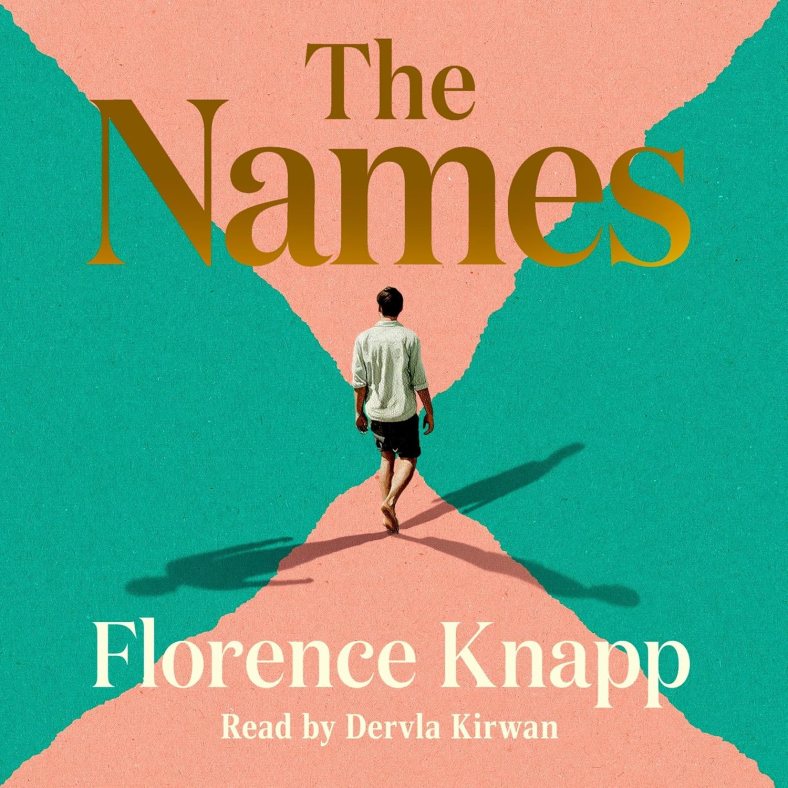
It is 1987, and in the aftermath of a great storm, Cora sets out with her nine-year-old daughter to register the birth of her son. Her husband intends for her to follow a long-standing family tradition and call the baby after him. But when faced with the decision, Cora hesitates. Going against his wishes is a risk that will have consequences, but is it right for her child to inherit his name from generations of domineering men? The choice she makes in this moment will shape the course of their lives.
Seven years later, her son is Bear, a name chosen by his sister, and one that will prove as cataclysmic as the storm from which it emerged. Or he is Julian, the name his mother set her heart on, believing it will enable him to become his own person. Or he is Gordon, named after his father and raised in his cruel image – but is there still a chance to break the mould?h.
‘The Names’ (2025) is a roll of the dice read for me. It’s a debut novel with an intriguing premise that I came across in my local bookshop.. If it works, it’ll be wonderful. I listened to the prologue below and decided to give it a try.
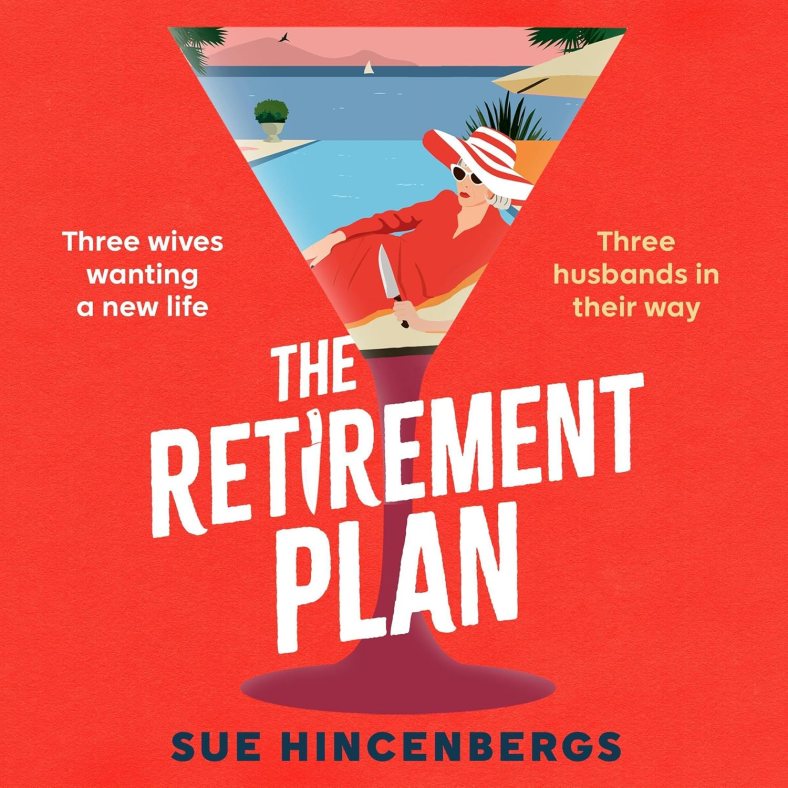
Pam, Nancy and Shalisa once imagined retirement would mean setting aside their worries, picking up their margaritas, and lying back in a hot tub. Right up until their husbands lost all their savings in a reckless investment.
Now, collecting their husbands’ life insurance is starting to sound more appealing than growing old with them. But enlisting the help of the local barber/hitman isn’t merely the most daring thing the friends have ever done – it’s also where the trouble really begins.
Because they don’t realise their husbands have some tricks up their sleeves. And there’s no turning back now . . .
‘The Retirement Plan’ (2025) is another debut novel and another Canadian author. I’m hoping its going to be a book that will keep me smiling. It has all the right elements: old people having to improvise solutions to unforseen problems, gender warfare, gentle humour and little bit of mayhem. Here’s the audiobook sample. It made me smile.
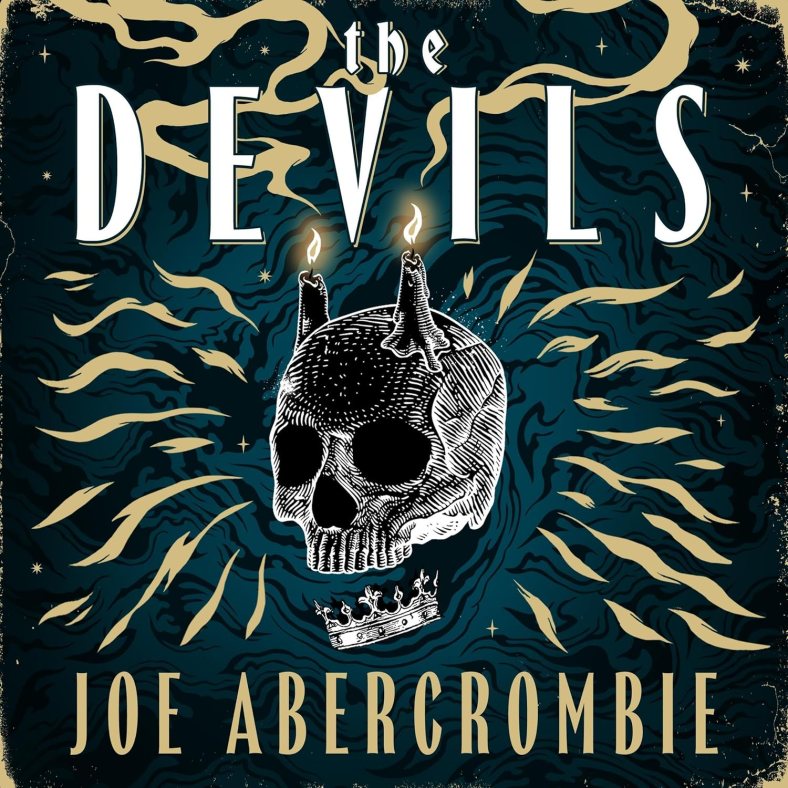
Europe stares into the abyss.
Plague and famine stalk the land, monsters lurk in every shadow and greedy princes care for nothing but their own ambitions. Only one thing is certain: the elves will come again, and they will eat everyone.
Sometimes, only the darkest paths lead towards the light. Paths on which the righteous will not dare to tread . . .
And so, buried beneath the sacred splendour of the Celestial Palace, is the secret Chapel of the Holy Expediency. For its congregation of convicted monsters there are no sins that have not been committed, no lines that will not be crossed, and no mission that cannot be turned into a disastrous bloodbath.
Now the hapless Brother Diaz must somehow bind the worst of the worst to a higher cause: to put a thief on the throne of Troy, and unite the sundered church against the coming apocalypse.
When you’re headed through hell, you need the devils on your side.
I should really be reading the third book in Joe Abercrombie’s ‘Shattered Sea‘ trilogy but his new series, set in an alternative medieval Europe, just sounds too good to miss. At a little over twenty-five hours, ‘The Devils’ (2025) is longer than my normal read but I’ve found that, with Joe Abercrombie the minutes fly by. I’m hoping this one will be fun rather than dark. Here’s the audiobook excerpt:
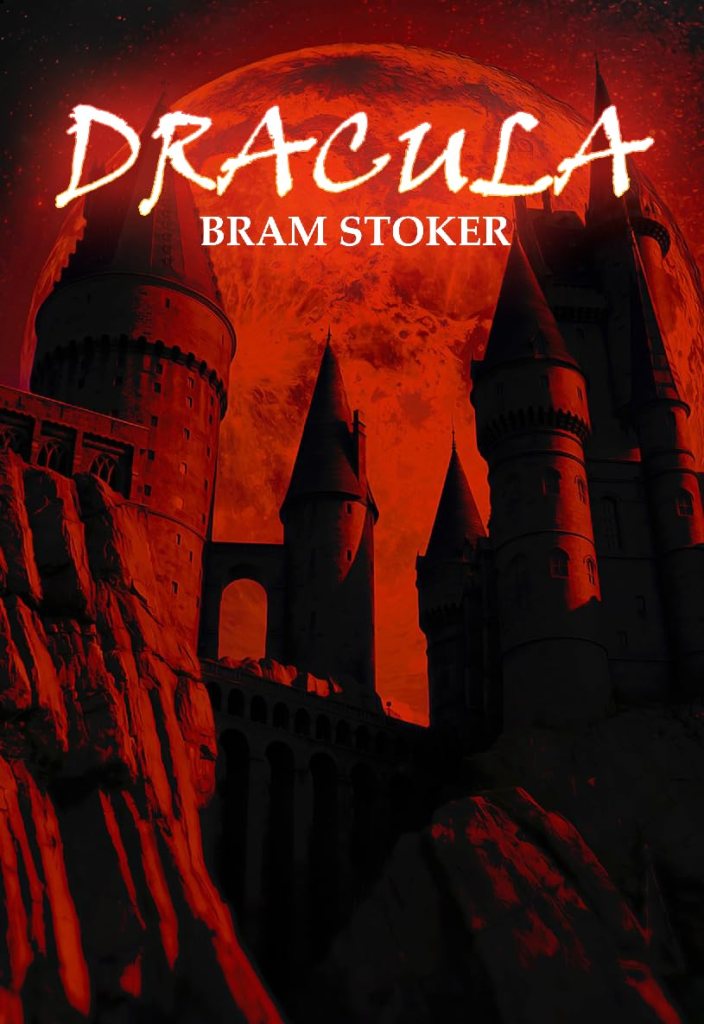
Dracula is a novel by Bram Stoker, published in 1897. As an epistolary novel, the narrative is related through letters, diary entries, and newspaper articles. It has no single protagonist, but opens with solicitor Jonathan Harker taking a business trip to stay at the castle of a Transylvanian nobleman, Count Dracula. Harker escapes the castle after discovering that Dracula is a vampire, and the Count moves to England and plagues the seaside town of Whitby. A small group, led by Abraham Van Helsing, hunt Dracula and, in the end, kill him.
Dracula was mostly written in the 1890s. Stoker produced over a hundred pages of notes for the novel, drawing extensively from Transylvanian folklore and history. Some scholars have suggested that the character of Dracula was inspired by historical figures like the Wallachian prince Vlad the Impaler or the countess Elizabeth Báthory, but there is widespread disagreement. Stoker’s notes mention neither figure. He found the name Dracula in Whitby’s public library while holidaying there, picking it because he thought it meant devil in Romanian.
I’ve never read Bram Stoker’s ‘Dracula‘ (1887) although I’ve seen dozens of Dracula movies. so I was intrigued when I was told about Dracula Daily. ‘Dracula‘ is an epsitalatory novel made of journal entries and letters, each of which bears a date between May and November. Dracula Daily invites participants to read and comment on each document on the day that it appear. It’s been up and running for about a week now and I’ve been having fun with it. I’ve also been pleasantly surprised at how well written the book is.
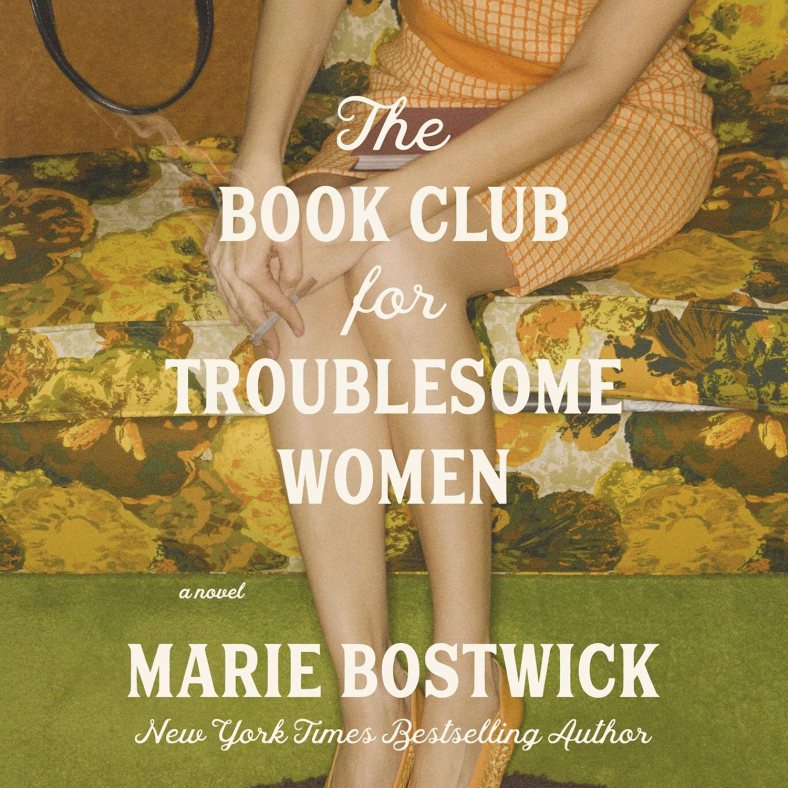
By 1960s standards, Margaret Ryan is living the American woman’s dream. She has a husband, three children, a station wagon, and a home in Concordia—one of Northern Virginia’s most exclusive and picturesque suburbs. She has a standing invitation to the neighborhood coffee klatch, and now, thanks to her husband, a new subscription to A Woman’s Place—a magazine that tells housewives like Margaret exactly who to be and what to buy. On paper, she has it all. So why doesn’t that feel like enough?
Margaret is thrown for a loop when she first meets Charlotte Gustafson, Concordia’s newest and most intriguing resident. As an excuse to be in the mysterious Charlotte’s orbit, Margaret concocts a book club get-together and invites two other neighborhood women—Bitsy and Viv—to the inaugural meeting. As the women share secrets, cocktails, and their honest reactions to the controversial bestseller The Feminine Mystique, they begin to discover that the American dream they’d been sold isn’t all roses and sunshine—and that their secret longing for more is something they share.
Nicknaming themselves the Bettys, after Betty Friedan, these four friends have no idea their impromptu club and the books they read together will become the glue that helps them hold fast through tears, triumphs, angst, and arguments—and what will prove to be the most consequential and freeing year of their lives.
I’ve never read Marie Bostwick before, although I’ve been aware of her historical fiction for a while. My wife and I were browsing book titles and this one caught her eye. It’s a little different from my normal fare but I think it has the potential to be an intense read, especially in today’s climate where the women of America are being pushed to go back to the way of life that tramelled the lives of the women in this book. Here’s the audiobook extract.
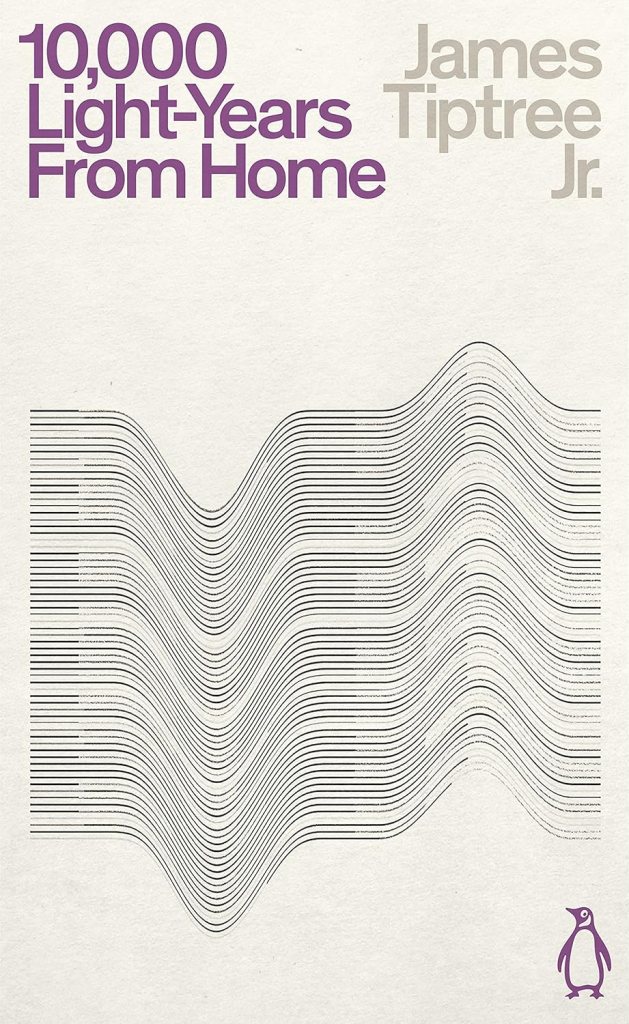
Fifteen Science Fiction short stories
AND I AWOKE AND FOUND ME ON THE COLD HILL’S SIDE
THE SNOWS ARE MELTED, THE SNOWS ARE GONE
THE PEACEFULNESS OF VIVYAN
MAMA CAME HOME
HELP
PAINWISE
FAITHFUL TO THEE, TERRA, IN OUR FASHION
THE MAN DOORS SAID HELLO TO
THE MAN WHO WALKED HOME
FOREVER TO A HUDSON BAY BLANKET
I’LL BE WAITING FOR YOU WHEN THE SWIMMING POOL IS EMPTY
I’M TOO BIG BUT I LOVE TO PLAY
BIRTH OF A SALESMAN
MOTHER IN THE SKY WITH DIAMONDS
BEAM US HOME
A few years ago, after I admitted to myself that my eyesight was no longer good enough to read the small text in mass market paperbacks, I started to release my much-loved books into the wild. This short story collection, along with two other short story collections and a novel by James Tiptree Jr were among them. I was delighted when I was offered a Kindle version of the book for £0.99. I first read this collection fifty years ago and thought it was remarkable. I re-read the first story this week and found that it is still remarkable. I look forward to reading the rest.
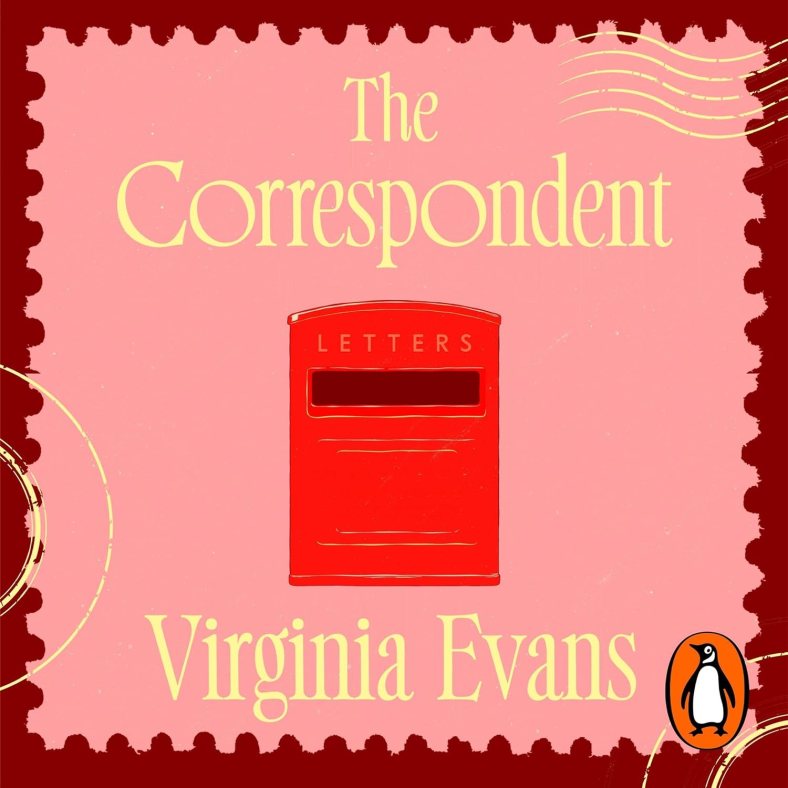
In her letters to family and friends we come to know the life of Sybil Van Antwerp: stubborn, cantankerous, opinionated, always steadfast in her belief in the power of the written word.
But as the clock begins to tick for Sybil, the need for a few post-scripts to the life she’s led becomes apparent. Fixing her difficult relationship with her children. Taking a final chance at romance. Atoning for an old legal case which has come back to haunt her. And finally, reckoning with a devastating loss that she has spent the last thirty years holding close to her chest.
‘The Correspondent‘ (2025) calls out to me because: it’s about an old person trying to make sense of their life as they approach the end of it, it’s an epistalotory novel about a woman who values the written world and the audiobook is a full-cast production that promises to bring the letters to life. Here’s a sample of the audiobook
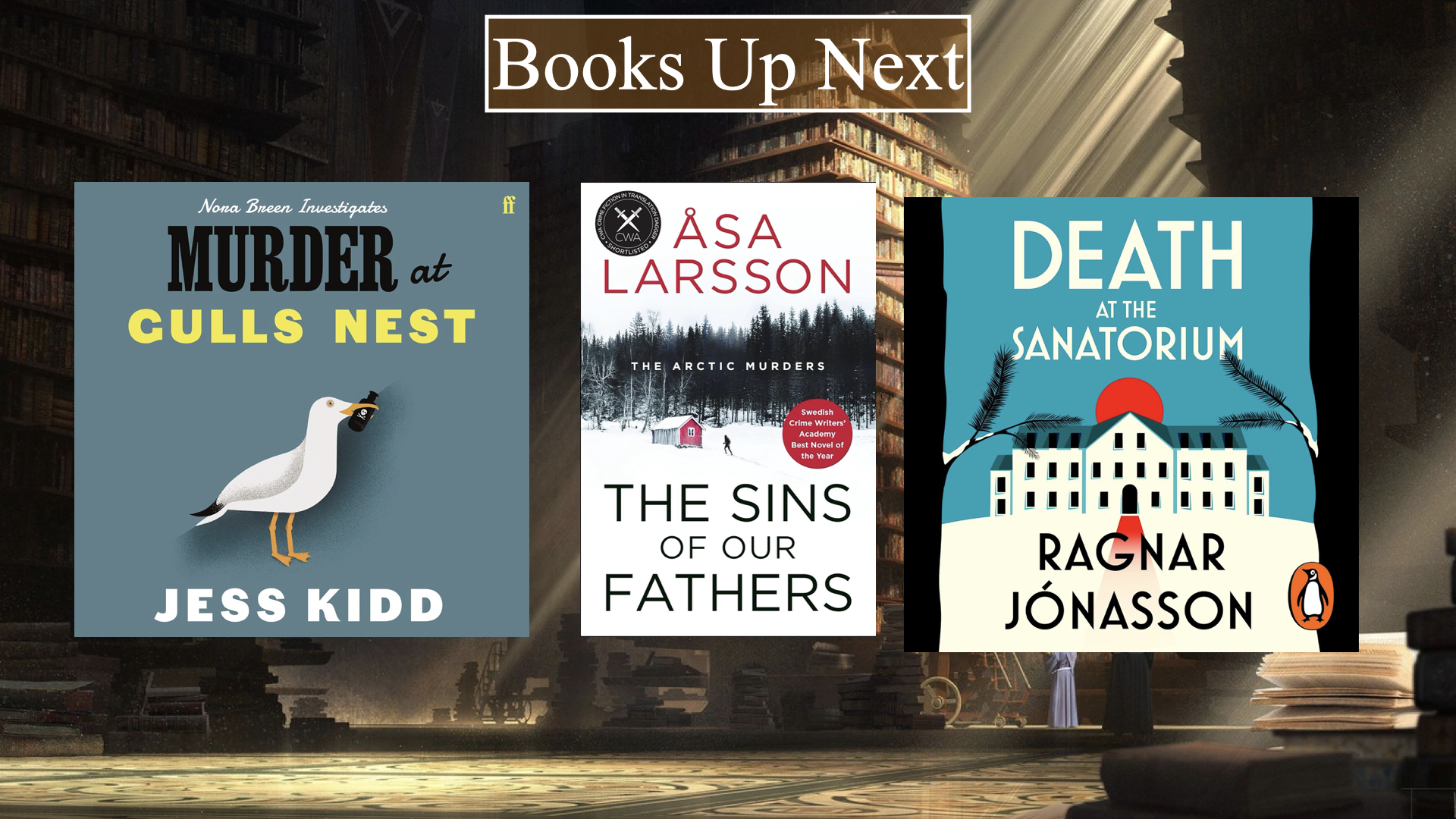

After thirty years in a convent, Nora Breen has thrown off her habit. Her fellow sister Frieda has gone missing and it’s up to Nora to find her. Nora’s only clue is that Frieda was last seen at Gulls Nest boarding house. So she travels down to the seaside town of Gore-on-Sea, takes a room and settles in to watch and listen. Over dubious – and sometimes downright inedible – dinners, Nora gathers evidence about the other lodgers. At long last, she has found an outlet for her powers of observation and, well, nosiness.
When one of the lodgers is found dead, Nora decides she must find the murderer. Not least because she suspects the victim knew Frieda. Could solving this mystery help her to understand what has happened to her friend?
I was drawn to ‘Murder At Gulls Nest‘ (2025) by the cover. I did wonder how to read the title, given the absence of an apostrophe before the S in Gulls, but I was interested enough to browse the book, When I saw that Jess Kidd had started a ‘1950s seaside mystery series, featuring sharp-eyed former nun Nora Breen.‘ I knew I had to try it. I’m hoping for laughs, eccentric characters and a good mystery.

Forensic pathologist Lars Pohjanen has only a few weeks to live when he asks Rebecka Martinsson to investigate a murder that has long since passed the statute of limitations. A body found in a freezer at the home of the deceased alcoholic, Henry Pekkari, has been identified as a man who disappeared without a trace in 1962: the father of Swedish Olympic boxing champion Börje Ström. Rebecka wants nothing to do with a fifty-year-old case – she has enough to worry about. But how can she ignore a dying man’s wish?
When the post-mortem confirms that Pekkari, too, was murdered, Rebecka has a red-hot investigation on her hands. But what does it have to do with the body kept in his freezer for decades?
Meanwhile, the city of Kiruna is being torn down and moved a few kilometres east, to make way for the mine that has been devouring the city from below. With the city in flux, the tentacles of organized crime are slowly taking over . . .
‘The Sins Of Our Fathers‘ (2025) is the sixth and final book in the Rebecka Martinsson series that I’ve been reading since October last year. I’m almost reluctant to read it because it’s the last book. I’m sure it will be a good one. It won the Svenska Deckarakademins pris för bästa svenska kriminalroman (2021), Sweden’s top Crime Fiction prize.

Akureyri, Northern Iceland, 1983.
High up in the most northern part of Iceland stands The Akureyri Sanatorium. Once a hospital dedicated to treating tuberculosis, it now sits haunted by the ghosts of its past.
One wing of the hospital remains open and houses six employees: the caretaker, two doctors, two nurses and a young research assistant.
Despite the wards closing decades ago they remain at the hospital to conduct research. But the cold corridors, draughty windows and echoey halls are constant reminders of the building’s dark history.
When one of the nurses, Yrsa, is found brutally murdered, they discover that death has never left this place – and neither did its secrets. None can escape this terrifying legacy.
Despite just five suspects the case is never solved and remains open for two decades. Until a young criminologist named Helgi Reykdal attempts to finally lay the ghosts of the hospital’s past to rest . . .
I enjoyed the first two books in Ragnar Jónasson’s ‘Hidden Iceland’ series ‘The Darkness‘ and ‘The Island‘ so, when I saw that his latest book (available in English) was an Agatha Christie influenced period piece, I had to give it a try. Based on the audiobook sample, I’m looking forward to Sam Woolf’s narration. He has a very rich voice.
 Mike Finn's Fiction