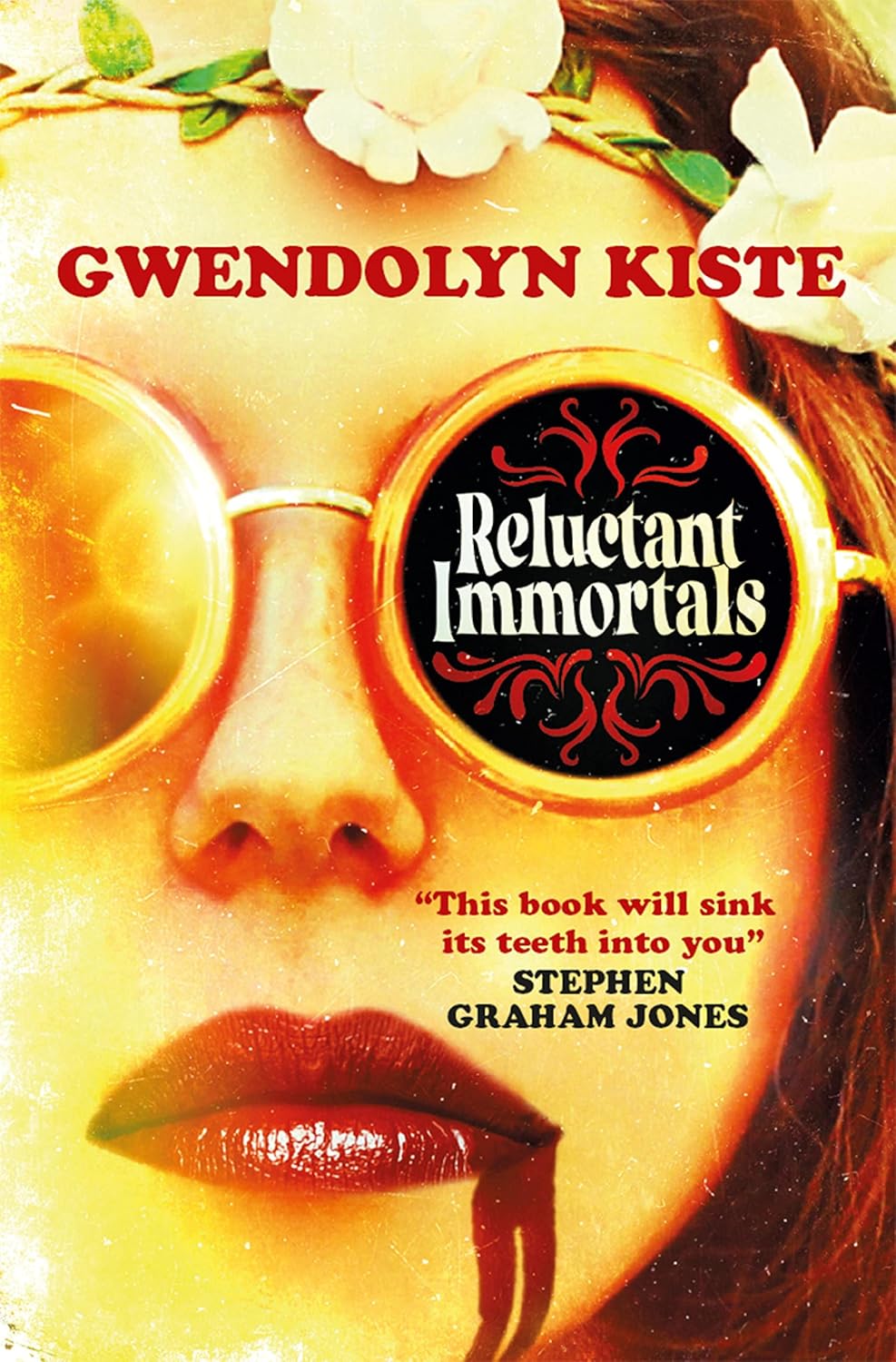
Los Angeles, 1967. Lucy Westenra and Bertha Mason – the forgotten women in Dracula and Jane Eyre – have been existing as undead immortals for centuries, unable to die and still tormented by the monsters that made them.
Lucy has long fought against Dracula’s intoxicating thrall, refusing his charismatic darkness and her ensuing appetite for blood. Bertha Mason, the madwoman in the attic, is still pursued from afar by Mr Rochester, who wants to add her to his collection of devoted female followers.
Then Dracula and Rochester make a shocking return in San Francisco. To finally write their own story, Lucy and Bertha must boldly reclaim their stories from the men who tried to erase them in this harrowing gothic tale of love, betrayal and coercion.
Reluctant Immortals‘ was my second book by Gwendolyn Kiste. It was just as strange and just as compelling as ‘The Rust Maidens‘ (2019). Like ‘The Rust Maidens’, this book was powered by rage at how men treat women, but this time that rage was shaped and focused through the strength of friendship and mutual support between two women who had (almost) freed themselves from abusive men.
The premise threw me a little at first: Lucy Westenra from ‘Dracula‘ and Bertha Mason, the wife in the attic from ‘Jane Eyre‘, immortal and living together in Los Angeles in 1967. They are still living in the shadow of the men they’ve tried to free themselves from. Lucy is guarding the urns holding Dracula’s ashes. Keeping them intact and separated is the only way to prevent Dracula’s return. Bertha is still hiding from Rochester, who has never stopped hunting her. Somehow (and the explanation is original and a bit of a stretch), Rochester and Bertha are as immortal as Lucy and Dracula. Lucy feels her vampirism as a curse that she has to control every day and which brings rot and decay to any place she spends time in. Thanks to her years locked in an attic, Bertha cannot bear to be in a confined space. The pair of them seek solace by escaping into the movies showing at one of the last remaining Drive-in movie lots. It’s not just Lucy and Dracula who are immortal,
I learned all this in the first quarter of the book. I was still struggling to swallow it all when Jane Eyre, who is also immortal and somehow bound to Bertha, turned up. That felt like too much to take in. I almost stopped reading.
Instead, I took a deep breath, reminded myself that this was speculative fiction and that I should cut it some slack.
I’m glad I did because, once I relaxed and accepted the story on its own terms, it became a compelling tale that I had to learn the end of. The pace of the story picked up as Lucy and Bertha’s life in L.A. turned to ash and they headed to San Francisco during the ‘Summer Of Love’ to find Jane, who seemed to have gone back to Rochester.
I loved the unromantic but non-judgmental depiction of hippies. The dirt, the desperation and the self-delusion of the lifestyle were clearly shown, but so was the hope that drove these lost young people to search for something better than the fractured lives they’d lived.
The anarchic, a-summer-outside-of-time atmosphere of San Francisco provided the perfect setting for Lucy and Bertha to confront the malignant masculinity and insatiable hunger of Dracula and Rochester. I was glad that this wasn’t a Marvel Universe Good Guys versus Bad Guys kind of confrontation, but rather an opportunity for Lucy and Bertha to stand their ground.
Lucy was the driving force of the book. I loved how she saw the world and the courage and discipline she showed in shaping her own life and refusing to be ruled by the expectations and constraints powerful men tried to impose on her.
I hope that, sometime soon, one of the new wave of women directors in Hollywood picks this novel up and turns it into an extraordinary film.
 Mike Finn's Fiction