
This week, it feels like I’ve been squeezing my books into the gaps between appointments at places I didn’t particularly want to be at. Still, there are few better distractions than reading or buying books. They’ve kept me calm.
Anyway, here’s what’s been happening this week and what’s up next.
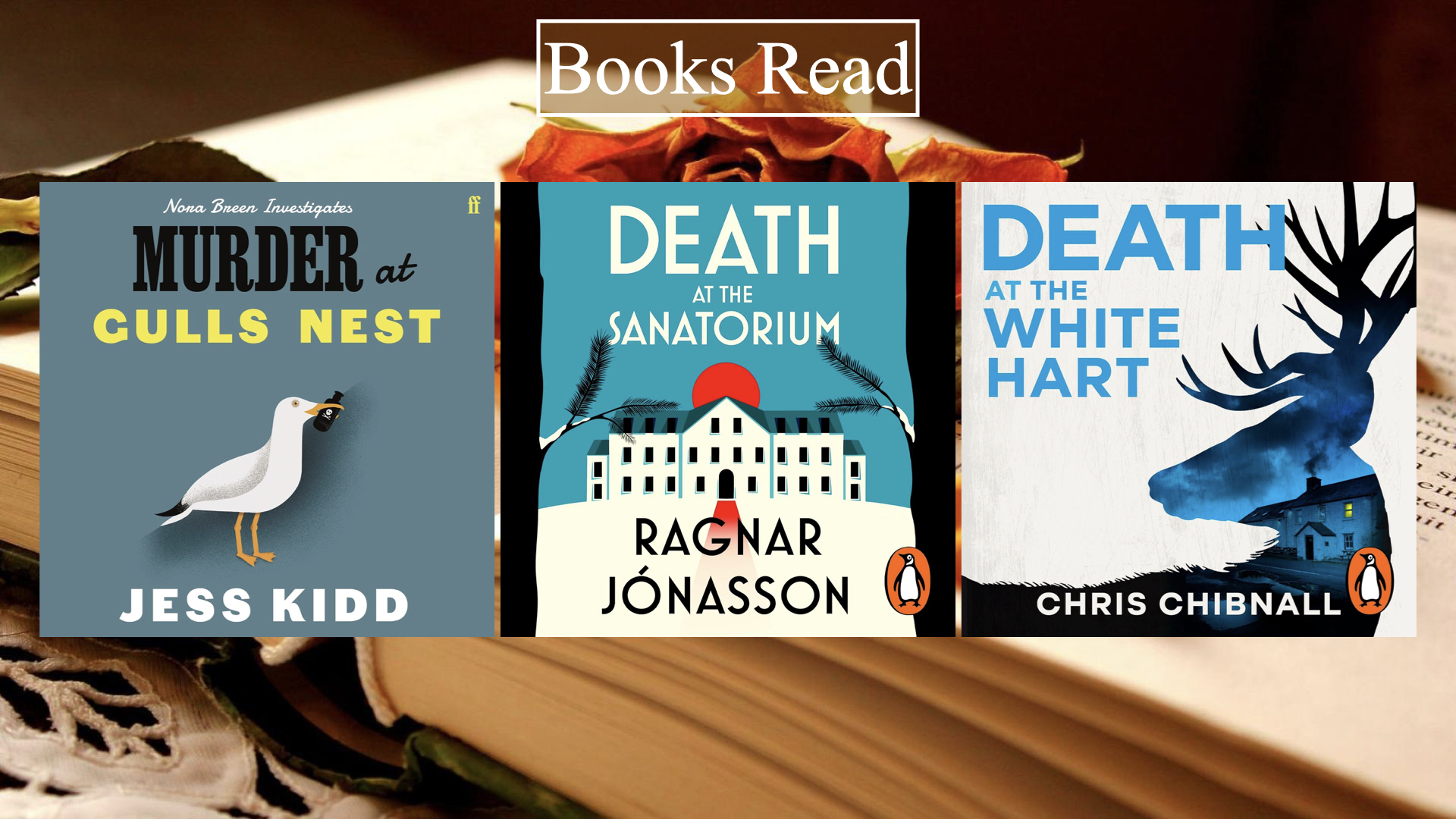
This week has been all about murder, one at a 1950s guesthouse on the Kentish coast, one at a sanitorium in the far north of Iceland and one at a village pub in Dorset. They’ve all been entertaining reads.
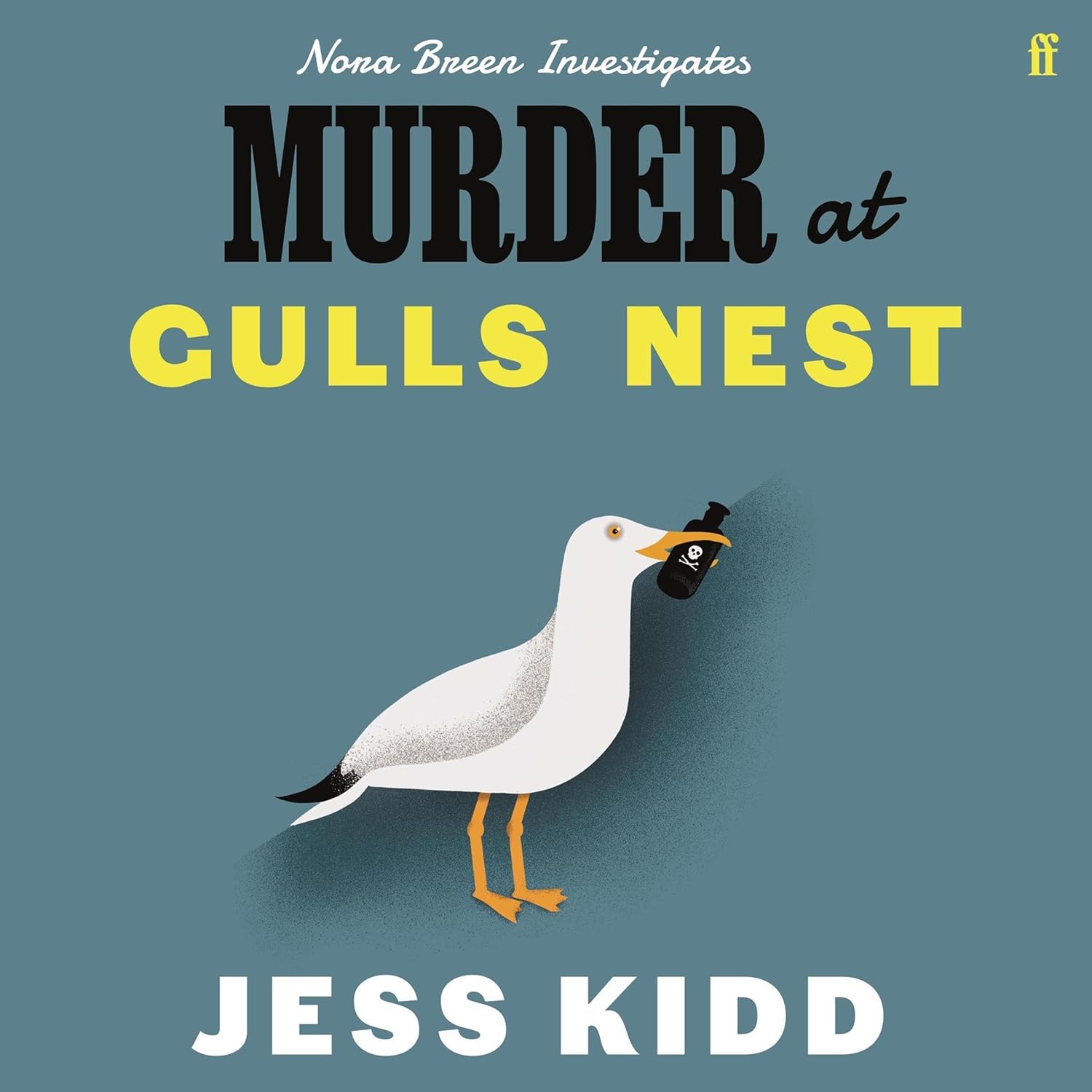
‘Murder At Gulls Nest’ (2025) was a delightful surprise. Set on the coast of Kent in 1954, it kicks off a murder mystery series around an unusual and engaging amateur sleuth. Nora Breen is an Irishwoman who took holy orders in her teens and has spent the last thirty years in the mostly silent, prayerful seclusion of a Carmelite order in rural Yorkshire. The book opens with Nora leaving her life as Sister Agnes behind and making her way in the world. She starts by taking up residence at Gulls Nest, a slightly run-down boarding house on the coast of Kent. She is there to find out what happened to another former sister whose regular letters to Nora ceased unexpectedly and without explanation.
Nora is a wonderfully rounded character. Her personality dominates the book. Her insatiable curiosity nosiness, her quick temper, her refusal to accept constraints imposed on her and her empathy for and insight into the people around her.
Nora does not share the reason for her stay at Gulls Nest with the other guests. She is just getting to know them when one of them is found dead. Nora believes the guest was murdered and sets about finding out by whom.
I loved how real the people in the book felt. The dialogue was spot on. The people were eccentric but not unbelievably so. Nora was magnificent. The plot was engaging and I completely failed to work out who the killer was.
I’m hooked on this series now. I’ll pre-order the next one as soon as it becomes available.

This was a slightly odd novel. The author sees it as being heavily influenced by Agatha Christie, whose work he’s been reading and translating since childhood, but to me, it felt too bleak to be a Golden Age Mystery.
I found the writing little dry. The two timelines the story was told on worked well enough. The 1983 murder investigation seems convincingly slapdash. The 2012 story seemed to me a bloodless thing. I couldn’t connect with Helgi, the main character. I enjoyed the inclusion of Detective Inspector Hulda Hermannsdóttir from the Dark Iceland series in both timelines.
Puzzling out how the two timelines would eventually connect carried me through most of the story. The plot was both dark and twisty. I again failed to work out who the murderer was.
The ending was abrupt and strange. I don’t think either the abruptness or the strangeness improved the book.

This debut novel by the creator of ‘Broadchurch‘ carried me along happily until almost the end. I loved how cleverly the story was structured to set up the situation, introduce the characters and sustain suspense. The writing moved the plot along smoothly. The dialogue worked well, as did the mix of plot-related disclosure and the disclosure of personal backstories for the two main police officers. The nine-year-old girl in the story stole the show but all of the characters were convincing. None of them felt as though they were just there to move the plot along. The plot itself was satisfying.
In my mind, I was thinking of this as an impressive four-star read until just before the end of the book. This wasn’t one of those times when the resolution of the mystery was a letdown. The mystery and its resolution were satisfying. Unfortunately, the final chapters of the book dragged, firstly because the murderer’s explanation of how the murder was done was tediously long and secondly because the author wanted to give all of the characters a few moments of Happily Ever After before closing the book.
Still, if there is a second book, I’ll be happy to read it.

I’ve added an eclectic selection to my shelves this week: a Science Fiction novel, an Historical Mystery, a Nordic Noir mystery, an American Golden Age Mystery and a biography. I’m hoping to get to all of them very soon. I just need a way of making each day forty-eight hours long and I’ll have all the time I need for reading.

On the distant world of Kiln lie the ruins of an alien civilization. It’s the greatest discovery in humanity’s spacefaring history – yet who were its builders and where did they go?
Professor Arton Daghdev had always wanted to study alien life up close. Then his wishes become a reality in the worst way. His political activism sees him exiled from Earth to Kiln’s extrasolar labour camp. There, he’s condemned to work under an alien sky until he dies.
Kiln boasts a ravenous, chaotic ecosystem like nothing seen on Earth. The monstrous alien life interacts in surprising, sometimes shocking ways with the human body, so Arton will risk death on a daily basis. However, the camp’s oppressive regime might just kill him first. If Arton can somehow escape both fates, the world of Kiln holds a wondrous, terrible secret. It will redefine life and intelligence as he knows it, and might just set him free . . .
Sometimes I love Adrian Tchaikovsky’s novels and sometimes they fall flat. I’m hoping this will be one of the ones I enjoy. The classic understanding-an-alien-ecosystem-and-adapting-to-it premise appeals to me, as does the idea that our hero has been condemned to a penal colony but is still unbowed. Click on the SoundCloud link below to hear a sample.
LONDON 1940
Charlie Matters’ life has always been a fight for survival. Orphaned with no prospects, Charlie steals what he needs, living day-to-day until he can enlist in the battle against the Germans. He miraculously emerges unscathed from the Blitz, but there’s no telling when the next bomb will fall, and whether it will be the one to end his life.
Molly Wakefield’s dreams of a joyful homecoming are all she’s had to hold on to after being evacuated to the countryside via ‘Operation Pied Piper’ five years before. But when she finally returns to the city, Molly faces a London changed beyond recognition, and the devastating news that neither of her parents are there, only her old nanny, Mrs. Pride.
Charlie and Molly’s paths converge when they both seek solace at ‘The Book Keep’, where they find an unexpected ally and protector in the bookshop’s owner, widower Ignatius Oliver. But the trio’s newfound peace is jeopardized as past secrets catch up with them: Charlie’s illicit activities have not gone unnoticed, an ominous shadow has trailed Molly since her return, and Ignatius is burdened by a secret that contributed to his wife’s death. Can they help one another survive this turbulent time? Or will they be ripped apart from the last people they hold dear?
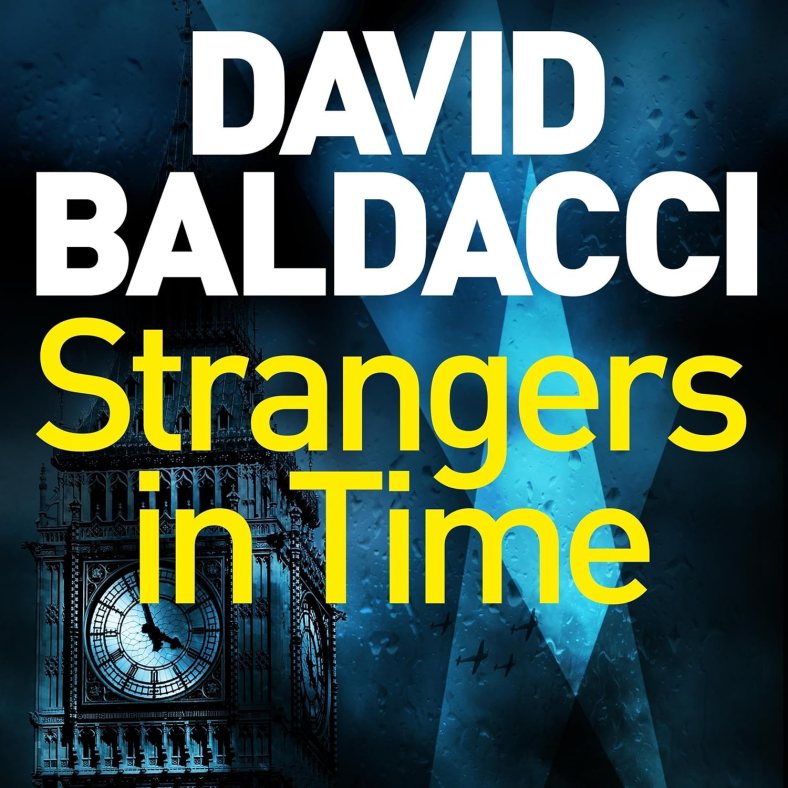
My last three David Baldacci books have been Travis Devine thrillers. I’ve enjoyed them as entertaining adventures. I was looking forward to see if there was a fourth book in the series when I found that David Baldacci’s latest book is something quite different. ‘Strangers In Time‘ (2025) is set in London during World War II. The main characters are English and one of them is a woman. I’m intrigued to see what he does with this.
I’ve picked up the audiobook version because it’s close to a full cast production. As with the Travie Devine books, this audiobook leaves the text unaltered but has the dialogue spoken by a narrator who is specific to each character. Click on the SoundCloud link below to hear a sample.
In the middle of the North Sea, between the UK and Denmark, lies the beautiful and rugged island nation of Doggerland.
Detective Inspector Karen Eiken Hornby has returned to the main island, Heimö, after many years in London and has worked hard to become one of the few female police officers in Doggerland.
So, when she wakes up in a hotel room next to her boss, Jounas Smeed, she knows she’s made a big mistake. But things are about to get worse: later that day, Jounas’s ex-wife is found brutally murdered. And Karen is the only one who can give him an alibi.
The news sends shockwaves through the tight-knit island community, and with no leads and no obvious motive for the murder, Karen struggles to find the killer in a race against time.
Soon she starts to suspect that the truth might lie in Doggerland’s history. And the deeper she digs, the clearer it becomes that even small islands can hide deadly secrets . . .
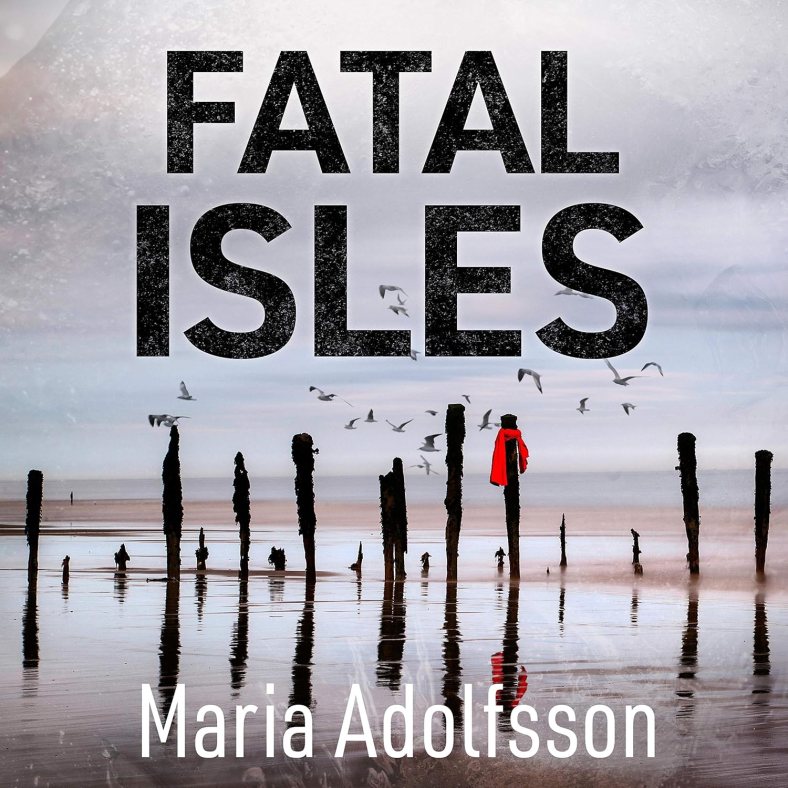
What drew me to ‘Fatal Isles’ (2018) is that its the first book in a seven-book Nordic Noir series for which the author has created the fictional island nation of Doggerland, sitting in the North Sea between the UK and Denmark. I love the boldness of that. I’m hoping that Maria Adolfsson delivers some intriguing world-building as well as a dark mystery.
The first three books in the series are available in English as audiobooks and ebooks, so I’m hoping this will be the start of a new series for me.
Click on the YouTube link to hear a sample.
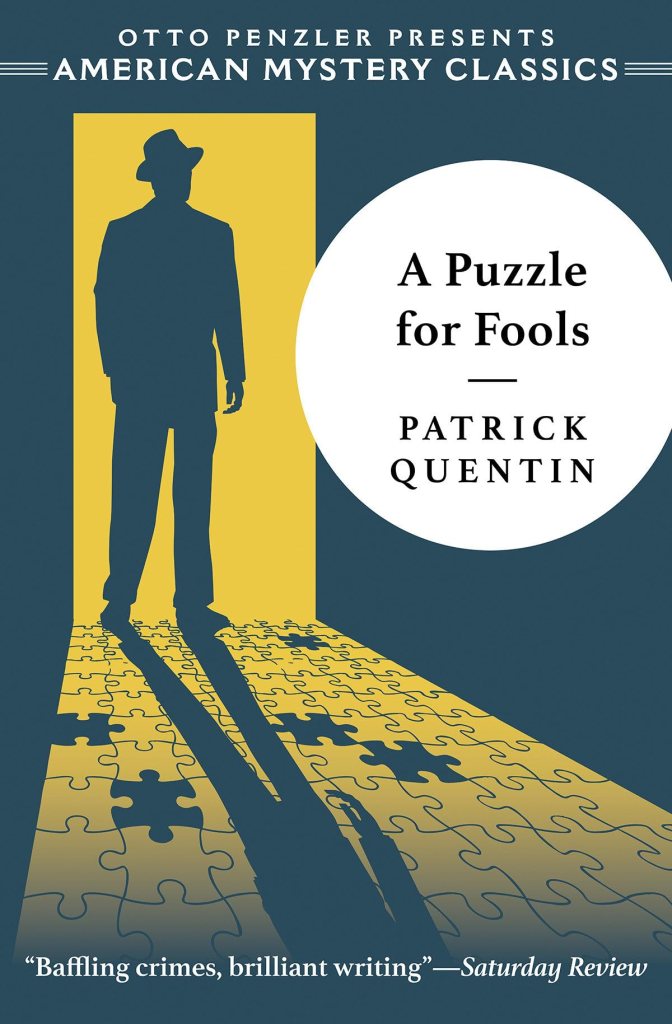
Peter Duluth turned to drink after his wife’s untimely death; now, two years later and desperate to dry out, he enters a sanitorium, hoping to turn his life around. But he doesn’t quite get the calm relaxation he expected. Strange, malevolent occurrences plague the hospital – and Peter hears his own voice crying out the warning ‘There will be murder.’
With a murderer is on the loose, and the staff every bit as erratic as the idiosyncratic patients, everyone is a suspect – including Peter, who is desperate to clear his name before the killer strikes again.
The main character in Ragnar Jonasson’s ‘Death At The Sanatorium‘ is a fan of Golden Age Mysteries. He was reading a Peter Deluth mystery by Patrick Quentin. I’d never heard of the series. I looked it up a found that the first book is set in a Sanatorium. Points Jonasson for that. I also found that this “American Mystery Classic” was written by two Englishmen who had emmigrated to New York. I read the first few paragraphs and decided to buy the book. Here’s how it starts:
“It always got worse at night. And that particular night was the first time they had left me without any kind of dope to help me sleep.
Moreno, the psychiatrist in charge, had given me one of those dark, impatient looks of his and said: “You’ve got to start standing on your own feet again, Mr. Duluth. We’ve coddled you long enough.”
I told him he didn’t make sense; that surely I paid enough per week to cover the expense of a triple bromide.
I pleaded; I argued; finally I got fighting mad and vented on him that remarkable vocabulary which is vouchsafed only to alcoholics who have been shut up for a couple of weeks without liquor.
But Moreno just shrugged, as much as to say:
“These drunks are more trouble than they’re worth.”
I had started to swear again and then I thought: “What’s the use?”
I couldn’t tell him the real reason why I wanted dope. I wasn’t going to admit that I was afraid; blindly, horribly afraid, like a kid that’s going to be left alone in the dark.

James Tiptree, Jr. burst onto the science fiction scene in the 1970s with a series of hard-edged, provocative short stories. Hailed as a brilliant masculine writer with a deep sympathy for his female characters, he penned such classics as Houston, Houston, Do You Read? and The Women Men Don’t See.
For years he corresponded with Philip K. Dick, Harlan Ellison, Ursula Le Guin. No one knew his true identity.
Then the cover was blown on his alter A sixty-one-year-old woman named Alice Sheldon. As a child, she explored Africa with her mother. Later, made into a debutante, she eloped with one of the guests at the party. She was an artist, a chicken farmer, a World War II intelligence officer, a CIA agent, an experimental psychologist. Devoted to her second husband, she struggled with her feelings for women. In 1987, her suicide shocked friends and fans.
The James Tiptree, Jr. Award was created to honor science fiction or fantasy that explores our understanding of gender. This fascinating biography by Julie Phillips, ten years in the making, is based on extensive research, exclusive interviews, and full access to Alice Sheldon’s papers.
I’m currently reading James Tiptree Jr’s short story collection ‘10,000 Light-Years From Home’. It contained a short author bio that was so surprising that I went looking for more. I don’t normally read biographies but I’m fascinated by the details of Alice Sheldon’s life that I’ve read so far.

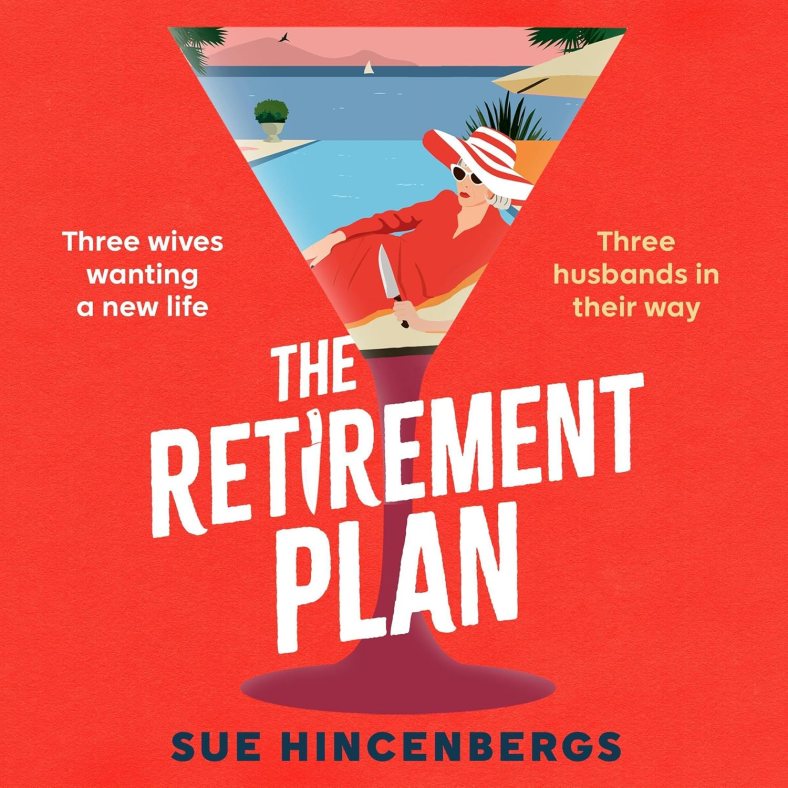
Pam, Nancy and Shalisa once imagined retirement would mean setting aside their worries, picking up their margaritas, and lying back in a hot tub. Right up until their husbands lost all their savings in a reckless investment.
Now, collecting their husbands’ life insurance is starting to sound more appealing than growing old with them. But enlisting the help of the local barber/hitman isn’t merely the most daring thing the friends have ever done – it’s also where the trouble really begins.
Because they don’t realise their husbands have some tricks up their sleeves. And there’s no turning back now . . .
‘The Retirement Plan’ (2025) is another debut novel and another Canadian author. I’m hoping its going to be a book that will keep me smiling. It has all the right elements: old people having to improvise solutions to unforseen problems, gender warfare, gentle humour and little bit of mayhem.

Maggie Bird’s ‘book group’ is an unusual one – a group of retired spies living an anonymous life in the seaside town of Purity. And this summer they plan little more than ‘reading’ (whilst sipping martinis), and some gentle birdwatching.
But trouble is just around the corner as the summer guests arrive.
For acting Police Chief Jo Thibodeau, summer brings its own problems – packed streets, bar brawls, petty theft. And now, a missing teenager down by the lake.
When their good friend becomes a prime suspect in the girl’s disappearance, Maggie and her Martini Club must put down their binoculars and roll up their sleeves. Leaving Jo to deal with not only a powerful family desperate for answers, but a meddlesome group of retirees.
Can Jo and the Martini Club find a way to work together, as they uncover one of the deadliest scandals their small town has ever seen?
‘The Summer Guests’ (2025) is the second book in Tess Gerritsen’s series about a bunch of (mostly) retired CIA agents who have made their homes in a small town in rural Maine. I enjoyed the first one, ‘The Spy Coast‘ and I’m hoping this one will be even better.
 Mike Finn's Fiction