5th June: Dr. Seward’s Diary
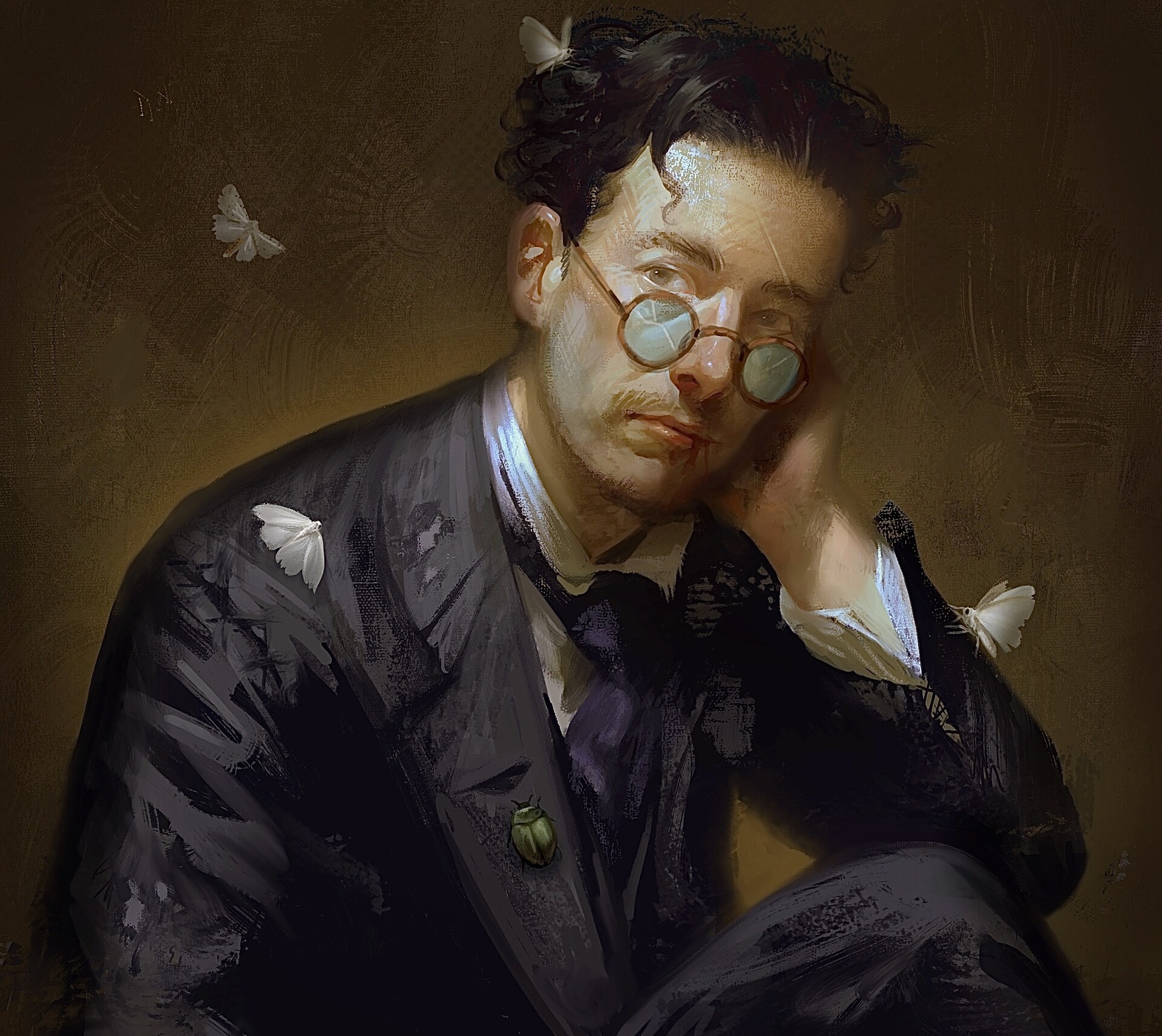
In some ways, I find Seward creepier than Dracula. He’s controlling, voyeuristic and very bad at predicting his patients’ behaviour. In this entry, Seward describes Renfield, a patient he seems obsessed with, as selfish, secretive and set upon some unknown purpose.
Yet he doesn’t see Renfield as dangerous because “His redeeming quality is a love of animals.”
The man collects flies. Is THAT a love of animals? Somehow I doubt that Seward has a dog or even a cat in his life.
And I wonder how many men, even in 1897, would have used the word ‘expostulate.’ Seward takes himself way too seriously.
I like the idea of a purposeful (albeit mentally disturbed) Renfield, who hasn’t decayed into something totally servile yet.
In the graphic below, the illustrator Amber Goodhart has drawn Renfield in a way that I think captures him at this point in the story.
31st May: Harker’s Journal
Harker awakes to find that his notes, memoranda, papers relating to railways and travel, his letter of credit, and the clothes he travelled in have all disappeared overnight.
Harker has been saying that he’s felt like a prison since 12th May and yet his reaction to finding everything that he might need if he can escape the castle is shock. He ends by writing “This looked like some new scheme of villainy…”.
I’m willing to bet that Harker didn’t graduate at the top of his class.
28th May: Harker’s Jounral
In this short entry, Harker tries to smuggle out letters to his boss and to Mina (in shorthand) back in England but is thrwarted by Dracula who, very creepily, makes a point of letter Harker know his letters have been intercepted.
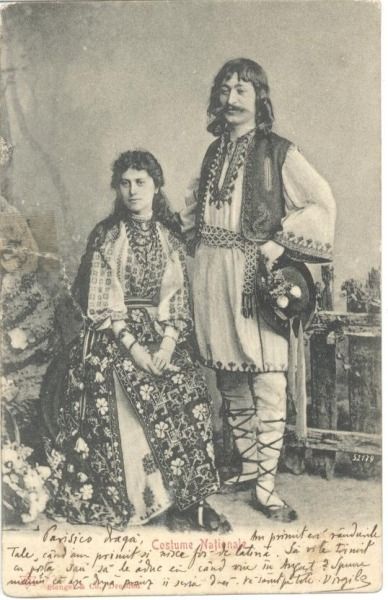
Harker is so deperate that he puts his trust in a “band of Szgany have come to the castle, and are encamped in the courtyard.” even though he knows that the Szagany “attach themselves as a rule to some great noble or boyar,”. So who did he think the Szagany camped in the courtyard of Castle Dracula might be loyal to?
Perhaps he discounted any capacity for loyalty. He describes them as “allied to the ordinary gipsies all the world over” and labels them as ‘almost beyond the law’, which is close to calling them criminals. That’s not surprising perhaps, as the Egyptians Act of 1530, which tried to ban Roma from England, was only repealed a few decades before ‘Dracula‘ was publshed. He describes them as “fearless and without religion, save superstition, and they talk only their own varieties of the Romany tongue.” I doubt he knew that their language, derived from Sanskrit, was more ancient than his own.
Here’s a Victorian Postcard view of the Szagany. They must have seemed quite exotic to the English middle-class,
I liked the final sentence of the journal entry. Harker, surprised at his ability to sleep when so threatened, writes: “Despair has its own calms.”
26th May: Telegram from Arthur Holmwood to Quincey P. Morris.
Short and sweet but really, can you trust an English gentleman who styles himself as ART? Sounds like the perfect match for Barbie Lucy.
25th May: Dr. Seward’s Diary (Kept in phonograph) and Letter, Quincey P. Morris to Hon. Arthur Holmwood.
We get to know a little more about the two men whose proposals Lucy rejected.
I liked the pen sketch of Seward. His use of a phonohgraph and Latin tags establish him as pompous and smug. His assessment of Renfield, one of his patients, is free of empathy. His conclusion, that Renfield is dangerous because he is unselfish caught my attention. His final note to himself mixes physics and psychology in an original but unconvincing way: “when self is the fixed point the centripetal force is balanced with the centrifugal; when duty, a cause, etc., is the fixed point, the latter force is paramount, and only accident or a series of accidents can balance it.” I think this could be a very early example of psychobabble. Today, this guy would have a popular self-help podcast.
Quincy P. Morris’s letter is affable and aimed at bringing all three of Lucy’s suitors together over drinks and a male. The language is bizarre. I wonder if any American actually wrote that way in 1887. It’s a long way from the dialogue in ‘The Bostonians‘. I feel like I’m reading something with all the authenticity of Buffalo Bill Cody’s Wild West Show.
24th May: Letter, Lucy Westenra to Mina Murray.
This is another point where the chronology of the documents differs from the order of documents in the novel.
This is a light, fluffy letter in which Lucy explains that she’s had three proposals in one day. While Lucy does come across as shallow and vain in this, she tells her story with wit, good humour and comic timing.
It seems to me that Lucy would have loved TikTok.
This letter is like a pallet cleanser after all that Transylvanian Gothi gloom.
19th May: Harker’s Journal
I have to admire Dracula’s gall. He makes Tony Soprano seem timid and unambitious. He asks Harker to write post-dated letters confirming that he has left the castle and is on his way home. They both know that Harker isn’t going to be allowed to leave the castle. When Harker asks what dates he should use, he knows that the answer will tell him how long he has left to live.
18th May: Harker’s Journal
Harker wakes in his own bed but doesn’t remember how he got there. I admired him for trying to return in daylight to the room he saw the three women in. It’s his way of trying to hold on to his sanity.
16th May: Harker’s Journal
This is the point when Harker encounters the three women Dracula keeps in his castle. The movie makers love this scene. I’ve never read it before so I came to it with expectations shaped by the repressed sleaze of Hammer Horror and the soft porn vibes of Coppola’s ‘Bram Stoker’s Dracula’.
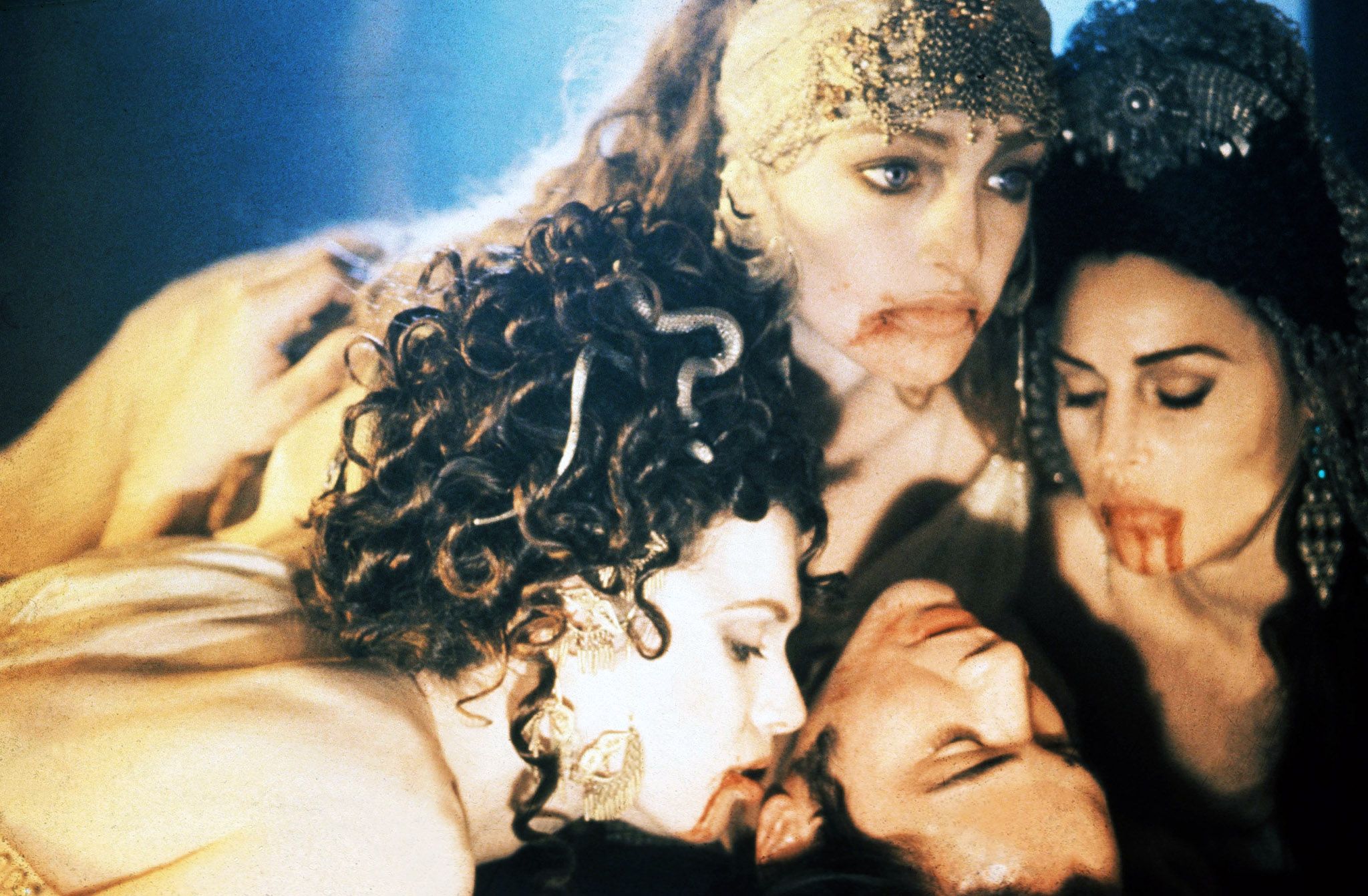
The scene in the book isn’t like either of those. It’s much more Victorian in tone. It is shocking but, for me at least, the shock came from something I don’t remember having seen in a movie.
The journal entry starts with Harker so deeply shocked by the events he’s about to recount that he fears he may be losing his sanity. He isn’t excited or guilty only afraid.
The encounter with the three women takes place when Harker is half asleep. He’s unable to move. barely ablet to raise an eyelid and not entirely sure that what he’s seeing is real. I think his inability to participate is partly a way of maintaining his innocence in the eyes of the Late Victorian audience and partly a way of establishing him as a victim.
The two dark-haired women defer to the blonde woman and only she approaches Harker. There is no seduction involved. It’s fairly clear that she sees him as a delicious snack rather than a sexual object. What comes to the fore is the unabashed hunger of a predator. I think this behaviour by a woman whom Harker describes initally as ‘a lady’ and then as a ‘girl’ is the part that would have shocked Victorians.
Here’s the description:
“The girl went on her knees, and bent over me, simply gloating. There was a deliberate voluptuousness which was both thrilling and repulsive, and as she arched her neck she actually licked her lips like an animal, till I could see in the moonlight the moisture shining on the scarlet lips and on the red tongue as it lapped the white sharp teeth. Lower and lower went her head as the lips went below the range of my mouth and chin and seemed to fasten on my throat. Then she paused, and I could hear the churning sound of her tongue as it licked her teeth and lips, and I could feel the hot breath on my neck. Then the skin of my throat began to tingle as one’s flesh does when the hand that is to tickle it approaches nearer, nearer. I could feel the soft, shivering touch of the lips on the super-sensitive skin of my throat, and the hard dents of two sharp teeth, just touching and pausing there. I closed my eyes in languorous ecstasy and waited, waited with beating heart.”
I think that would have been fairly racy stuff in 1887. I wonder what they made of Harker waiting in “langorous ecstasy“. I imagine this was the reaction expected of a woman, not a man.
What shocked me was what happened after Dracula arrives in the nick of time and drives the women off Harker, who he claims as his own. One of the women complains. It was what happened next that shocked me. Here’s the text:
““Are we to have nothing tonight?” said one of them, with a low laugh, as she pointed to the bag which he had thrown upon the floor, and which moved as though there were some living thing within it. For answer he nodded his head. One of the women jumped forward and opened it. If my ears did not deceive me there was a gasp and a low wail, as of a half smothered child. The women closed round, whilst I was aghast with horror. But as I looked, they disappeared, and with them the dreadful bag.*
I can’t find a single image of this part of the scene. I wonder if the Victorians were unphased by child abduction while we are reluctant to add it as entertainment.
Harker says that the women “simply seemed to fade into the rays of the moonlight and pass out through the window, for I could see outside the dim, shadowy forms for a moment before they entirely faded away,”
Which raises an important question.
If these women can go through a window without opening it and hover above a precipice, why does Count Dracula have to climb down a wall like a lizard?
15th May: Harker’s Journal
The Count leaves the Castle and Jonathan uses his absence as an opportunity to explore. Why the Count left by climbing head first down the wall rather than using the front door is not explained but it did reprise a powerful image that set the tone for some seriously Gothic spookiness.
I love the descriptions of the vast castle, surrounding on three side by a steep fall and thus able to have magnificent windows. Knowing more about Dracula than Jonathan does at this point, I found myself wondering how much the Count missed watching the sun set over the wilderness from these windows.
I liked the reminder that, when it was published, this was a very modern novel. At the end of the entry, Jonathan writes:
“It is the nineteenth century up-to-date with a vengeance. And yet, unless my senses deceive me, the old centuries had, and have, powers of their own which mere “modernity” cannot kill.”
To my twenty-first century eyes, Jonathan seems very much of his time. Here his is, an eductated man, engaged to an intelligent woman, and yet, as he sits at a writing desk, his mind produces this image of womahhood:
*Here I am, sitting at a little oak table where in old times possibly some fair lady sat to pen, with much thought and many blushes, her ill-spelt love letter, and writing in my diary in shorthand all that has happened since I closed it last.”
12th May: Harker’s Journal
This entry in Harker’s journal takes us from *The Count seems a little dodgy and Harker needs to watch his back* to “The Count is not human and Harker is doomed“.
At the start of the entry, Harker has started to understand both that he is very much in the Count’s power and that the Count is an astute businessman who seems to be planning something covert.
He ends the journal entry on the brink of losing his mind.
Why?
Because of one of the most iconic images of Dracula – the one where Harker sees Dracula climbing head-first down the castle wall above the abyss. It’s a startling image that marks Dracula as something other than human.

11th May: Letter, Lucy Westenra to Mina Murray
So, we get our introduction to Lucy Westenra via her reply to Mina Murray, with whom she has been friends since childhood. I was impressed by how, in three paragraphs, Stoker paints a portrait of Lucy that jumps off the page. He does it not by describing Lucy but by sharing Lucy’s response to a man she has just been introduced to. Here’s what she wrote:
“He is an excellent parti, being handsome, well off, and of good birth. He is a doctor and really clever. Just fancy! He is only nine-and-twenty, and he has an immense lunatic asylum all under his own care. Mr. Holmwood introduced him to me, and he called here to see us, and often comes now. I think he is one of the most resolute men I ever saw, and yet the most calm. He seems absolutely imperturbable. I can fancy what a wonderful power he must have over his patients. He has a curious habit of looking one straight in the face, as if trying to read one’s thoughts. He tries this on very much with me, but I flatter myself he has got a tough nut to crack. I know that from my glass.
Do you ever try to read your own face? I do, and I can tell you it is not a bad study, and gives you more trouble than you can well fancy if you have never tried it.
He says that I afford him a curious psychological study, and I humbly think I do.”
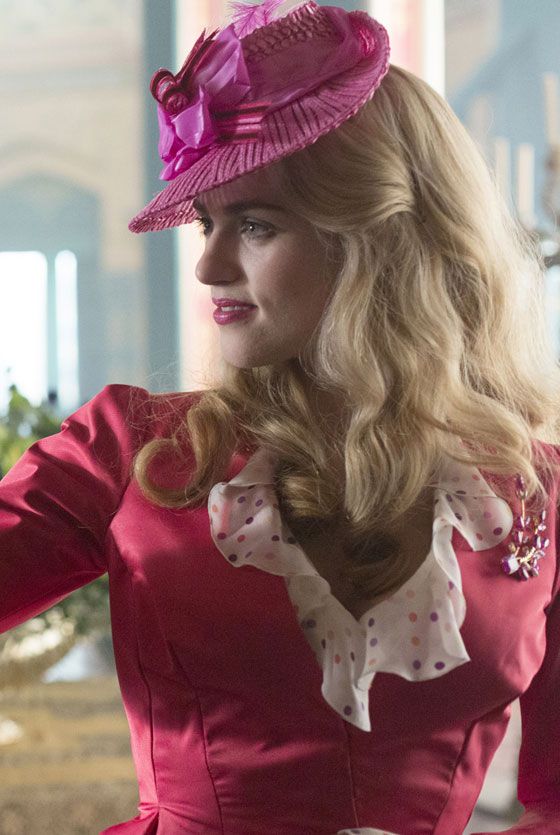
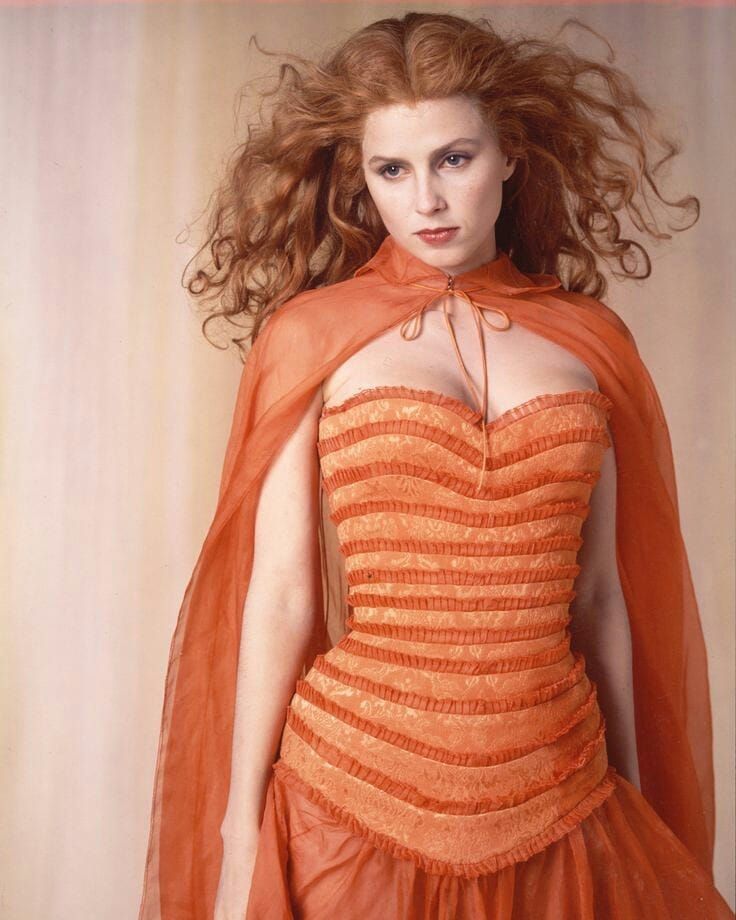
Lucy is the character who seems to have captured the filmmaker’s imagination. Their depiction of her varies but all seem arch and knowing.

9th May: Letter from Miss Mina Murray to Miss Lucy Westenra
I didn’t expect to get a DraculaDaily update today because the next entry in Harker’s journal is on 12th May, but DraculaDaily follows the chronology of the documents that make up ‘Dracula‘, not the sequence in which they appear in the novel. Mina Murray doesn’t appear for another couple of chapters in the novel, but her first missive is dated 9th May, so I got it today.
Mina wasn’t who I expected. She’s much more than vamp-bait waiting to happen. She’s not a young Victorian lady waiting quietly at home for her fiancé to return. She’s working for a living. She’s an assistant schoolmistress. In her spare time, she’s learning to use all the modern office tools and techniques – typewriting, stenography, shorthand – that will enable her to work alongside Harker. I had no idea that Stoker had cast Mina as a New Woman. This could get interesting.
I spent some time looking at what is written about Mina Murray. This was the best article I could find:
Women in Dracula: Mina and Lucy Embody Contrasting Aspects of Victorian Femininity.
It seems that there are a lot of spin-off novels which have Mina as the main character.
This trilogy, The Mina Murray Series‘ caught my eye.
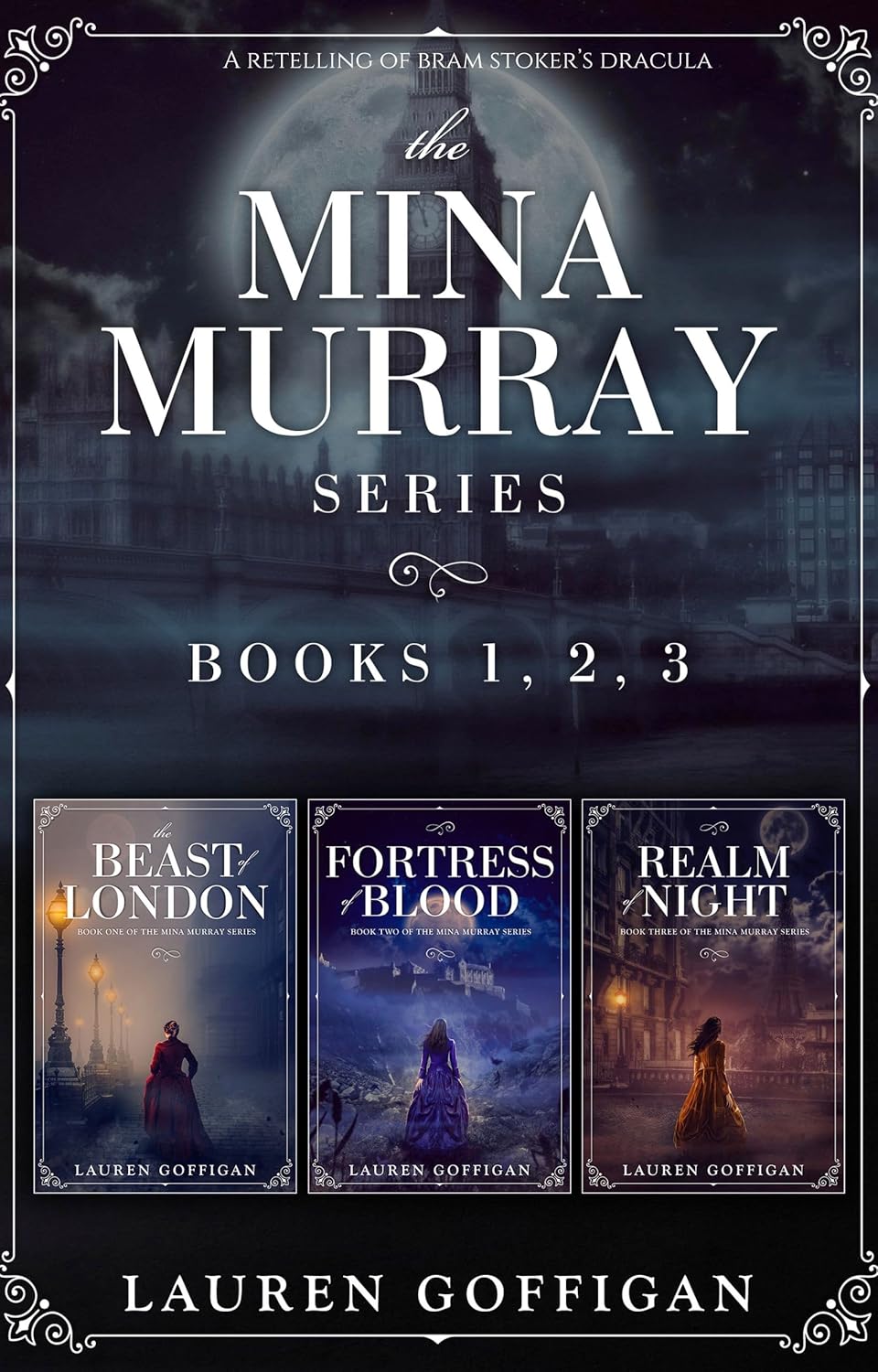
If you’ve read it, I’d love to know what you think. I’m also interested in recommendations for other Dracula spin-off novels.
8th May: Harker’s Journal
Today, Harker finally figures out that he’s alone in the castle with the count and is, in effect, a prisoner. After a short period of panic, he gets himself under control until he realises that the Count has no reflection.
I’ve always struggled with this idea. We can see something because light from an object travels to our eyes. So, how is it that light from Dracula reaches Harker’s eyes and is interpreted in the usual way, but Dracula has no reflection? The light that creates reflections should behave the same way as the light that provides direct sight, so how can Dracula have no reflection? It makes no sense to me. He’s either visible or he isn’t.
I know, I know, I’m reading a story about an immortal vampire and I’m worried about an apparent violation of the laws of physics. but the thing is, I struggle to let stuff like that slide. So I typed “Dracula No Reflection Why” into my search engine and found the post below on the wonderful vamped.org site . It didn’t give me an answer I’d depend upon, but it was a fun read.
7th May: Harker’s Journal
No drama today. The Count is lulling Harker into seeing him as normal, or at least attributing any adnomalities to the Count being an old man and a foreign nobleman. Dracula’s desire to blend into the London crowds sounds humble but becomes more sinister when we know that it will help him stalk his prey.
There were points when I wanted to shake Harker and say, “Wake up. This guy has circled the place where you live. Why would he do that?”
Harker spends most of the time talking the Count through the details of Carfax House, his new estate in Purfleet, England. The Count has done his research and yet he’s keen to buy a rundown house, made gloomy by the surrounding trees, with its main attributed being a fortified keep, a ruined chapel and strong stone walls surrounding the twenty acres of land. See anything odd in that, Harker? How about his sanguine reaction to his nearest neighbour being a luntatic asylum?
Harker’s etymology of Carfax caught my attention. In his notes on the house he says:
“The estate is called Carfax, no doubt a corruption of the old Quatre Face, as the house is four sided, agreeing with the cardinal points of the compass.”
I’d never heard this explanation before. It seemed odd so I looked it up. in etymonline.com and found this:

Still, Bram Stoker didn’t have the Internet to help him do his research.
I also looked up Purfleet and found this post about Purlleet House, which it’s thought Stoker based Carfax House on.
5th May: Harker’s Journal
What a chapter! This is the original, undiluted Gothic and it’s wonderful.
I loved Stoker’s description of the carriage ride through the Carpathians. The last of the sun illuminating the mountain peak called God’s Seat reminded me of the Dent De Midi seen from Vaud at sunset. Capturung the beauty of the mountains in sunlight made what followed more menacing.
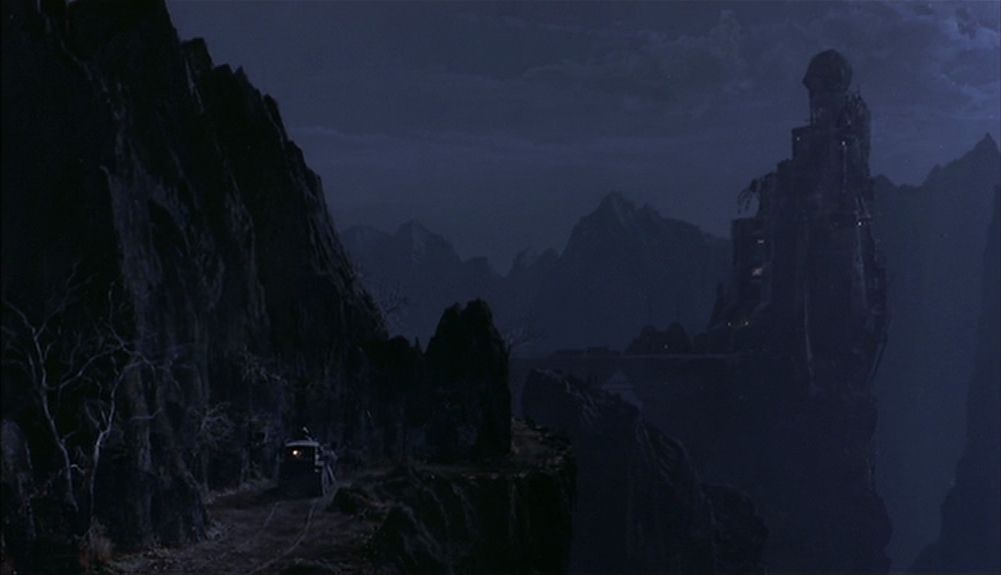
Harker transfers to the Count’s carriage as night descends. There is a splendid scene when the carriage is surrounded by a circle of wolves that fill the horses with fear. Then there is the arrival at midnight a the dark ruin of Dracula’s castle. I think this graphic captures the feeling of the scene perfectly.
Finally, there is the meeting with the Count. I’ve seen so many images of him but this the first time I’ve read the original. Stoker goes into a great deal of detail describing the man. It’s not a pretty picture but it’s not a monstrous one either. Only the hair on the palms stands out as bizarre. This graphic seems faithul to Stoker’s description except for the strange white eyes.

I was delighted to find that one of the most famous lines from the Dracula story comes not from Hollywood as I’d thought, but from Stoker himself. Harker has been welcomed by the Count and given a good meal Dawn is approaching. Harker writes:
There seemed a strange stillness over everything. But as I listened, I heard as if from down below in the valley the howling of many wolves. The Count’s eyes gleamed, and he said. “Listen to them, the children of the night. What music they make!” Seeing, I suppose, some expression in my face strange to him, he added, “Ah, sir, you dwellers in the city cannot enter into the feelings of the hunter.”
4th May: Harker’s Journal
Harker can’t say he hasn’t been warned. H/is hostess begs him on her knees not to go. She warns him not to travel on the eve of St. George’s Eve when, at midnight “all the evil things of the world hold full sway” but he goes anyway (there’d be no story if he didn’t and the foreboding is first-rate).
The only contempoary reference I can find for St. George’s Eve is a post entitled Beware St. George’s Eve on Supernaturally Speaking which tells me what the different kinds of vampires and witches did on that night and why.
I was raised as a Catholic, which is perhaps why I was so surprised when Harker’s response to the woman giving him her rosary was.
“I did not know what to do, for,.as an English Churchman, I have been taught to regard such things as in some measure idolatrous…”
It had never occurred to me that something designed to assit prayer could be seen this way.

3rd May: Harker’s Journal
The 3rd May entry shows Harker a great deal more interested in food and recipes than I would have expected. It also does a good job of giving the feeling that from the Danube onwards, Harker is leaving the West behind and heading into the wild and uncharted.
One of the dishes Harker liked was Paprika Hendi – a spicy chicken dish. I don’t eat meat but I was curious about the recipe. Click on the image below if you’d like the recipe too.

 Mike Finn's Fiction