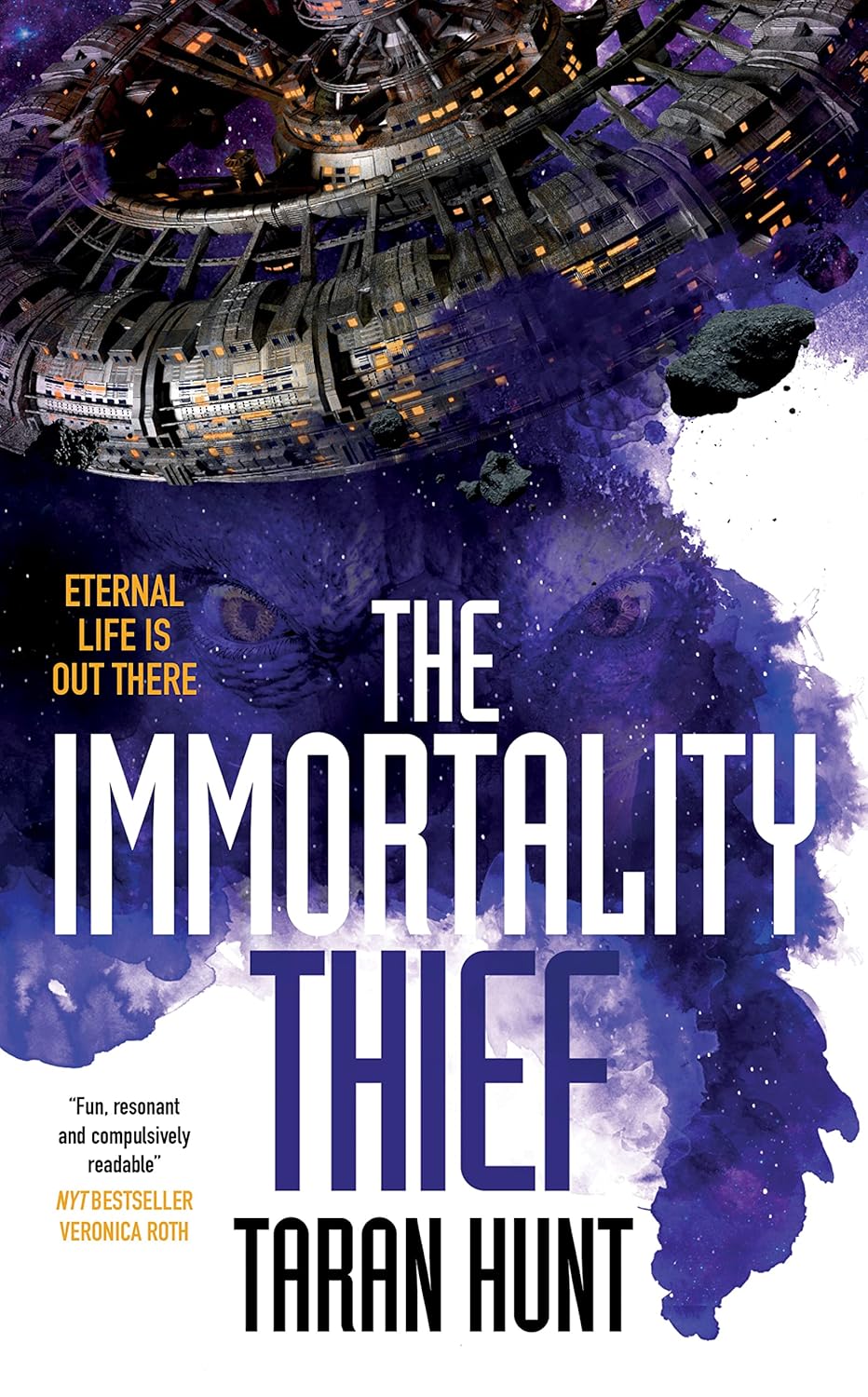
Far off the edge of human existence, beside a dying star lies a nameless ship abandoned and hidden, lost for a millennium. But there are secrets there, terrible secrets that would change the fate of humanity, and eventually someone will come looking.
Refugee, criminal and linguist Sean Wren is made an offer he knows he can’t refuse: life in prison, “voluntary” military service – or salvaging data in a long-dead language from an abandoned ship filled with traps and monsters, just days before it’s destroyed in a supernova. Data connected to the Philosopher’s Stone experiments, into unlocking the secrets of immortality.
And he’s not the only one looking for the derelict ship. The Ministers, mysterious undying aliens that have ruled over humanity for centuries, want the data – as does The Republic, humanity’s last free government. And time is running out.
In the bowels of the derelict ship, surrounded by horrors and dead men, Sean slowly uncovers the truth of what happened on the ship, in its final days… and the terrible secret it’s hiding.
IN A NUTSHELL
The Immortality Thief‘ was an impressive debut novel that had me signing up for the rest of this space opera series.
What I liked most about ‘The Immortality Thief‘ was that it managed to remain a tightly focused personal story woven into a fully imagined universe. Focusing on the history and motivation of the main character, a young man whose whole city was obliterated while he was still a child, gave a richer context to this The action-packed, quest-oriented thriller.
I loved the strong visuals in the story. The vast decaying space station on which most of the action takes place, loomed in my imaignation like a ruined gothic cathedral. The monstrosities that infested the space station were scary and, in the case of the predatory children, disturbing.
The scope of the imagined universe and the depth of imagination behind it was impressive. It provided a context in which our hero finds himself caught between two natural enemies, both of whom contributed to the destruction of his people.
There were interesting ideas about language, trust and the relationship between the two. I particularly liked that one of the languages was expressed entirely through the use of coloured lights. Trust appeared in many forms: enforced trust that lasts only as long as survival depends on collaboration; trust born out of a common heritage or history that survives longer than a rational assessment of the data would suggest; and trust that comes from choices taken, risks shared and sacrifices made.
The pages were packed with action, spiced by the main character’s reflections on his memories. Memory also became a theme in the book. The power and the inaccuracy of what we remember and how the memory of a trauma shapes not just our past but how we parse the present.
I felt the pacing was a little off in the middle section of the book, when the three main characters were fighting their way across the huge, decaying spaceship. I understood that this was an important experience for challenging and shaping the relationship between the three of them, but there were so many violent encounters, and they were so similar that I began to feel like I was trapped in a video game where I couldn’t level up.
The final quarter of the book more than made up for any frustration. It had me turning the pages eagerly. The ending was unexpected but pleasing. I’ve already downloaded ‘The Unkillable Princess‘ (2025), the second book in the series

Taran Hunt lives in Queens, NY. She dabbles in languages, physics, and theatre, while dreaming up monsters with too many teeth.
She has published two novels; THE IMMORTALITY THIEF – Rebellion Publishing, 2022 and THE UNKILLABLE PRINCESS – Rebellion Publishing, 2025
 Mike Finn's Fiction