I’ve read more than a thousand books since I started this book blog back in 2011. By now, I’ve forgotten what I wrote in most of the reviews and am left only with an residual emotional memory of the books, like cooking smells clinging to my clothes after a meal. So, I’ve decided to do a little time travelling by book blog and re-read some of the reviews I’ve posted.
This month, I’m travelling back five years to October 2020. Five years doesn’t sound like a long time but 2020 was the first year of COVID. It was a year that most people will remember as a discontinuity, a permanent fracturing of what we see as normal.

I didn’t lose anybody to COVID but I was and still am deeply angered by the greed, corruption, incompetence, and arrogant dispassion with which my government responded to a crisis that killed a quarter of a million of us.
By October, six months after the first Lockdown in the UK, the worst seemed to be over but the scars were still fresh. The post below captures some of what I was feeling at the time and connects to the poetry that arose from the trauma.
At the time, I thought I was using my reading as an escape from COVID, but when I looked at the books I reviewed in October 2020, I realised that the three that stand out are all related to doom, destruction and human venality. The good thing is that all three of them are great books. I heartily recommned them to you.
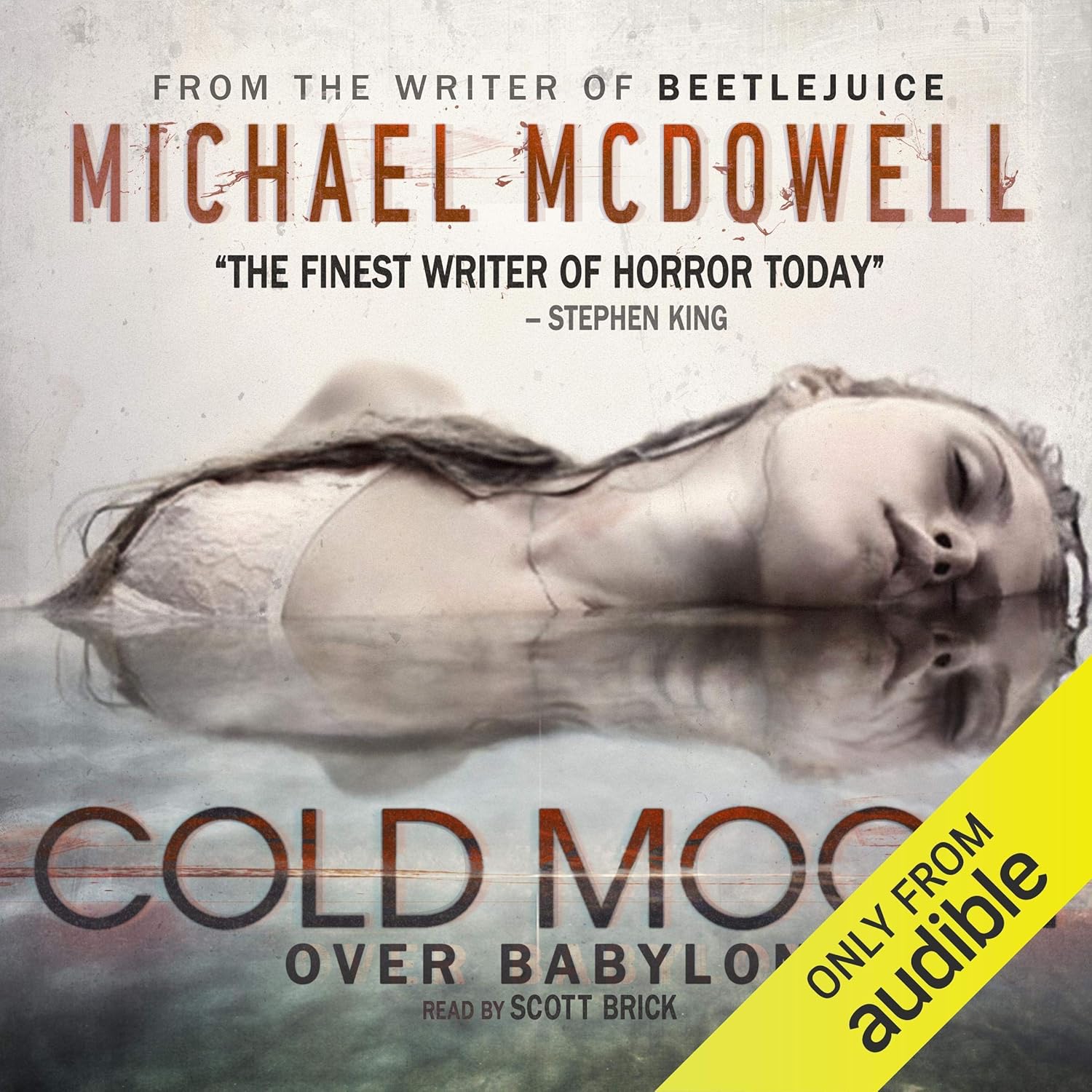
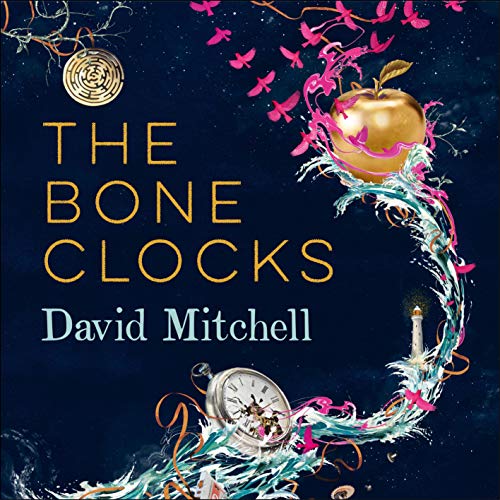

One was Michael McDowell’s classic 1980s horror novel about violent supernatural revenge wrought on a small town in Florida after a young girl is murdered. One was David Mitchell’s huge decade spanning supernatural fantasy about the long struggle between the darkness and the light that felt real and contemporary. One was Paul Tremblay’s seemingly prescient novel about a new fast-spreading virus overwhelming Massachusetts.
I’ve shared my impressions of them below. If you’d like to time travel with me, follow the links to the original reviews.
Welcome to Babylon, a typical sleepy Alabama small town, where years earlier the Larkin family suffered a terrible tragedy. Now they are about to endure another: 14-year-old Margaret Larkin will be robbed of her innocence and her life by a killer who is beyond the reach of the law.
But something strange is happening in Babylon: traffic lights flash an eerie blue, a ghostly hand slithers from the drain of a kitchen sink, graves erupt from the local cemetery in an implacable march of terror. And beneath the murky surface of the river, a shifting, almost human shape slowly takes form. Night after night it will pursue the murderer. And when the full moon rises over Babylon, it will seek a terrible vengeance.
‘Cold Moon Over Babylon‘ (1980) is a story of violent supernatural revenge wrought on a small town in Florida after a young girl is murdered. It’s a powerful, emotionally engaging, quietly disturbing novel that felt like it was sharing an unpleasant but important message about the cumulative effect of secret transgressions on small towns.
The most frightening force in the book isn’t supernatural; it’s human. Evil, twisted, repugnant, but entirely human and entirely believable. That the revenge against this evil included not just returning the violence inflicted, but destroying the sanity and dignity of the person being punished, was deeply satisfying.
Here’s what I said about the book at the time:
The book reminds me of a steam train. Like that first flurry of steam and scream of the whistle when the train starts, the noise of violent death at the beginning of the book grabs the attention at once. Then movement feels slow, almost ponderous. The chaotic noise of released steam is replaced by the quiet rhythm of wheels starting to turn under power. You don’t notice the speed and momentum of the train until the next bad things happen. Then you realise that the train is unstoppable and is going to smash your emotions.
Looking back on it now, I realise that this book resonated with my anger at the corruption, complacent incompetence and condescending callousness of Johnson’s parasitic government. Perhaps that’s why I enjoyed the revenge so much.
To read my 2020 review, click on the link below.
One drowsy summer’s day in 1984, teenage runaway Holly Sykes encounters a strange woman who offers a small kindness in exchange for ‘asylum’. Decades will pass before Holly understands exactly what sort of asylum the woman was seeking . . .
The Bone Clocks follows the twists and turns of Holly’s life from a scarred adolescence in Gravesend to old age on Ireland’s Atlantic coast as Europe’s oil supply dries up – a life not so far out of the ordinary, yet punctuated by flashes of precognition, visits from people who emerge from thin air and brief lapses in the laws of reality. For Holly Sykes – daughter, sister, mother, guardian – is also an unwitting player in a murderous feud played out in the shadows and margins of our world, and may prove to be its decisive weapon.
‘The Bone Clocks’ (2014) was astonishingly good. David Mitchell took a classic fantasy trope of an eternal, covert, magic-enabled struggle between the forces of darkness and light, then raised the game by embedding the story in a vividly evoked past and a credible near future, and telling it all through the eyes of engaging, credible, and memorable characters.
The audiobook was twenty-four hours long and I enjoyed every minute of it. The narration, by multiple narrators, was outstanding, The writing was vivid. While the themes were large, the plot spanned decades, the magic systems were complex, the storytelling always kept an intimate human focus.
David Mitchell let me take up residence in the heads of people who were very different from each other and often only loosely associated with one another. I believed in each of them, even the ones I didn’t like. In one case he let me occupy the head of the same person when they were in their teens and in their sixties and succeeded in showing me that they were and weren’t the same person.
When I read this, I was aware of being almost overwhelmed by the power of the storytelling. Look back on it now, it seems to me that part of what drew me to it was the way it showed how someone who is relatively powerless could make a life even when caught up in a covert struggle between the darkness and the light.
To read my 2020 review, click on the link below.
In a matter of weeks, Massachusetts has been overrun by an insidious rabies-like virus that is spread by saliva. But unlike rabies, the disease has a terrifyingly short incubation period of an hour or less. Those infected quickly lose their minds and are driven to bite and infect as many others as they can before they inevitably succumb. Hospitals are inundated with the sick and dying, and hysteria has taken hold.
To try to limit its spread, the commonwealth is under quarantine and curfew. But society is breaking down, and the government’s emergency protocols are faltering. Dr. Ramola ‘Rams’ Sherman, a soft-spoken paediatrician in her mid-30s, receives a frantic phone call from Natalie, a friend who is eight months pregnant. Natalie’s husband has been killed – viciously attacked by an infected neighbour – and in a failed attempt to save him, Natalie, too, was bitten. Natalie’s only chance of survival is to get to a hospital as quickly as possible to receive a rabies vaccine. The clock is ticking for her and for her unborn child.
Natalie’s fight for life becomes a desperate odyssey as she and Rams make their way through a hostile landscape filled with dangers beyond their worst nightmares – terrifying, strange and sometimes deadly challenges that push them to the brink.
For me, ‘Survivor Song‘(2020) is the definitive plague novel.That it was published in the year that COVID 19 was ravaging the world seems like an act of precognition on Paul Trembley’s part.
This isn’t a story about scientists working together to save the world, or governmnets managing the compromises between freedom and safety. It isn’t about an inevitable slide into a post-apocalyptic future. It’s a story about two women, one of them pregnant, trying to survive terrible events by supporting each other. It felt real and relevant to me.
Here’s what I said at the time about what gave the novel such an impact:
It wasn’t horror, that hair-standing-on-end from a nameless fear feeling. It wasn’t terror, where the fear is like a pain so intense and overwhelming that there is no room for anything else, not even the belief that it will pass. It was dread, the slow-burn cousin of the fear family. The one you see coming. The one that leaves you with your ability to think and act, but slowly, inexorably extinguishes your hope.
Looking back, I think this novel is the piece of fiction that most accurately captures the emotional impact of COVID on me. It demonstrated our fragility as individuals, our strength as a species and our need always to be ready to look after each other when our governments fail us.
To read my 2020 review, click on the link below.
 Mike Finn's Fiction