
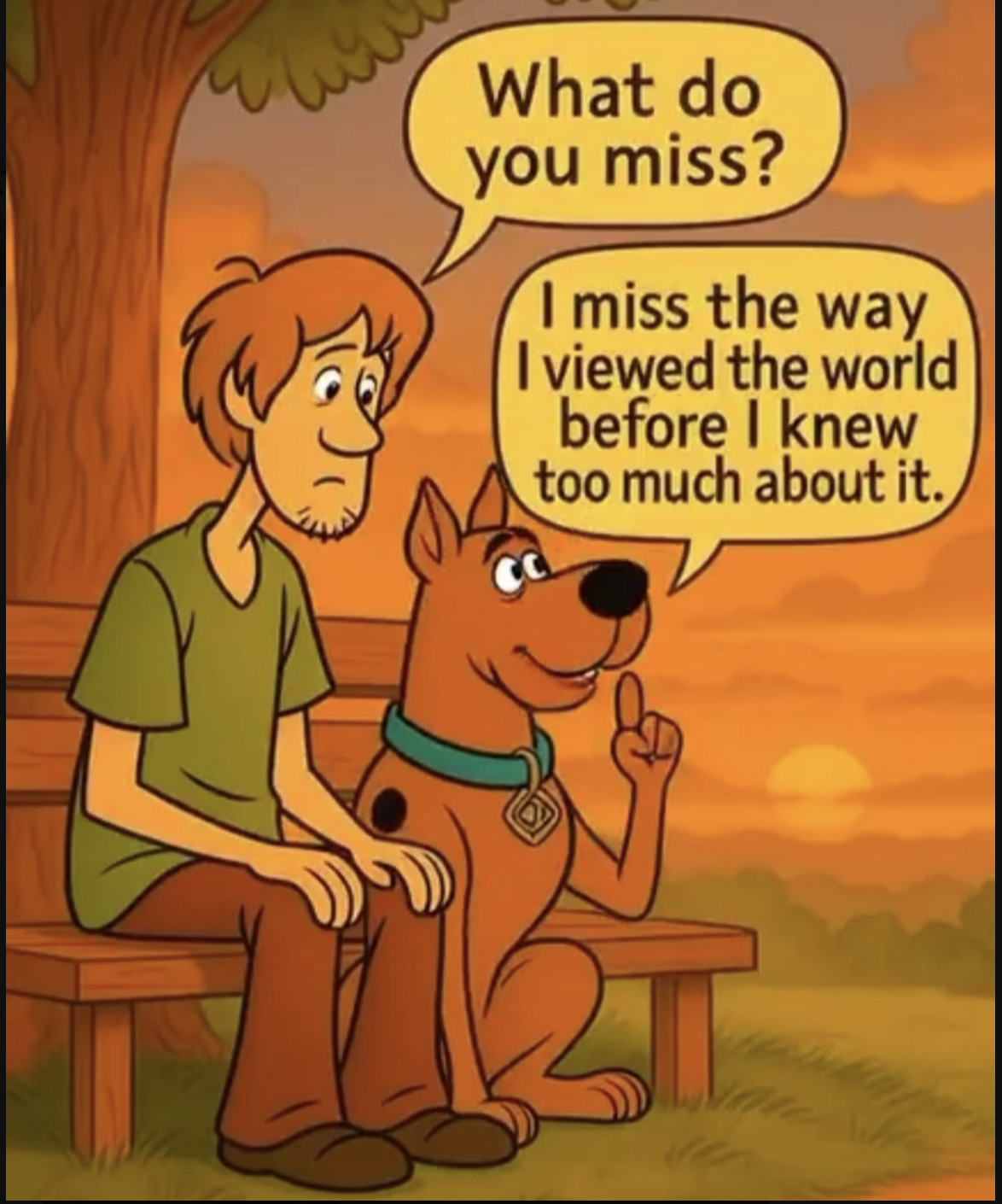
Reading is what kept me going this week, distracting me from the doomscrolling about world events over which I have no control but which still manage to erode my peace of mind. It turns out Scooby-Doo knows how that feels.
Anyway, here’s what I’ve read and bought this week and what’s up next.

Each of the four books I read this week surprised me by going in directions that I didn’t expect. My highlight of the week was Roger Zelazny’s ‘A Night In The Lonesome October’. A book filled with famous monsters and villains, it surprised me with the calm, hopeful tone of the storytelling

Lai Zhen is about to die. As an Internet-famous survivalist, she’s spent her life prepping for the end of the world. But now, desperate and cornered in a mall in Singapore, she’s mad she might go out not knowing what the hell is going on. If she makes it out alive, what kind of a future will be waiting for her?
Across the world, Martha Einkorn works the room at a gathering of mega-rich companies hell-bent securing a future just for them. Covert weapons, private weather, technological prophecy, when Martha fled her father’s compound she may have left the cult behind, but if the apocalyptic warnings of his fox and rabbit sermon are starting to come true, how much future is actually left?
Martha and Zhen’s worlds are about to collide. While a few billionaires assured of their own safety lead the world to destruction, Martha’s relentless drive and Zhen’s insatiable curiosity could lead to something beautiful … or the cataclysmic end of civilization.
‘The Future‘ (2023) was a strange book: part lecture, part thriller, part prayer, part satire. Sometimes it was all four at the same time. The ideas fizzed. The discussion on the meaning and relevance of the parable of the Fox and the Rabbit, and the analysis of the Bible story about Lot leaving Sodom and Gomorrah, reminded me of my own religious education five decades ago. I found these passages thought-provoking and oddly soothing. The calm, reflective proselytising tone reminded me of George Bernard Shaw’s ‘Man And Superman‘.
There were some great action scenes, including an assassination attempt with a dramatic resolution that would make a wonderful movie scene. The plot had at least two twists that cranked up the tension, but the pace of the storytelling was slower than I’d expect of a thriller. I had fun watching the I-bet-I-know-who-that’s-based-on billionaires being vivisected on the page.
As a thought piece aimed at breaking through the Tech Bro hegemony on defining the future, it was wonderful. As a speculative fiction thriller, it was still fun.

All is not what it seems…
In the murky London gloom, a knife-wielding gentleman named Jack prowls the midnight streets with his faithful watchdog Snuff—gathering together the grisly ingredients they will need for an ancient and unearthly rite. For soon after the death of the moon, black magic will summon the Elder Gods back into the world. And all manner of Players, both human and undead, are preparing to participate.
Some have come to open the gates. Some have come to slam them shut. And now the dread night approaches—so let the Game begin.
I fell in love with ‘A Night In The Lonesome October‘ (1993). It’s a story of a strange metaphysical struggle for the fate of mankind that occurs each time there is a full moon on Halloween. It’s a conflict that repetition and ritual have turned into a deadly game with rules and traditions that the players must obey or suffer consequences. The game draws monsters and villains from classic horror stories to become players. Each player has an animal as a familiar. At the start of the game, players don’t know which of their fellows is an enemy or an ally.
I liked that the story was told in the form of a chapter for each day in October, building to the final conflict on Halloween.
For me, the story worked as well as it did because it was told entirely from the point of view of Snuff, the dog, familiar to Jack, a man who carries a very large knife when he goes hunting in the London’s East End. I liked Snuff. He was calm, rational, as friendly as circumstances would allow and treated players and familiars fairly. His way of looking at the world accepted the importance of winning the game for his side but didn’t allow that to become an excuse for treating others badly.
The book was imbued with quiet hope and gentle humour. I had fun trying to work out who all the characters were based on. I admired the boldness and originality of this story. I think it is one I will come back to in another October and read a chapter each day.
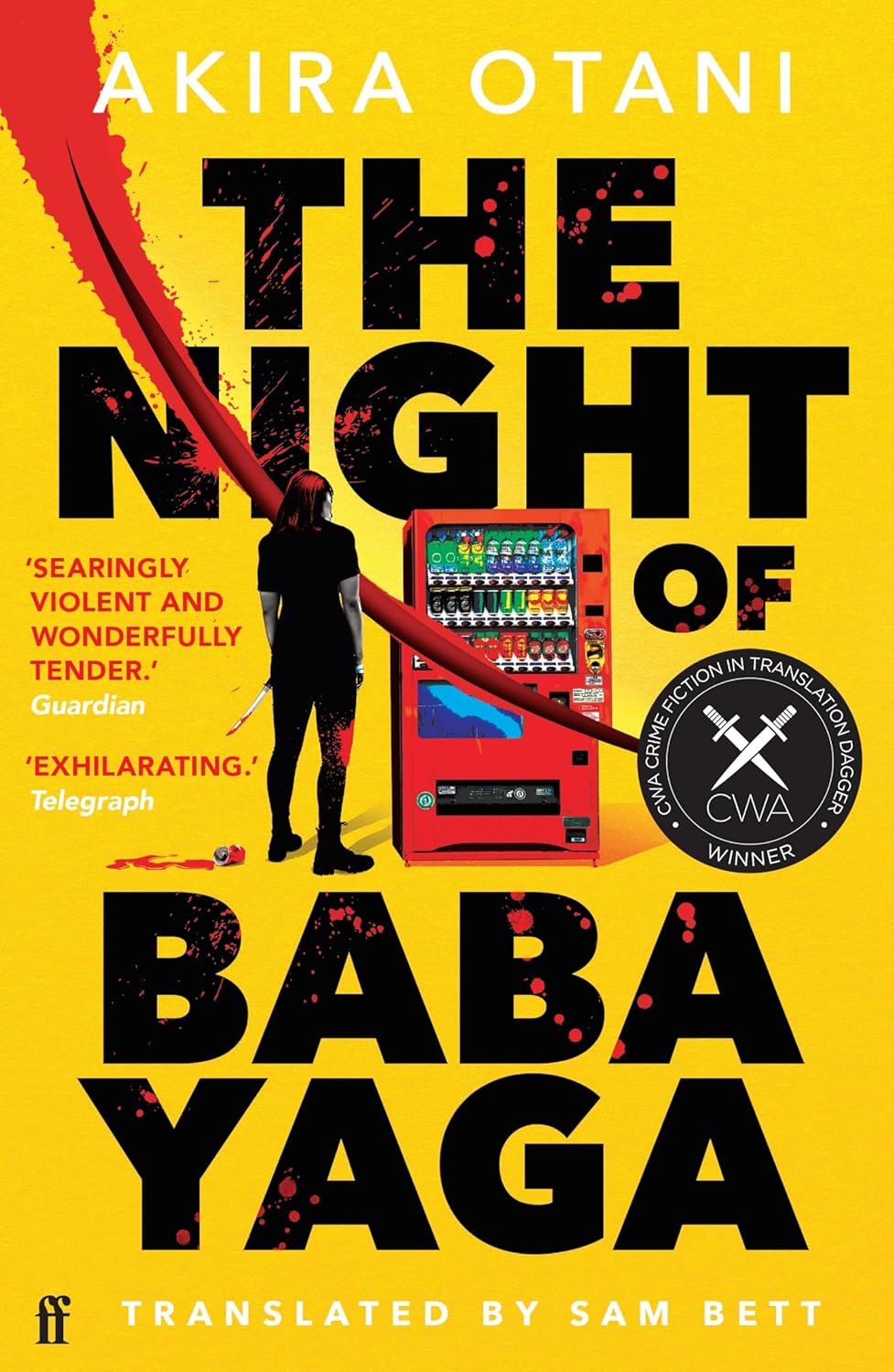
Fierce, mixed-race fighter Shindo has been kidnapped by the yakuza. After brutally beating most of them in an attempt to escape, she is forced to work as a bodyguard to protect the gang boss’s sheltered daughter Shoko, a strange, friendless eighteen-year-old who could order Shindo’s death in a moment.
At first Shindo derides Shoko’s naïvete, but as the men around them grow ever more bloodthirsty and controlling, she becomes ferociously devoted to her charge. However, she knows that if things continue as they are, neither woman can expect to survive much longer.
But could there ever be a different life for two people like them?
‘The Night of Baba Yaga‘ (2020) was even stranger than I had expected it to be. Set mostly in Tokyo in 1979, it tells the story of a mixed-race woman abducted by the Yakuza because her fighting skills and her gender make her a good candidate to act as a bodyguard for the boss’s teenage daughter.
It’s a story filled with graphic, gory violence. It stinks of testosterone, rage and fear. It accepts that some people, including our ‘heroine’, are built for violence and only really feel alive when they lose themselves in the joy of its intensity. At the same time, it quietly ridicules the male posturing, disdaining the rituals and hierarchies that they use to dress their animal aggression and lust with honour and purpose.
It’s an engaging thriller, told at a fast pace but with great clarity. It’s character-driven, focusing on the emerging relationship between the bodyguard and her charge. There’s lots of action, a subtext that challenges Japanese gender norms and plot twists that kept shifting my understanding of what was going on.

The Sign of the Four (1890), also called The Sign of Four, is the second novel featuring Sherlock Holmes written by Sir Arthur Conan Doyle. Set in 1888, The Sign of the Four has a complex plot involving service in India, the Indian Rebellion of 1857, a stolen treasure, and a secret pact among four convicts (“the Four” of the title) and two corrupt prison guards. It presents Holmes’s drug habit and humanizes him in a way that had not been done in the preceding novel, A Study in Scarlet (1887). It also introduces Dr. Watson’s future wife, Mary Morstan.
‘The Sign of Four’ (1889), the second Sherlock Holmes novel, surprised me by being a more of ‘Boy’s Own Adventure’ romp than a clever, puzzle-solving mystery. It was written to be read in episodes in a magazine, rather than as a novel. The episodic structure of the story made the novel feel uneven and disjointed.
It was good fun in a Saturday Matiee sort of way but the prose felt like something dashed off in a hurry.
My review is HERE

I’m making progress, This week I only bought the same number of books as I read. Their an eclectic selection. A paranormal enemies to lovers romance, a cyber-thriller, a speculative fiction novel about autism and a joyful slasher story about the perils of being cancelled for a drunken tweet.

Misery Lark, the only daughter of the most powerful Vampyre councilman of the Southwest, is an outcast – again. Her days of living in anonymity among the Humans are over: she has been called upon to uphold an historic peacekeeping alliance between the Vampyres and their mortal enemies, the Weres, and sees little choice but to surrender herself in the exchange – again . . .
Weres are ruthless and unpredictable, and their Alpha, Lowe Moreland, is no exception. He rules his pack with absolute authority, but not without justice. And, unlike the Vampyre Council, not without feeling. It’s clear from the way he tracks Misery’s every movement that he doesn’t trust her. If only he knew how right he was . . .
Because Misery has her own reasons to agree to this marriage of convenience, reasons that have nothing to do with politics or alliances, and everything to do with the only thing she’s ever cared about. And she is willing to do whatever it takes to get back what’s hers, even if it means a life alone in Were territory . . . alone with the wolf.
I’ve been aware of this for a while, but resisted buying it because it’s an enemies-to-lovers romance and I don’t read romances. Except, this one kept getting good reviews from book bloggers whom I respect. And it’s got a great cover. And a sequel. And then there’s the whole vampire versus werewolf thing. So I caved and downloaded the audiobook.
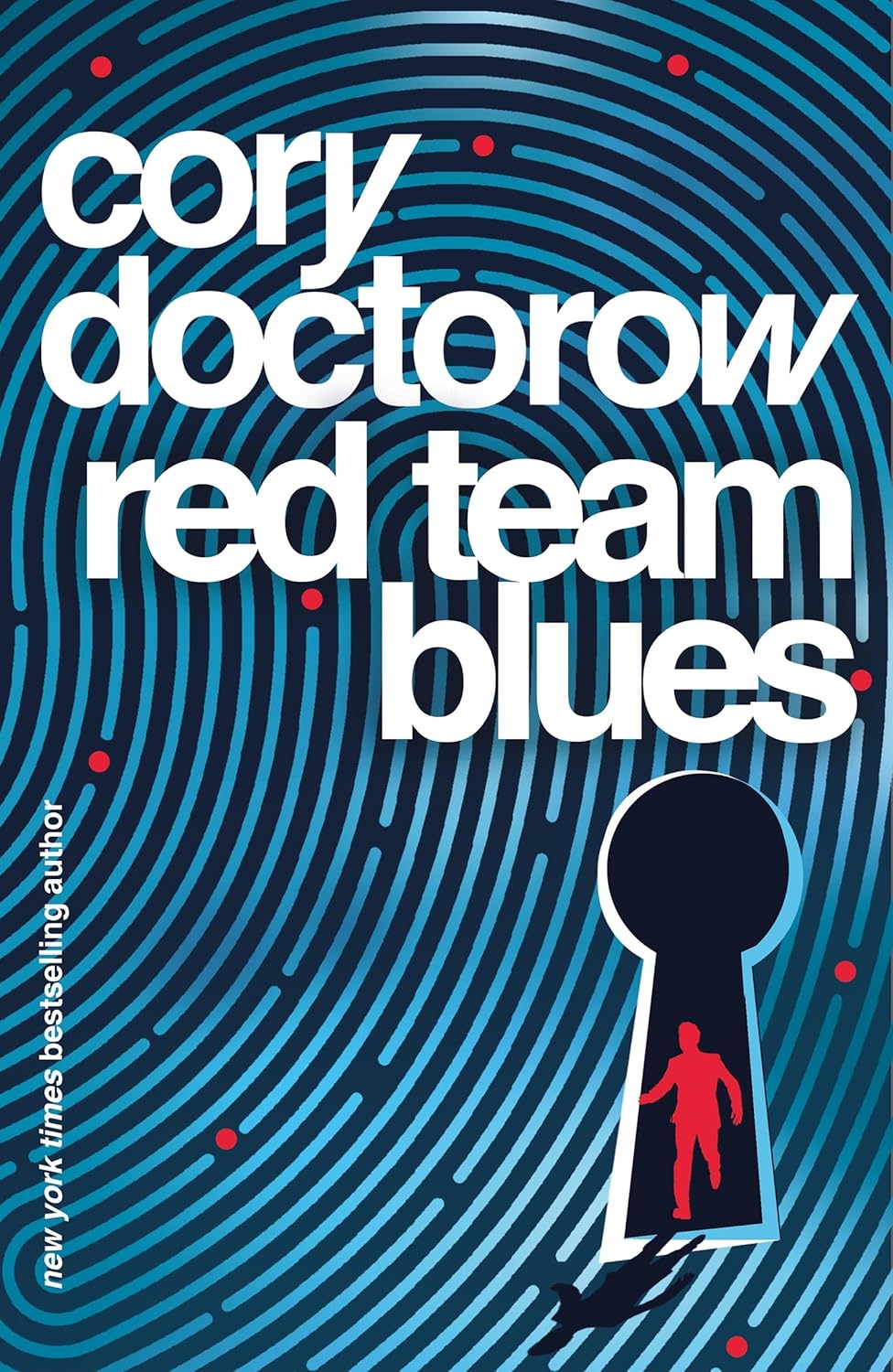
In cyber-security, RED TEAM plays attack. BLUE TEAM plays defence.
Marty Hench’s career in tech is almost as old as Silicon Valley. He’s the most accomplished forensic accountant in town, an expert on the international money-laundering and shell-company chicanery used by Fortune 500s, divorcing oligarchs, and international drug cartels alike (there’s more crossover than you might imagine).
Marty was born to play attack. If there’s a way to get under the walls and bring the castle down, he’s the one to do it. There’s no better financial Red Teamer in the Valley.
Now he’s on the trail of a stolen key, one that unlocks an illicit backdoor to billions in crypto. More than reputation and fortune is on the line – Marty’s adversaries are implacable criminal sadists who will spill oceans of blood to get what they want.
Finding the stolen key is going to be the least of Marty’s problems: now he has to save his skin. To do that, he’ll have to play defence. And Marty hates playing the Blue Team.
This was reviewed by another Halloween Bingo player and sounded like my sort of thing. Cory Doctrow is a new author for me. I looked him up. He has the industry background to make this an informed insider read as well as a thriller. I’m looing forward to it.
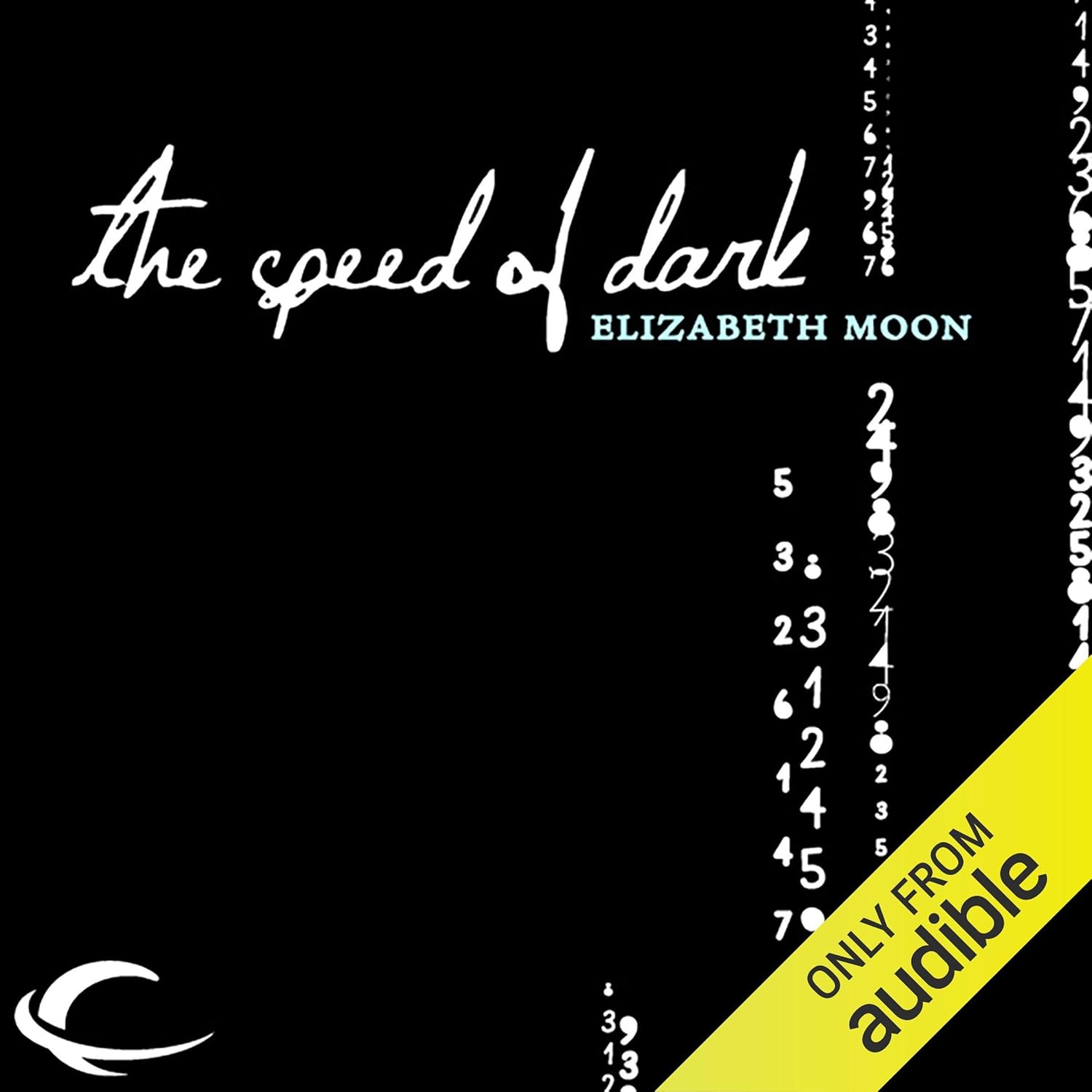
In the near future, disease will be a condition of the past. Most genetic defects will be removed at birth; the remaining during infancy. Unfortunately, there will be a generation left behind. For members of that missed generation, small advances will be made. Through various programs, they will be taught to get along in the world despite their differences. They will be made active and contributing members of society. But they will never be normal.
Lou Arrendale is a member of that lost generation, born at the wrong time to reap the awards of medical science. Part of a small group of high-functioning autistic adults, he has a steady job with a pharmaceutical company, a car, friends, and a passion for fencing. Aside from his annual visits to his counselor, he lives a low-key, independent life. He has learned to shake hands and make eye contact. He has taught himself to use “please” and “thank you” and other conventions of conversation because he knows it makes others comfortable. He does his best to be as normal as possible and not to draw attention to himself.But then his quiet life comes under attack.
It starts with an experimental treatment that will reverse the effects of autism in adults. With this treatment Lou would think and act and be just like everyone else. But if he was suddenly free of autism, would he still be himself? Would he still love the same classical music – with its complications and resolutions? Would he still see the same colors and patterns in the world – shades and hues that others cannot see? Most importantly, would he still love Marjory, a woman who may never be able to reciprocate his feelings? Would it be easier for her to return the love of a “normal”?
There are intense pressures coming from the world around him – including an angry supervisor who wants to cut costs by sacrificing the supports necessary to employ autistic workers. Perhaps even more disturbing are the barrage of questions within himself. For Lou…
I picked this book up when I searched Elizabeth Moon’s back catalogue after I read ‘Remnant Population‘. The autism theme calls to me. I decided to buy the book when I got to the fourth chapter of the first page, when our autistic hero thought this:
“Everything in my life that I value has been gained at the cost of not saying what I really think, and saying what they want me to say.”
‘The Speed of Dark’ won the Nebula Award for Best Novel (2003).

Cancelled after a drunken, ill-advised post, TV-star Willow McKenzie is sent to Camp Castaway – a retreat in the woods where you hide from your mistakes.
Spoiler #1: there’s nowhere to hide.
That first night, fellow campers gather round a fire, telling ghost stories. And Willow hears the tale of Knock-Knock Nancy – a beheaded local woman whose spirit still roams the woods.
Spoiler #2: she takes her victim’s heads.
Willow doesn’t believe in ghosts – until next day, a camper vanishes. And, that evening, Willow hears it:
Knock. Knock. Knock.
Spoiler #3: It’s already too late . . .
I know the cover looks gory, but I think it’s gory in a fun way. After all, you can’t have slaughter without laughter, so I’m hoping this will make me smile rather than flinch.
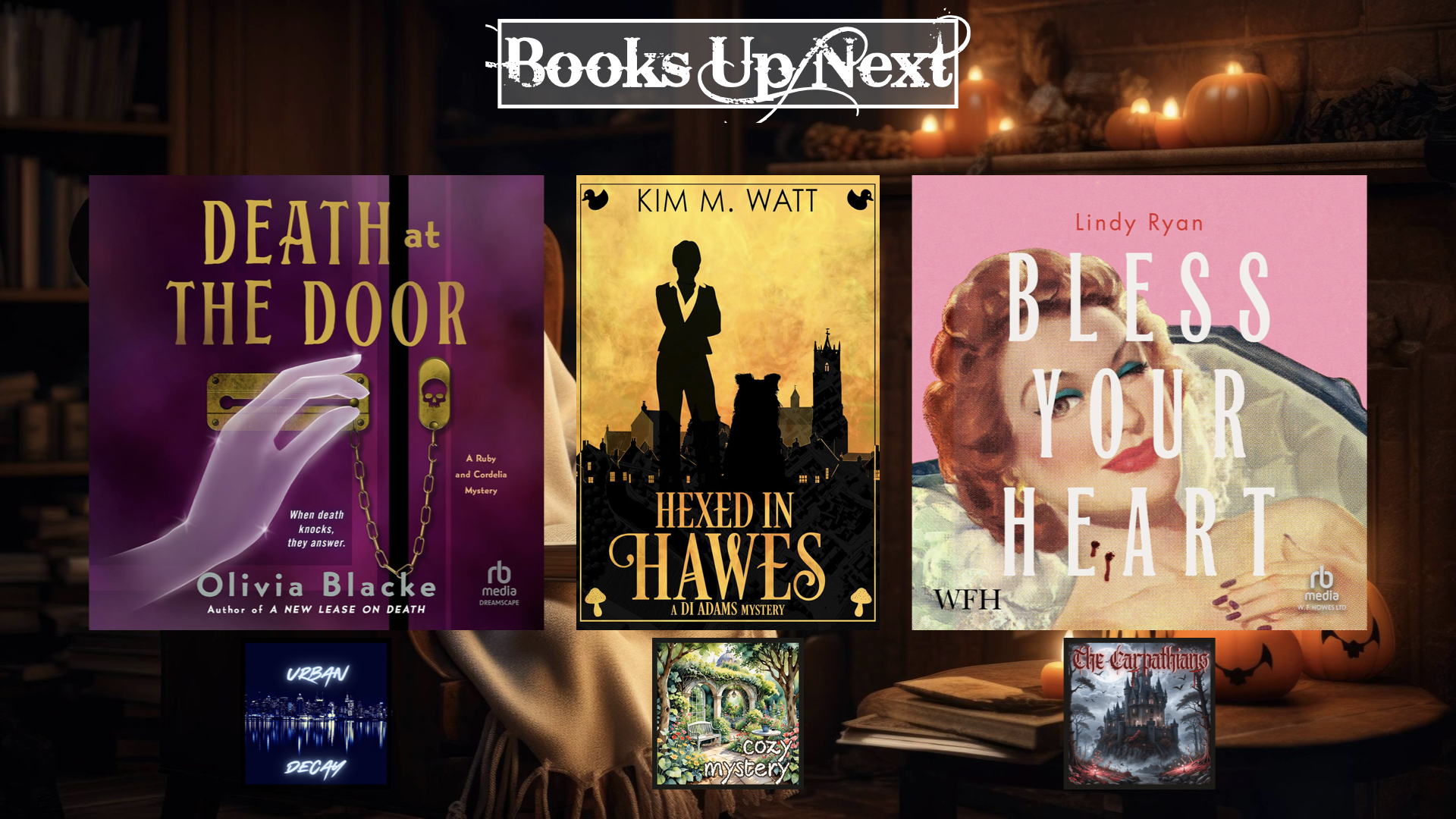
This week, I’m reading two recently published books in series that I’m following and the first book in what I hope will be a quirky vampire series that I’ll be following.
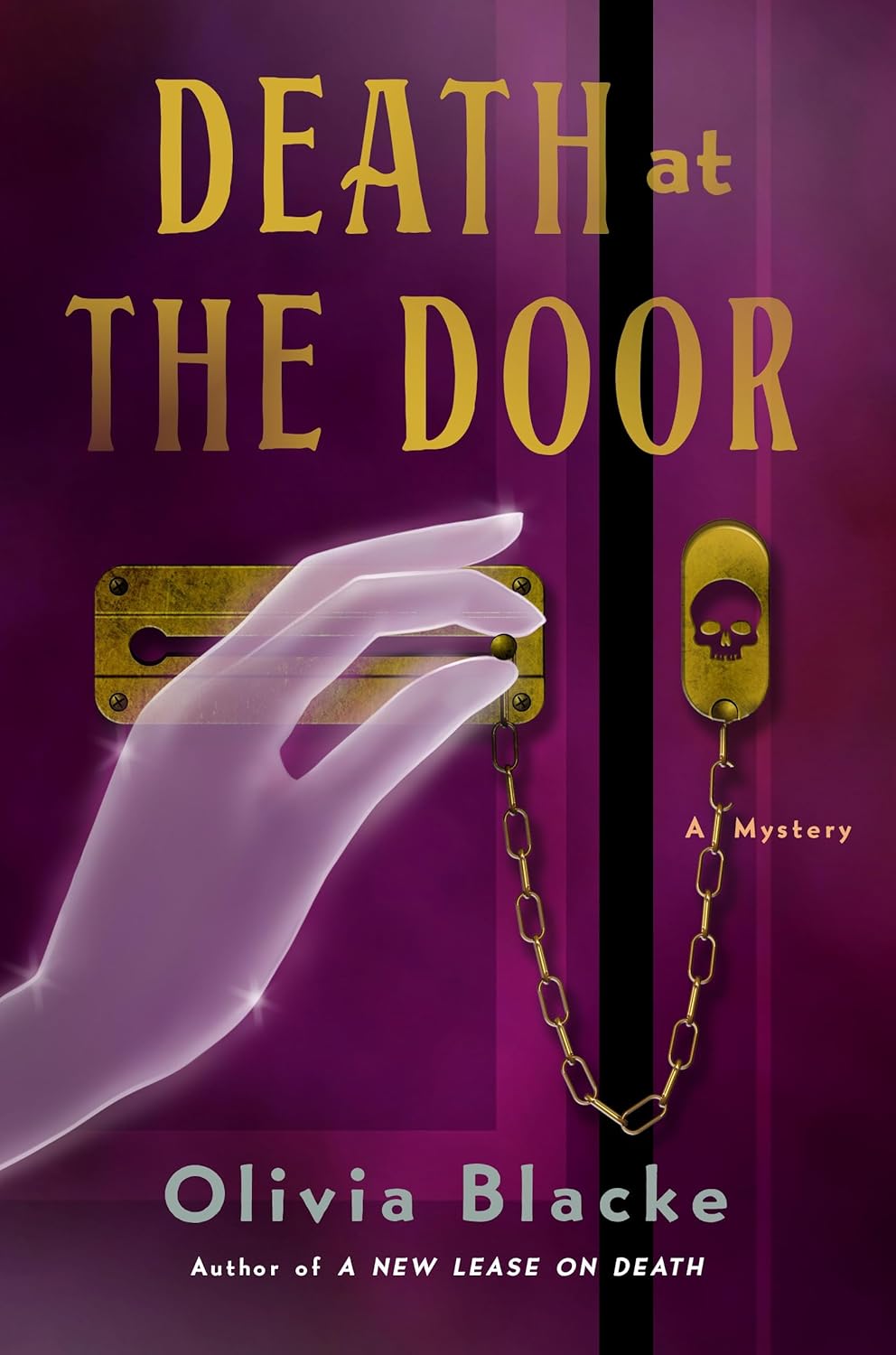
Ruby Young is slowly adjusting to her new life in Boston. A big part of that is her unexpected roommate—the ghost of the woman who lived there before. For Cordelia Graves, she may no longer be breathing, but it’s still her apartment and Ruby is the somewhat unwanted houseguest. They’re both happy they’ve managed to become friends, which is a miracle considering they struggle to communicate with each other. Cordelia even set Ruby up with her old job.
When Ruby discovers the body of a delivery guy at work, the new life she’s been building hangs in the balance. The last time Cordelia dragged Ruby into a murder investigation, it was almost two ghosts living in the apartment, not one. Determined to protect Ruby, Cordelia tries to shield her from the investigation, but Ruby has other ideas. It will take both of them working together to navigate the fine line between the dead and the living to bring a killer to light.

Read any mystery, suspense, supernatural, or horror book that takes place primarily in an urban environment, including urban fantasy.
I’ve had this sequel to ‘A New Lease On Death’ on pre-order. I’m looking forward to catching up with the nice but naive Ruby Young and Cordelia Graves, her ghostly I-died-in-the-bathtub-in-this-apartment-and-I’m-not-leaving roommate.

There’s more than one way to get to Faery. It’s getting back that’s the problem…
DI Adams is not having a good summer. Her house has been hexed. Her DCI’s muttering about mental health breaks. Her invisible dog keeps disappearing at inopportune moments. And to top it all off, her parents have just turned up, determined to experience all Yorkshire has to offer.
And they’re going to get more than they bargained for, because someone else has turned up too.
He calls himself Velmyr Duskthorn, Lord of the Fae, and he’s demanding a powerful book Adams doesn’t have, can’t get, and couldn’t hand over anyway – unless she fancies starting an inter-species war.
But when her parents go missing, the whole game changes.
Now Adams is racing against rogue portals, dangerous sheep, and trigger-happy farmers, plus the closing net of her own colleagues. Her allies are thinning out fast, but she still has her duck, her Dandy, and one very large stick. And this is her family.
So if Faery wants to fight? Come on and give it a go …
Read a cozy mystery subgenre of crime fiction characterized by light-heartedness, minimal violence, and a focus on amateur detectives solving crimes in small, intimate communities. They often feature plot and character development, and avoid graphic violence, explicit sexuality, and excessive cursing.
The DI Adams series is my favourite series by Kim Watt. I had this on pre-order too and started it on the day it was published. I’m already enjoying the cheerful chaos that always surrounds DI Adams.

It’s 1999 in Southeast Texas and the Evans women, owners of the only funeral parlor in town, are keeping steady with… normal business. The dead die, you bury them. End of story. That’s how Ducey Evans has done it for the last eighty years, and her progeny―Lenore the experimenter and Grace, Lenore’s soft-hearted daughter, have run Evans Funeral Parlor for the last fifteen years without drama. Ever since That Godawful Mess that left two bodies in the ground and Grace raising her infant daughter Luna, alone.
But when town gossip Mina Jean Murphy’s body is brought in for a regular burial and she rises from the dead instead, it’s clear that the Strigoi―the original vampire―are back. And the Evans women are the ones who need to fight back to protect their town.
As more folks in town turn up dead and Deputy Roger Taylor begins asking way too many questions, Ducey, Lenore, Grace, and now Luna, must take up their blades and figure out who is behind the Strigoi’s return. As the saying goes, what rises up, must go back down. But as unspoken secrets and revelations spill from the past into the present, the Evans family must face that sometimes, the dead aren’t the only things you want to keep buried.
My wife has already read this one. She told me that the phrase, ‘Bless your heart’ is a polite put down disguised as a benediction. I’m looking forward to a Southern Gothic vampire story with a twist of snark all the way through.

I have six days left in the game and four more book to read. That’s not as challenging as it sounds as I’ve already started three of them. I have four bingos now and I should manage a Black Out Bingo by Halloween.
I’ve also made a last-minute change to my card. I’m using the Transformation Potion to change True Crime into The Carpathians so I can read ‘Bless Your Heart‘.

Anyway, here’s thestatus of my card:
Reading: 4, Called: 23, Read: 21, Read and Called: 20, Bingo: 4.
 Mike Finn's Fiction