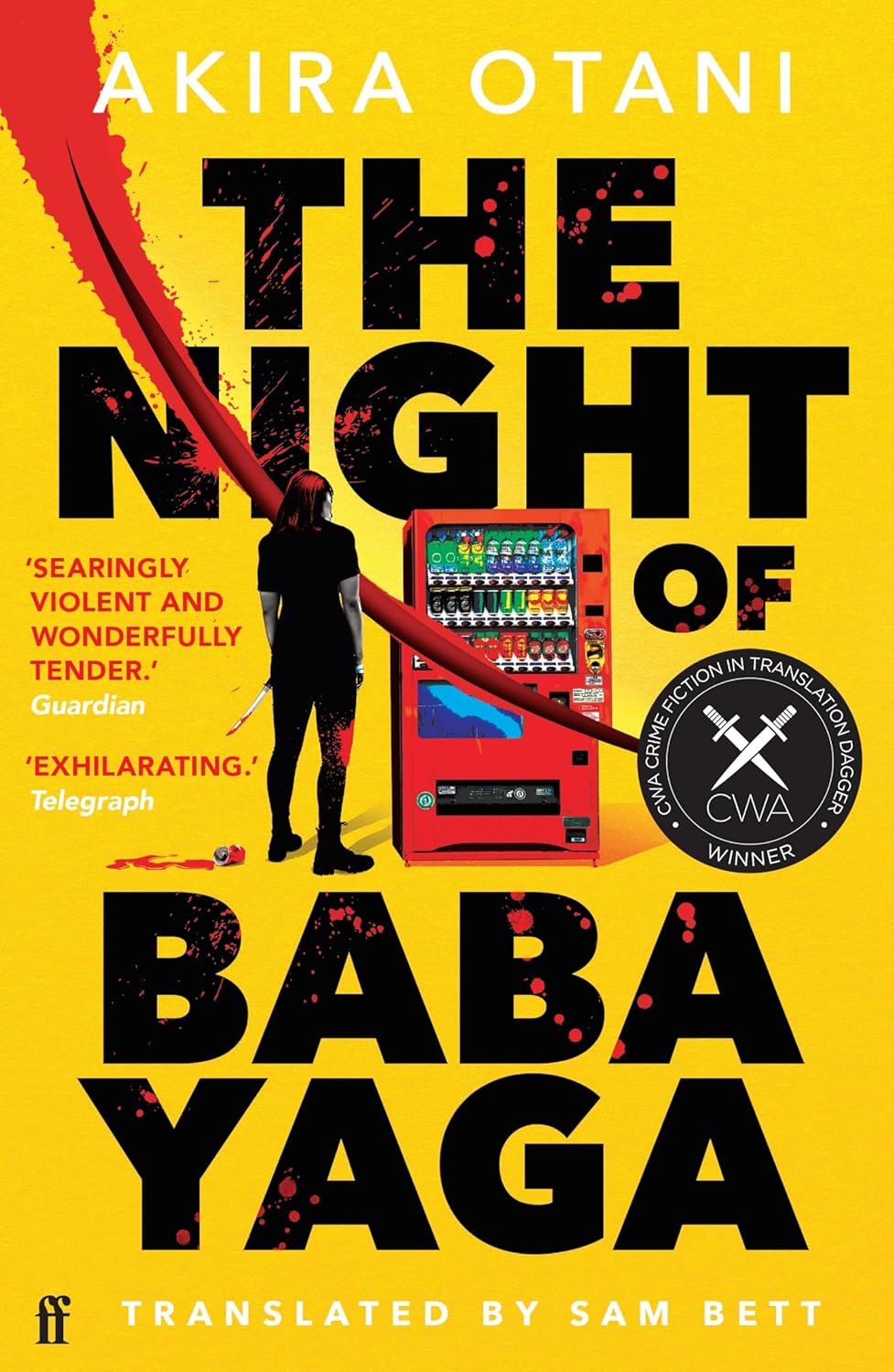
Fierce, mixed-race fighter Shindo has been kidnapped by the yakuza. After brutally beating most of them in an attempt to escape, she is forced to work as a bodyguard to protect the gang boss’s sheltered daughter Shoko, a strange, friendless eighteen-year-old who could order Shindo’s death in a moment.
At first Shindo derides Shoko’s naïvete, but as the men around them grow ever more bloodthirsty and controlling, she becomes ferociously devoted to her charge. However, she knows that if things continue as they are, neither woman can expect to survive much longer.
But could there ever be a different life for two people like them?
I expect Japanese fiction to be strange. The cultural differences are significant and often not self-evident. The whole approach to storytelling and narrative is different, even in genres that appear to operate within the same conventions. Even so, The Night of Baba Yaga‘ was stranger than I had expected it to be.
Set mostly in Tokyo in 1979, it tells the story of a mixed-race woman who demonstrates such exceptional fighting skills when a man assaults her in public that the local Yakuza abduct her and force her to work as a driver/bodyguard for the boss’s teenage daughter.
It’s not a pleasant story. The Yakuza are not pleasant people. Akira Otani disdains romanticising or glamourising the Yakuza. She shows them in all their brutality, which means that this is a story filled with graphic, gory violence. It stinks of testosterone, rage and fear. It quietly ridicules the male posturing and the rituals and hierarchies the Yakuza use to dress their animal aggression and lust with honour and purpose. At the same time, the story accepts that some people, including our ‘heroine’, are built for violence and only really feel alive when they lose themselves in the joy of its intensity. Violence, the hunger for it, the necessity of it, the joy of it, becomes almost a character in its own right.
”The Night of Baba Yaga‘ is an engaging thriller, told at a fast pace but with great clarity. It is character-driven rather than plot-driven. It focuses on the emerging relationship between the bodyguard and her teenage charge, who, it turns out, has even less freedom than the abducted bodyguard.
AAction rather than introspection moves the story forward. Relationships are described in terms of what the characters do and how they treat each other rather than through internal monologuing. There is a lot of action, most of it violent and none of it glorified. It seemed to me that the subtext of the action was intended to challenge Japanese gender norms. The men in the story are deeply unpleasant and very dangerous.
The plot has a clever structure, with plot twists that kept shifting my understanding of what was going on, right up to the final chapter.
I enjoyed the story, gore and all. I ended up cheering for the bodyguard and hoping that she would find a way out of the mess she was in. I was aware that I probably wasn’t understanding the context of the story in the same way a Japanese reader might, but the story still resonated with me and I found I could relate to the characters easily enough.
 Mike Finn's Fiction