I’ve read more than a thousand books since I started this book blog back in 2011. By now, I’ve forgotten what I wrote in most of the reviews and am left only with an residual emotional memory of the books, like cooking smells clinging to my clothes after a meal. So, I’ve decided to do a little time travelling by book blog and re-read some of the reviews I’ve posted.
This month, I’m travelling back eight years to November 2017. For me, it was a slightly depressing year. It shouldn’t have been. It was my last year before retirement. I was setting up an AI strategy consulting practice and planning our return to the UK, so I was spending a lot of time thinking about the future. Unfortunately, everywhere I looked, I saw that the world I was about to start my retirement in was getting worse, and the rate of negative change was increasing. Putin had been winning his hybrid war against the Western democracies. He’d made Brexit happen and gotten Trump elected. I could see that AI was going to make remote control war easier, make billionaires richer and put the rest of us out of jobs. I could also see that there was nothing I could do about any of it. The post below shows how I was feeling.
I’d like to say that things have gotten better since then, but they haven’t. They tell you that people who don’t learn from history are doomed to repeat it. What they don’t mention is that people who HAVE learned from history are doomed to watch helplessly while other people repeat it.

As usual, reading was my refuge. I reviewed three very good books in November 2017: a quiet, contemplative Science Fiction novel about how the story we tell ourselves shapes our identity; a mainstream British novel about coping with loneliness and trauma; and an atmospheric book about the impact of a murder on a rich ranching family in Kansas in the 1980s. I heartily recommend all three of these books.
I’ve shared my impressions of them below. If you’d like to time travel with me, follow the links to the original reviews.
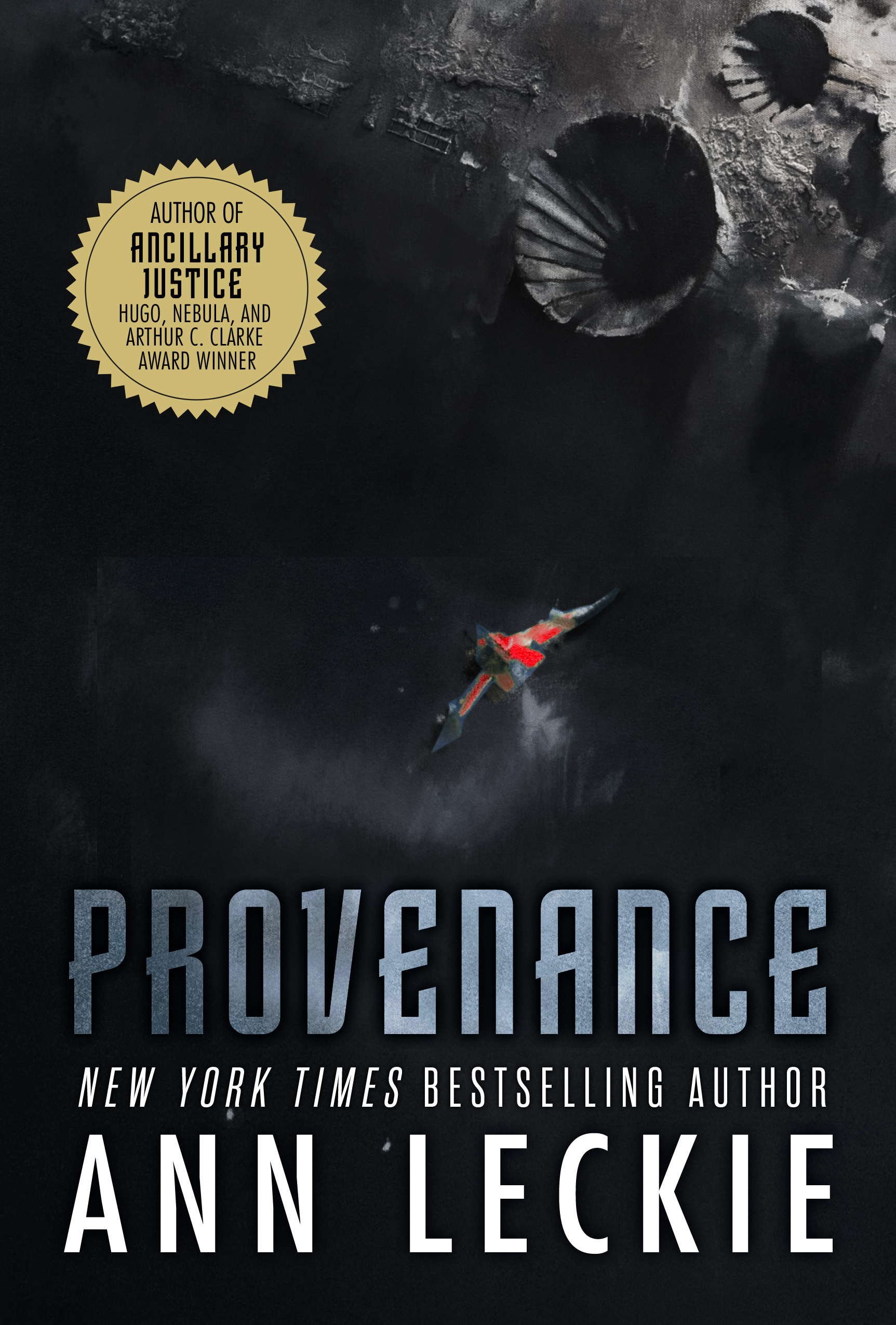
A power-driven young woman has just one chance to secure the status she craves and regain priceless lost artefacts prized by her people. She must free their thief from a prison planet from which no one has ever returned.
Ingray and her charge will return to their home world to find their planet in political turmoil, at the heart of an escalating interstellar conflict. Together, they must make a new plan to salvage Ingray’s future, her family, and her world, before they are lost to her for good.
I fell in love with Ann Leckie’s writing when I read her Imperial Radch trilogy ‘Ancillary Justice‘, ‘Ancillary Sword‘ and ‘Ancillary Mercy‘. “Provenance” is set in the same universe but is a standalone novel focusing on humans living outside the Radch.
The story pivots around the idea that our identity is the product of the story that we tell ourselves about who we are and where we came from. It examines how the things that give that story a provenance, a history of ownership, become as important to us as the identity itself.
The plot unfolds in an unhurried way, allowing time for building worlds, introducing aliens, revealing characters and even adding a little humour. It starts as a sort of heist/forgery idea, then morphs into a murder investigation, and morphs again into a military thriller. The tone throughout is civilized, introspective and self-deprecating. If Jane Austen had written science fiction, this is the kind of humane comedy of manners she might have produced.
To read my 2017 review, click on the link below.
Eleanor Oliphant has learned how to survive – but not how to live
Eleanor Oliphant leads a simple life. She wears the same clothes to work every day, eats the same meal deal for lunch every day and buys the same two bottles of vodka to drink every weekend.
Eleanor Oliphant is happy. Nothing is missing from her carefully timetabled life. Except, sometimes, everything.
One simple act of kindness is about to shatter the walls Eleanor has built around herself. Now she must learn how to navigate the world that everyone else seems to take for granted – while searching for the courage to face the dark corners she’s avoided all her life.
Change can be good. Change can be bad. But surely any change is better than…. fine?
I I didn’t expect it to be, but ‘Eleanor Oliphant Is Completely Fine‘ (2017) turned out to be one of My Top Fifteen Reads of 2017
Given that this is a book about a person who is very far from completely fine, who bears the physical and mental scar of childhood trauma and lives in a state of brutal isolation, this might sound like a depressing read. Yet I found it hopeful and sometimes funny, not because it escaped from reality but because it captured it so well but never gave in to despair.
There is so much understanding here of how day to day life really is, how we struggle with it, how loneliness colonises our lives like a carcinogenic mould until our lives become literally unbearable and how important small acts of kindness and regular honest contact are.
The writing is pretty much perfect. The characterisation is both subtle and clear. Modern life is closely observed and then relayed through the unique filter of Eleanor’s perception. The emotions in the book are strong and real but not broadcast in soundbites or flash cards. If this was a movie, there would be no dramatic music, just close-ups of people being people.
I was amazed to discover that this was a debut novel. So far there hasn’t been a second book but I understand that one is due in 2027. I don’t know what it’s called or what it’s about, but I know I’ll read it.
To read my 2017 review, click on the link below.
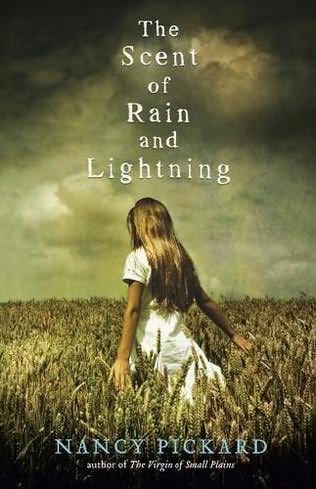
Twenty-six years ago, when she was only three months old, Jody Linder’s father was murdered as she slept in her cot. Her mother vanished, presumed dead.
Local trouble-maker Billy Crosby confessed to the murder and was locked up, leaving his wife and son to face the consequences in the small Kansas town of Rose. But his son Collin, now a lawyer, has successfully petitioned for a retrial, which means that – for now – Billy is back in town.
Jody is horrified – the man who tore her family apart is living just a few streets away. So why does she find herself wondering if Collin is right? What if Billy was innocent, and her close-knit family has been hiding a terrible secret all these years?
‘The Scent of Rain and Lightning’ (2010) was made into a movie in 2017, which is what drew my attention to the book. It wasn’t the sort of novel I’d normally read. It’s set in a failing town in Kansas and tells the story of a misdortune that reshapes the lives of the richest ranching family in the area. The story moves between the 1980’s when a murder is about to take place and twenty-three years later when the man convicted of the murder is about to be released and returned home.
What I liked most about the book was that it was more than a murder mystery. It was mostly focused on the impact of the murder on those who survived it. It was filled with secrets and anger and grief but still managed to find a little room for love and forgiveness. It pulled no punches on the damage done by violence, lust and selfishness, but it raised the possibility of hope that can be realised only by setting hate aside.
To read my 2017 review, click on the link below.
 Mike Finn's Fiction