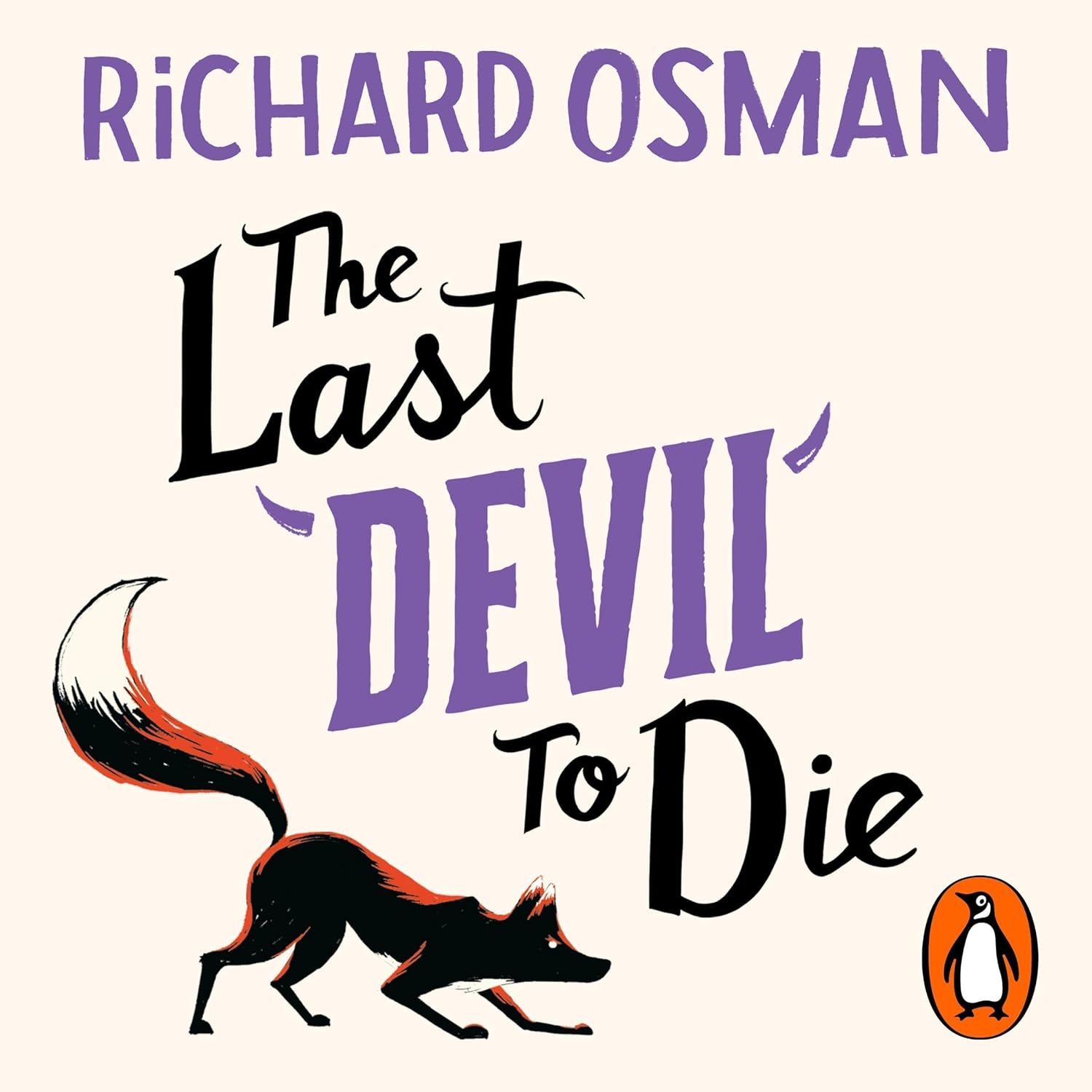
Shocking news reaches the Thursday Murder Club.
An old friend in the antiques business has been killed, and a dangerous package he was protecting has gone missing.
As the gang springs into action they encounter art forgers, online fraudsters and drug dealers, as well as heartache close to home.
With the body count rising, the package still missing and trouble firmly on their tail, has their luck finally run out? And who will be the last devil to die?
IN A NUTSHELL
A return to form for The Thursday Murder Club series. This was an excellent read. What I loved most about it was the empathy Richard Osman generates for the small details of our lives that do so much to define us, and his understanding of the different ways in which we feel and show love for each other. The mystery worked well, but the focus was on the relationships. Stephen’s battle with dementia and Elizabeth’s grief at seeing him slipping from her were deeply affecting. Joyce, as ever, was a delight.
I was delighted to find that the fourth book in The Thursday Murder Club series was as good as the first. I liked that the focus went back to the lives and loves of The Thursday Murder Club members rather than reaching for ever more complicated plots.
The mystery was solid without being extravagant, and The Thursday Murder Club’s involvement didn’t depend on something from Elizabeth’s past catching up with her. Everything, including the mystery, was about friendship, trust, and death.
Like the first book, this one was enlivened by accurate, insightful details of how our day-to-day lives work, highlighting our small vanities and self-deceptions in a way that promoted empathy rather than sarcasm.
I liked that the central cast keeps expanding, adding more perspectives on life and broadening the world the four core members of The Thursday Murder Club live in.
I admire Richard Osman’s ability to enrich his story by adding more points of view while keeping the narrative cohesive and the plotting tight. I enjoyed seeing the impact that coming into contact with the four members of The Thursday Murder Club has on other residents of the retirement village.
The two police officers co-opted into the Thursday Murder Club made the plot more plausible, added a lot of humour, and avoided the tiresome how-will-they-get around-the-cops-this-time? dynamic that I think mars the Marlow Murder Club mysteries.
Part of what makes the book work so well is that the relationship between the four main characters continues to evolve as the characters grow and change. In this book, Elizabeth is often so preoccupied with Stephen that she isn’t available to lead the group, so Joyce, in her own inimitable style, takes on the task. Ron and Ibrahim each have important roles in the plot, and each of them has changes in personal circumstances to adjust to.
I particularly enjoyed getting to see Ibrahim working as a prison psychologist, counselling a dangerous woman that The Thursday Murder Club helped send to jail in a previous book. Ibrahim’s precision, relentless research and passion for structure have been a source of humour in the books. When I saw him practicing his profession, his pecadillos became essential skills. It was also interesting to see that his membership of The Thursday Murder Club has made him more willing to be flexible in his professional ethics, stepping beyond the normal boundaries of counselling in order to get information to solve a case.
Joyce’s journal entries were wonderful. Each entry was a little masterpiece of storytelling and character building. She is at once deeply credible and endlessly complex. Her journal creates an intimate connection with the reader.
The storyline around Stephen’s battle with dementia was heartbreaking. It wasn’t sentimental, nor was it brutal. It was honest and realistic, which made the sadness harder to bear but easier to accept. I think this part of the story will have reduced many readers to tears.
I thought Fiona Shaw’s narration was first-rate. It was a performance, not a reading. It was controlled and focused, getting the most from the text. It was a great example of what an audiobook can be. Click on the YouTube link to hear a sample.
 Mike Finn's Fiction