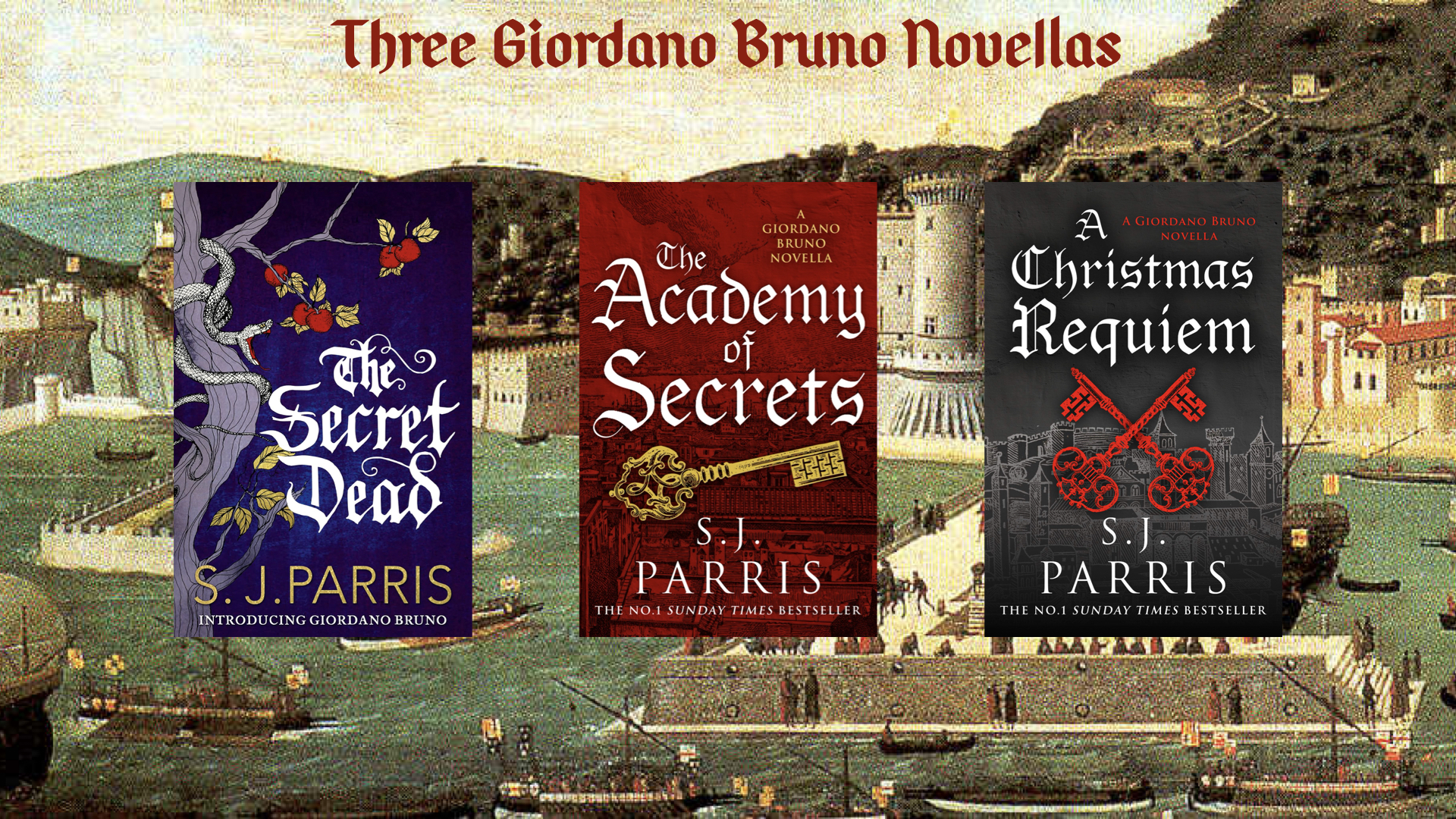
S. J. Parris’ seven-book series of 16th Century historical mysteries, built around the real-life figure of Giordano Bruno, an Italian philosopher, poet, alchemist, astronomer, cosmological theorist, and esotericist, has been recommended to me repeatedly, so I decided to sample the series by reading three novellas , written as prequels to the first book, starting when Giordano Bruno first entered the Dominican Order at the monastery of San Domenico Maggiore in Naples in 1566.
Originally published separately, the three novellas are now available in a single volume called ‘The Dead of Winter’. I think they work well together. Giordano Bruno developed over the course of the three novellas, and my picture of the world he lived in grew progressively darker.
I’m now keen to read the Giordano Bruno novels so I can see how he fares in the court of Elizabeth I.
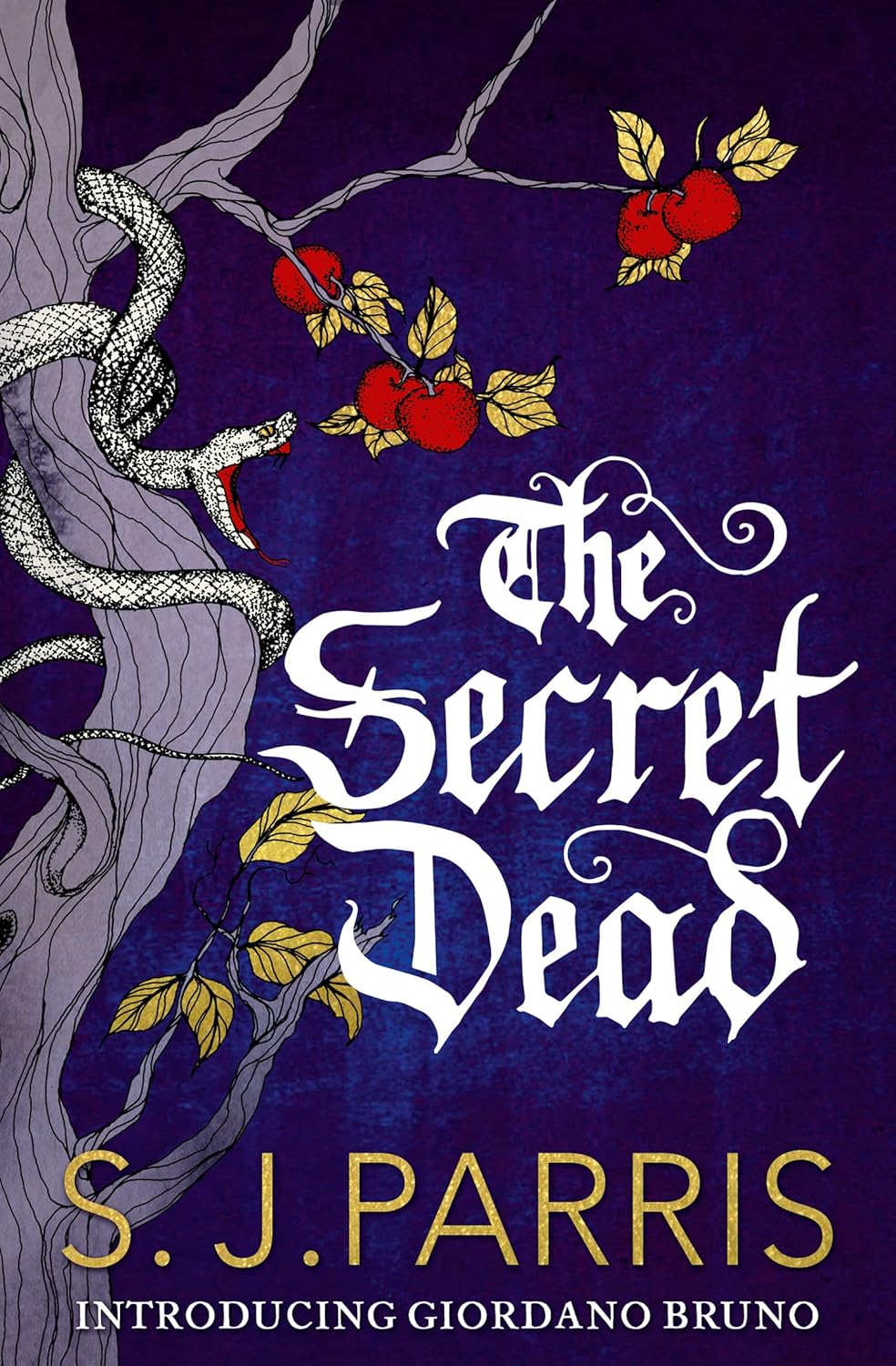
Naples, 1566. During a sweltering summer, eighteen-year-old Giordano Bruno takes his final vows at San Domenico Maggiore and is admitted to the Dominican Order – despite doubts over his tendency to ask difficult questions.
Assisting in the infirmary, Bruno witnesses an illicit autopsy performed on the body of a young woman. Her corpse reveals a dark secret, and Bruno suspects that hers may not have been an accidental death.
His investigation leads him to a powerful figure who wants to keep the truth buried – and Bruno is forced to make a choice between his future in the Order, and justice for an innocent victim and her grieving family…
This was an enjoyable introduction to Giordano Bruno. He immediately felt real to me.
I was surprised that he was a Dominican, given their role as Inquisitors at this time, but S. J. Parris did a good job of showing it as a pragmatic choice for a young man with no fortune.
The story has a strong sense of place and time, depicting Naples as a violent, choleric city with too many people squeezing into too small a space, all of them living in the shadow of both of Versuvious and the occupying Spanish forces. It’s a rich city where life is cheep, everyone carries a knife and the gap between what people do and what Church and State demand of them is wide enough for a man easily to fall into it and lose himself.
The mystery was straightforward but well-told. The autopsy scene was graphic without being exploitative. Investigating the murder of the young woman also set Bruno on the path towards heresy, prompting him to put more trust in his own scientific investigations than in the brutally enforced dogma of the Church.
I liked how the mystery demonstrated the power structures in Naples and the pressures to conform that Bruno was under. The ending was credible and made me cheer.
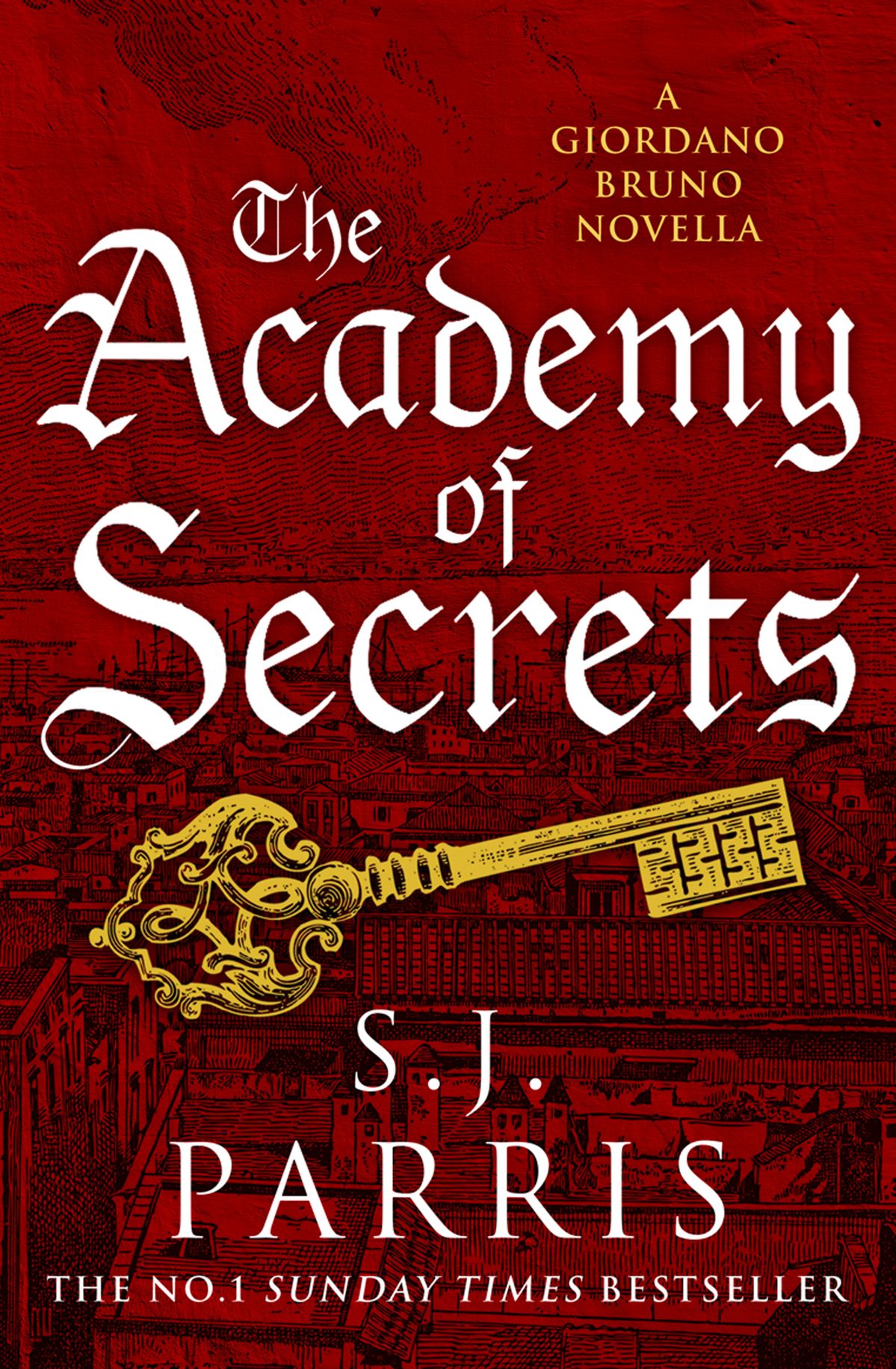
Naples, 1568
A rebellious young monk…
Novice monk Giordano Bruno struggles to follow the strict rules of religious life. He has questions – about God, life, the universe – which could prove deadly… especially at a time when the Inquisition is gaining power and influence.
A secret society…
One night, Bruno’s mentor invites him to a hidden location outside the city where a group of like-minded men meet to discuss forbidden subjects – a secret society. Bruno is captivated – even more so when he meets Fiammetta della Porta, the niece of the society’s wealthy leader, who initiates him into the ways of love.
An enemy who could destroy everything…
But Bruno has enemies, and he has been followed to his assignations. Not only is the heretical society at risk of exposure, but Bruno and his new lover are in grave danger. Keeping his secrets has become a matter of life or death…
This novella rounds out Bruno’s intellect and rebellious nature by entangling him with a secret society devoted to the understanding of Natural Magic (Science).
This story demonstrates that, although Bruno is an intellectual prodigy, he can put himself and others in danger because he has no patience with, or understanding of, politics, and is in the grip of a young man’s strong passions.
I admired how S. J. Parris evoked a world where the pursuit of forbidden knowledge could be fatal and where a person with no rank is at the mercy of the nobility.
In this story, the people were more important than the plot, but the plot still delivered some tension and excitement.
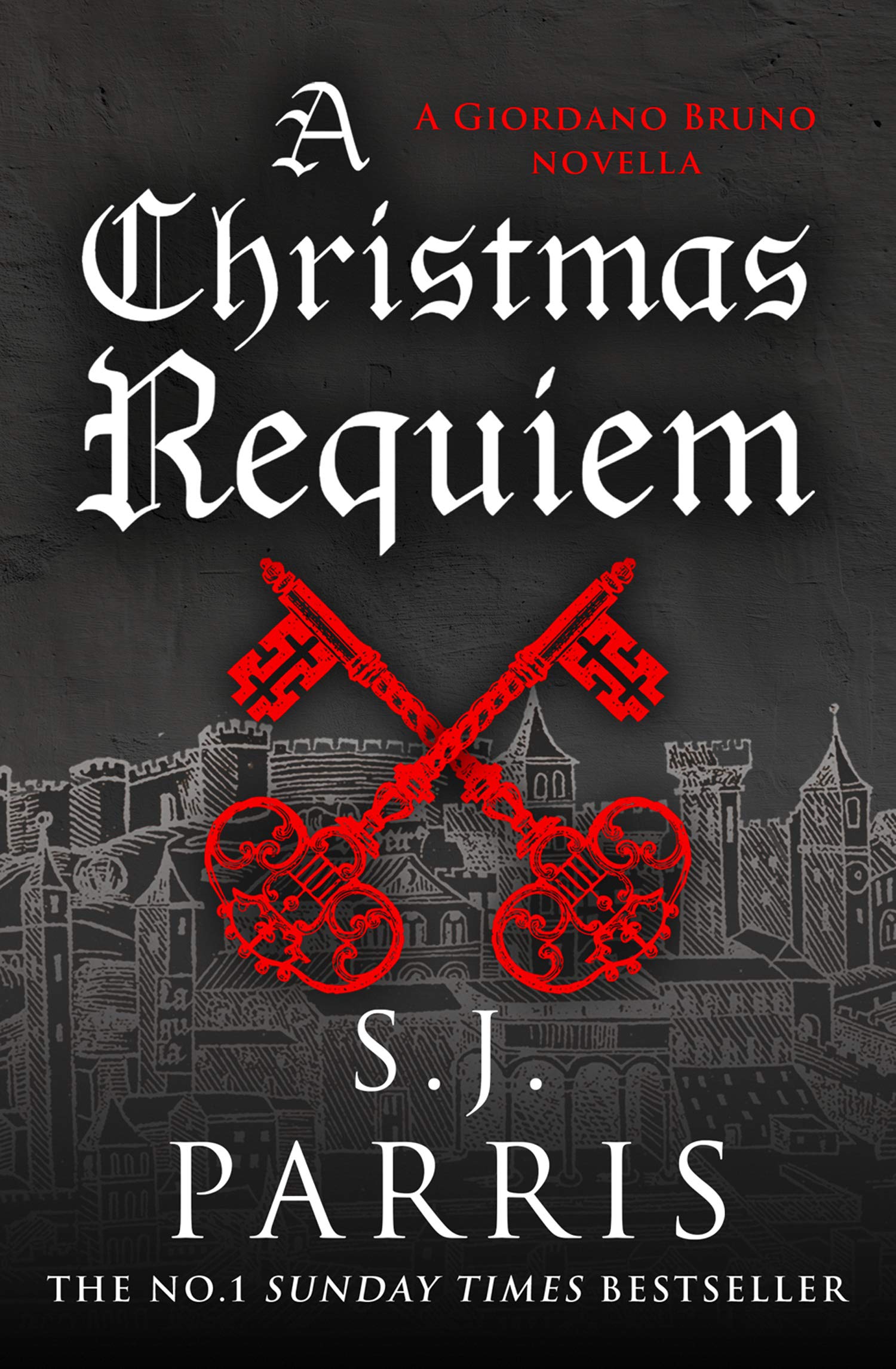
Rome, 1569. When novice monk Giordano Bruno is told the pope wants to see him, his first thought is that it must be a joke. The second is that it must be a trap.
Young Bruno’s talent for complex memory games has caught the attention of the Lord’s Vicar. Summoned to Rome, the city captures Bruno’s imagination, and he soon slips away from his suspicious, austere host Fra Agostino da Montalcino, drawn instead to more glamorous, sophisticated companions.
But accusations of heresy are only ever a whisper away, and Rome is a city of intrigue, trickery and blood. Bruno soon realises he will be lucky to escape the Eternal City alive.
This was the longest, darkest and best of the novellas. I was fascinated and appalled, but not surprised, by the Rome described in the novella.
I admired S. J. Parris’ skill in helping me see the Cardinals and the Pope as real people, with passions, ambitions and character flaws rather than pieces on a theocratic chessboard. Making them more human actually made them much more frightening.
In this story, the twenty-one-year-old Bruno discovers the hazards of being clever and flippant in the presence of men who can have you tortured and killed for the beliefs you hold and the books you’ve read. I liked that Bruno is both exceptionally bright and remarkably stupid. His naivety, arrogance and lack of impulse control got him into an astonishing amount of trouble in Rome in a very short time.
Part of what made this story so dark was knowing that the real Giordano Bruno was eventually killed by the Inquisition in Rome in 1600, thirty-one years after the events in this novella; he was burned at the stake in Rome in the Campo dei Fiori. S. J. Parris foreshadows this by having Bruno sneak out of the Dominican headquarters in Rome during a time of fasting. He finds something to eat at a café in the Campo de Fiori. He enjoys his meal up to the point where he spots a pole on the centre of the market used for the tormento della cordia, a torture device used by Inquisitors. For me, the darkest scene was Bruno’s meeting with the Pope, which quickly became a potentially fatal interrogation.
 Mike Finn's Fiction