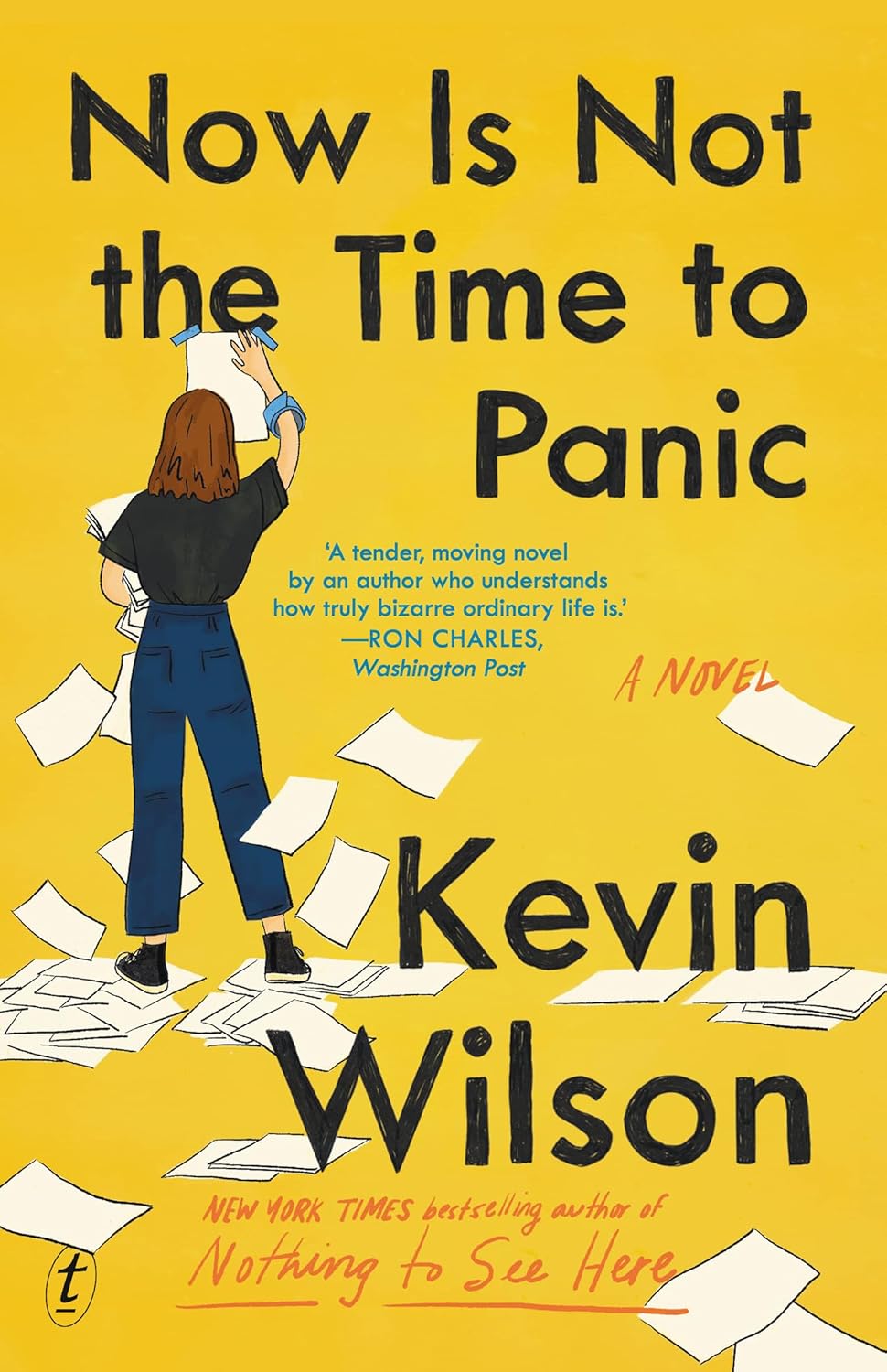
Sixteen-year-old Frankie Budge—aspiring writer, indifferent student, offbeat loner—is determined to make it through yet another sad summer in Coalfield, Tennessee, when she meets Zeke, a talented artist who is as lonely and awkward as she is.
As romantic and creative sparks begin to fly, Frankie and Zeke make an unsigned poster that becomes unforgettable to anyone who sees it. Copies of their work are everywhere in town, and rumours start to fly about who might be behind the ubiquitous posters: Satanists? Kidnappers? Soon, the mystery has dangerous repercussions that spread further afield, and the art that brought Frankie and Zeke together now threatens to tear them apart.
Twenty years later, Frances Eleanor Budge—famous author, mother to a wonderful daughter, wife to a loving husband—gets a call that threatens to upend everything: a journalist asks if Frances might know something about the Coalfield Panic of 1996. Could Frances’ past destroy the life she has so carefully built?
From the publisher’s summary, ‘Now Is Not The Time To Panic’ sounds like a coming-of-age Young Adult novel with a quirky romantic subplot. It isn’t. It is a very grown-up book about art, identity, the power of obsession, and the corrosive effect of keeping secret, for more than twenty years, events that you believe defined you.
The novel starts with present-day Frankie having the life she’s made as a wife. a mother and a successful author, put at risk because the secret she’s kept for twenty years, about the things she did in the summer of her sixteenth year, is about to be exposed. The story then moves between the present-day and the summer of 1996, revealing what Frankie has kept secret and what it means to her.
The 1996 timeline vividly captured what it was like to be sixteen and strange in a small town that had nothing to offer you, at a time before there was an Internet to show you other worlds and connect you to other people like yourself.
I loved that the present-day Frankie still so closely resembled her sixteen-year-old self in terms of her passions and her fears. She loves the normalcy of the life she’s built as an adult, but knows it sits on a foundation of strangeness that she’s kept secret even from the people she loves.
I loved that 1996 Frankie, even at sixteen, understood that who she was and what she wanted was different from the people around her, felt no need to apologise for it and had no ability to explain it except through art.
One of the strongest themes in the book is an exploration of what art is. This isn’t done through abstract conversations about art theory, but by describing what it feels like to create art that expresses something you know to be true and important, but that you can’t explain except through showing people the art. It showed the power of ambiguously truthful art to stir emotions in others, ranging from rapture to rage, and how art, once shared, no longer belongs to or is completely defined by the people who created it.
All of this is wrapped in a propulsive plot that had me turning the digital pages to find out what Frankie did in 1996 and what was going to happen to her in the present day.
I liked that the people in the present-day timeline often surprised me. Present-day Zeke was entirely credible, and yet very different from the boy who spent the summer of 1996 in a strange town. I knew how Frankie expected those she loves to react to the revelation of her secret, so the unexpected elements of their reactions helped me and Frankie to reassess what her secret really meant.
I admire Kevin Wilson’s ability to tell this story in a way that kept it accessible and hopeful without letting it become either clichéd or cosy. The book left me with a lot to ponder about how the story we tell ourselves about our lives shapes our behaviour and our expectations, even when, or perhaps especially when, the story is not the whole truth.
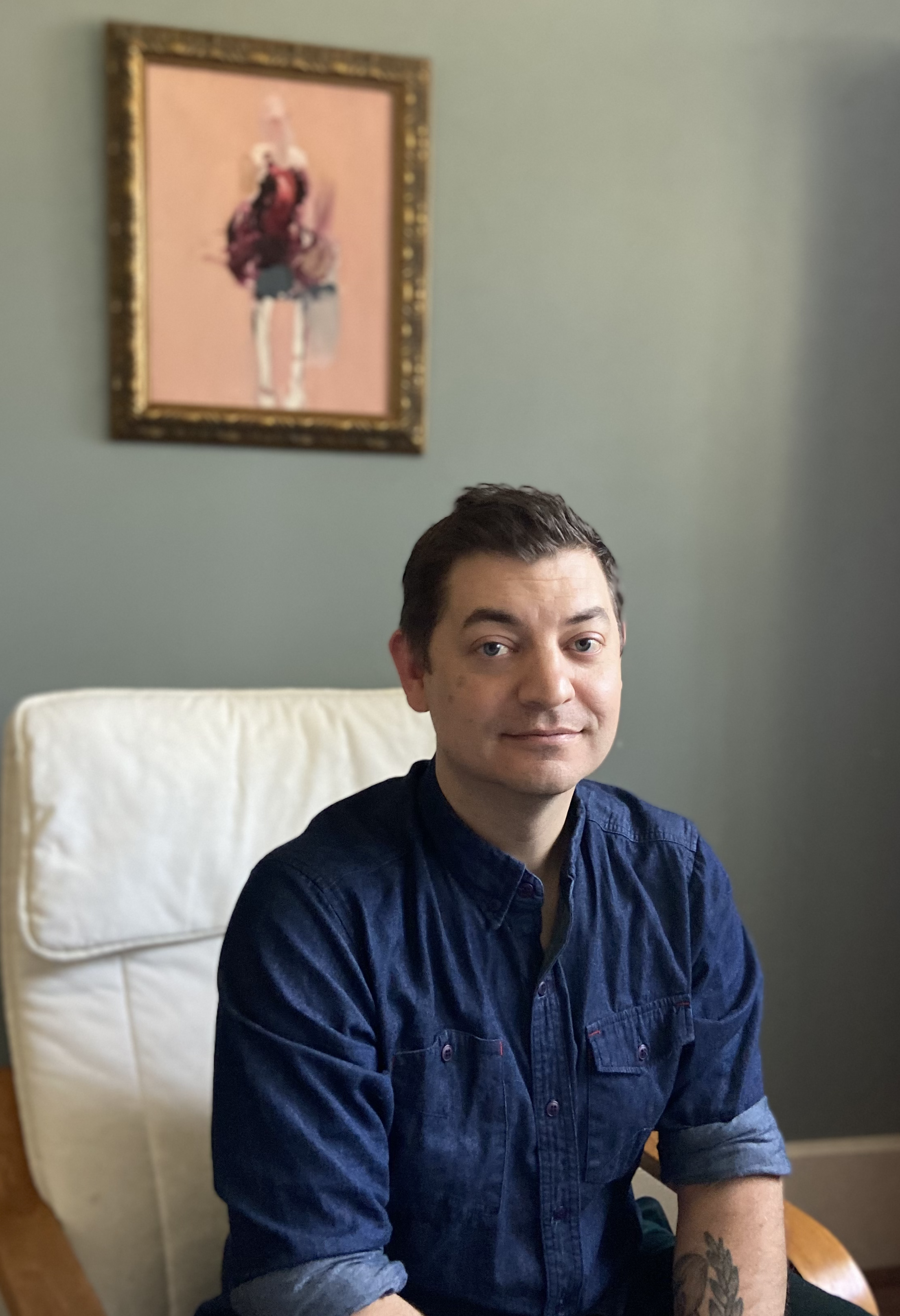
Here’s the Bio from Kevin Wilson’s website:
Kevin Wilson is the author of two collections, Tunneling to the Center of the Earth(Ecco/Harper Perennial, 2009), which received an Alex Award from the American Library Association and the Shirley Jackson Award, and Baby You’re Gonna Be Mine (Ecco, 2018), and five novels, The Family Fang (Ecco, 2011), Perfect Little World (Ecco, 2017), Nothing to See Here (Ecco, 2019), a New York Times bestseller and a Read with Jenna book club selection, Now is Not the Time to Panic (Ecco, 2022) and Run for the Hills(Ecco, 2025).
His fiction has appeared in Ploughshares, Southern Review, One Story, A Public Space, and elsewhere, and has appeared in Best American Short Stories 2020 and 2021, as well as The PEN/O. Henry Prize Stories 2012.
He has received fellowships from the MacDowell Colony, Yaddo, and the KHN Center for the Arts.
He lives in Sewanee, Tennessee, with his wife, the poet Leigh Anne Couch, and his sons, Griff and Patch, where he is an Associate Professor in the English & Creative Writing Department at the University of the South.
 Mike Finn's Fiction