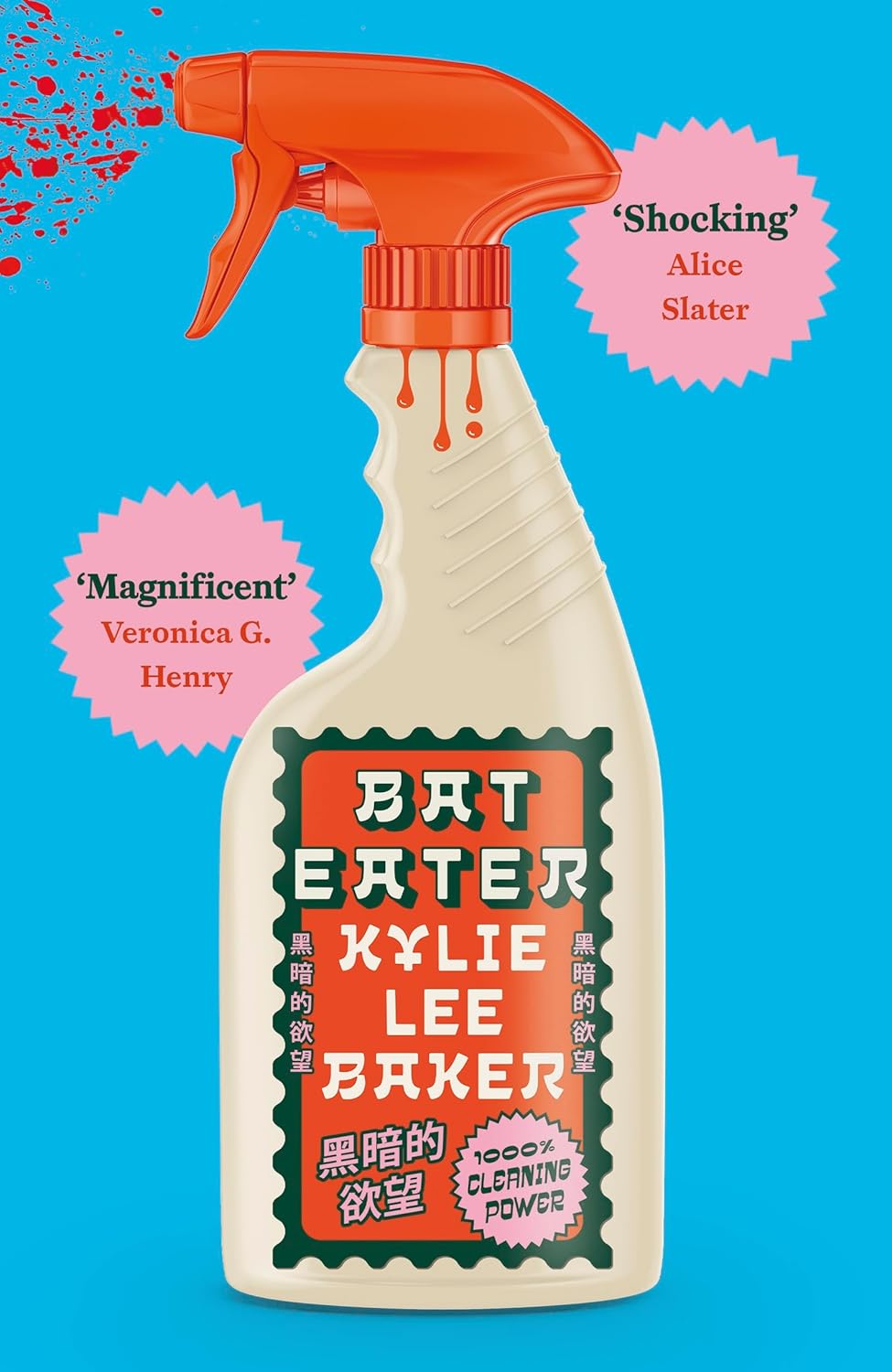
Cora Zeng is a crime scene cleaner. But the bloody messes don’t bother her, not when she’s already witnessed the most horrific thing possible: her sister being pushed in front of a train.
But the killer was never caught, and Cora is still haunted by his last words: bat eater.
These days, nobody can reach Cora: not her aunt who wants her to prepare for the Hungry Ghost Festival, not her weird colleagues, and especially not the slack-jawed shadow lurking around her doorframe. After all, it can’t be real – can it?
After a series of unexplained killings in Chinatown, Cora believes that someone might be targeting East Asian women, and something might be targeting Cora herself.
Soon, she will learn . . . you can’t just ignore hungry ghosts.
This novel left me reeling a little. The emotions in it were raw and powerful. Cora Zeng’s thoughts were unsettling. The novel was filled with blood, gore, violence and truly terrifying ghosts, but it wasn’t primarily a horror novel. It didn’t set out to horrify. It set out to tell the survival story of Cora Zeng, an American-born Chinese woman with a history of mental illness, who endures the trauma of seeing the only person she feels connected to brutally murdered in a racially motivated attack during the first COVID lockdown in Manhattan.
The first chapter set the tone for the novel. It was strange and a little challenging, but very powerful. The prose and Cora’s interior monologue were almost as strange as the unexpected and bloody violence that ends the chapter. Seeing the world through Cora’s eyes, I had a feeling of coming in and out of focus, of being in the world and watching it from the outside. I knew then that this was a novel to be savoured. It wasn’t about rushing forward to find out where the plot was leading me, like running over stepping stones; it was about understanding who Cora was, who trauma had made her and sharing her sense of helpless dislocation.
Cora has lived her life in the shadow of her charismatic half-sister. She has surrendered her agency to others because she doesn’t trust her own decision-making and has no strong desires. The trauma Cora has been through has left her even more vulnerable and uncertain of herself.
I loved Kylie Lee Baker’s prose. I found myself highlighting sentence after sentence, impressed at how clearly she expressed Cora’s thoughts. Being inside Cora’s head was often more disturbing than the misogynistic violence and the hungry ghosts that populate the story.
Cora is aware that she is not like other people. She lacks the desires she knows other people have. Far from bringing her a form of Buddhist serenity, Cora’s absence of desire causes her anxiety because it makes her uncertain of her identity. Cora keeps trying to find the life she should be leading, but…
“…every life she can imagine building for herself just feels like throwing a tarp over a crime scene. It’s just another way to carve out the chunk of her brain that still holds Delilah inside. Cora is only alive right now because the story of Delilah Zeng is behind aquarium glass in her mind.”
Cora’s sister was a dreamer who constantly imagined what her future would be like. Core finds herself unable to do this. She tells herself that…
“…not everyone has dreams. Some people just are, the way that trees and rocks and rivers are just there without a reason, the rest of the world moving around them.”
Cora feels lost. What she wants most is some guidance on how to live her life. She tells herself that:
“Maybe she wants someone to teach her how to be a human the correct way, the way she never learned. Someone to wake her up and tell her what to eat, what to dream about, what to cry about, who to pray to. Because Cora somehow feels that every choice she’s made has been wrong, that every choice she will ever make will lead her deeper and deeper into a life that feels like a dark, airless box, and when she peers through the slats in the wood she’ll see the pale light of who she might have been, so bright that it blinds her.
Setting the novel in Manhattan during the first COVID lockdown provides the trigger for the initial violence and adds to the sense of isolation and normality being disrupted. The novel showed how the fear of COVID, labelled as the Chinese Disease, unleashed racial violence in Manhattan. As the story progressed, it became clear that COVID just provided a rationalisation for racism and misogyny that was much more deeply rooted in society.
After the traumatic events of the first chapter, Cora finds herself struggling to understand what is real and what might be her brain misfiring. Her struggle is made more challenging by her social awkwardness and by the conflicting messages she has received about the nature of the supernatural world from her white Christian grandmother and her Chinese grandmother.
Cora has taken a job as a crime scene cleaner on the basis that nothing she is going to see is worse than what she’s been through and she enjoys restoring order to the chaos. In the course of her work, Cora comes across evidence of what might be a serial killer targeting young Chinese women like her. Not trusting her own judgement, she tries to ignore the evidence. Then ghosts start to appear to her. Not nice Casper-type ghosts, but hungry, frightening, we-want-to-consume-the-world ghosts.
Cora was much more willing to believe that what she was seeing was attriubtable to neurological pathology rather than a manifestation of the supernatural. Oddly, the more she looked for evidence of her own mental illness, the more easily I could imagine her being surrounded by ghosts.
This was not a story of happy endings. There were no ghostbusters to come to the rescue. Cora was stuck in the middle between violent, racist, misogynistic men and angry, vengeful ghosts. She’s left with no choice but to take a stand and try to save her own life.
The ending was spectacular, unexpected and, to me at least, quite satisfying. I’m already looking forward to the release of Kylie Lee Baker’s next novel, Japanese Gothic’ in October.
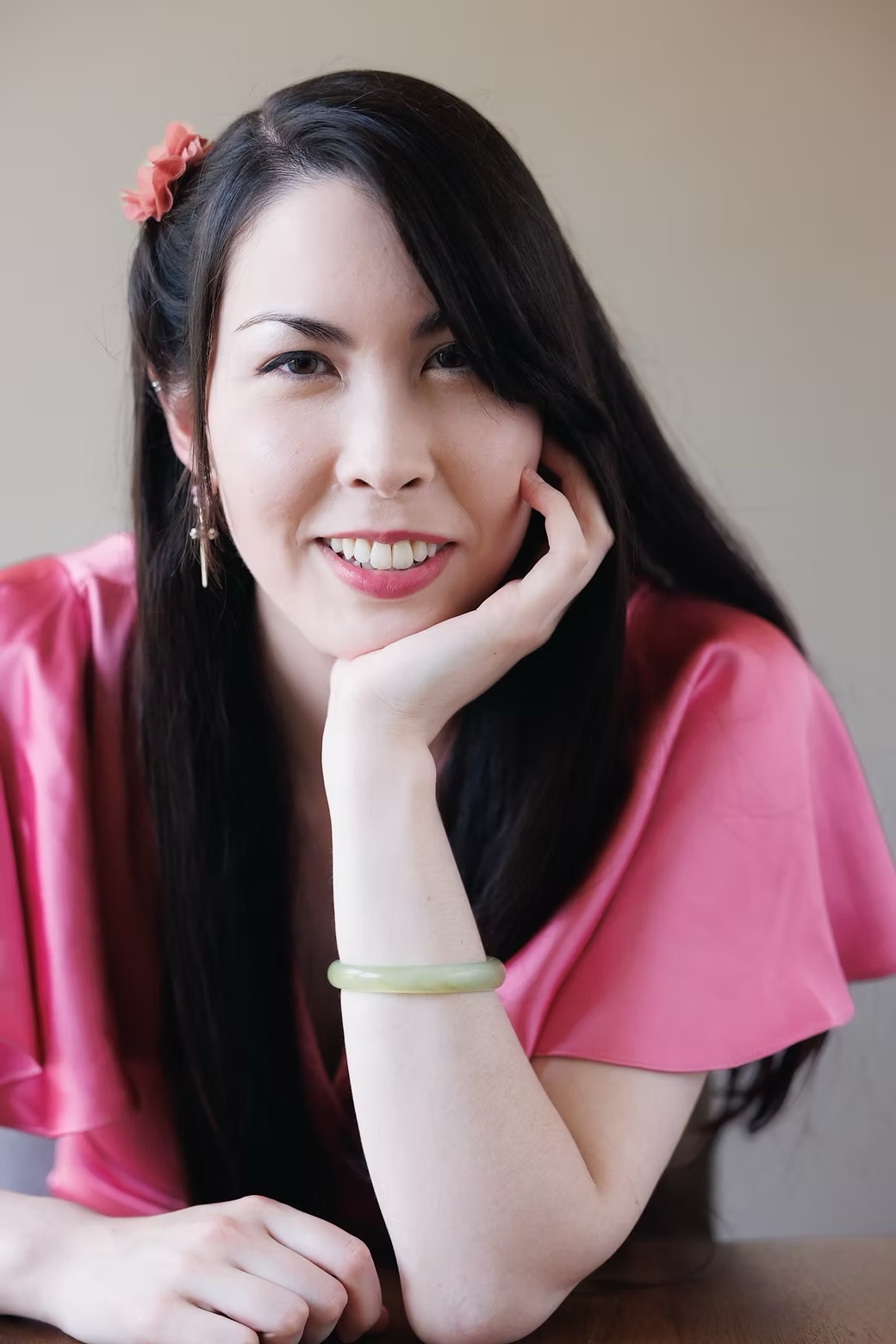
Kylie Lee Baker is the Sunday Times bestselling author of dark fantasy and horror novels such as The Keeper of Night, The Scarlet Alchemist, and Bat Eater and Other Names for Cora Zeng. She grew up in Boston and has since lived in Atlanta, Salamanca, and Seoul. Her writing is informed by her heritage (Japanese, Chinese, and Irish), as well as her experiences living abroad as both a student and teacher. She has a BA in creative writing and Spanish from Emory University and a MS in library and information science degree from Simmons University.
 Mike Finn's Fiction