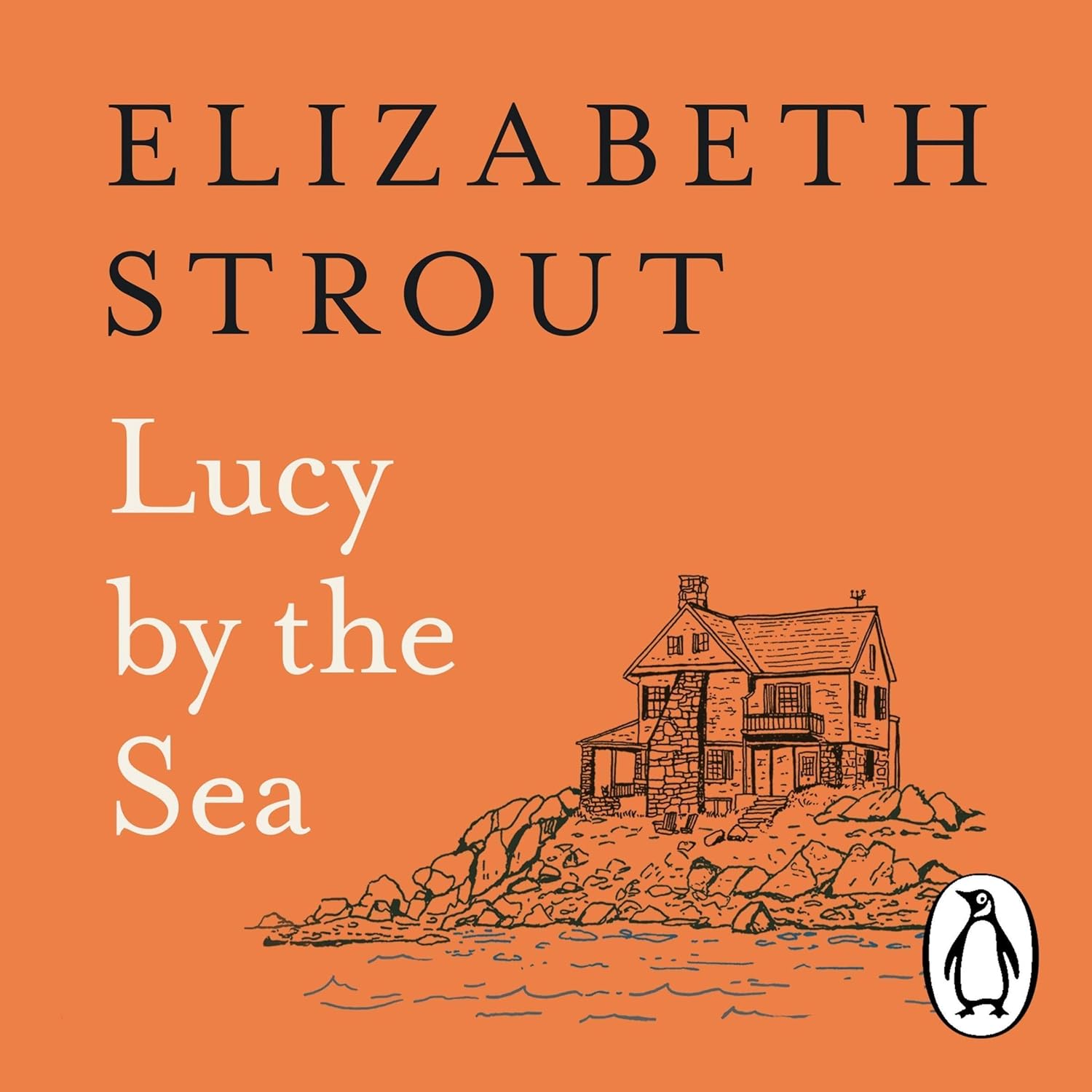
In March 2020 Lucy Barton’s ex-husband William pleads with her to leave New York and escape to a coastal house he has rented in Maine. Lucy reluctantly agrees, leaving the washing-up in the sink, expecting to be back in a week or two. Weeks turn into months, and it’s just Lucy, William, and their complex past together in a little house nestled against the sea.
IN A NUTSHELL
‘Lucy by the Sea’ is a quietly told, introspective fictional memoir of Lucy Barton’s experience of the first COVID Lockdown and the changes, frustrations, fears and reassessments of priorities that came in its wake. It’s an undramatic, truthful account, focused on Lucy’s emotional landscape. It deals as much with ageing as it does with the stresses of Lockdown. Not so much the physical changes that ageing brings, but the changes in priorities and attitudes, the adjustment of long-term relationships: with her ex-husband and with her now adult daughters. For me, it ran a little long, but that was partly because this felt like a slice of life, albeit a life disrupted by Lockdown, rather than a story with a beginning, a middle and an end.
I relished the first two books in the Amgash series, ‘My Name Is Lucy Barton’ (2016) and ‘Anything Is Possible’ (2018). The writing was astonishingly good and exceptionally honest. Lucy Barthon’s voice was distinctive and engaging. They were novels that described life as we live it in a compelling and truthful way. Lucy Barton’s relationships showed all the signs of fracture and wear that you might expect from people who’ve lived through hard times. Lucy Barton grew up in extreme poverty. She is no longer poor, but she has never left the experience of poverty behind. I have the third book, ‘Oh William!’ (2021) on my shelves, but I skipped it to read the fourth book, ‘Lucy By The Sea’ (2022) out of sequence because it fits into my ‘Fiction in a Time of COVID’ reading challenge.
‘Lucy By The Sea’ was a quietly told fictional memoir of the emotions and reflections triggered by lockdown and the pandemic. It was not dramatic, but it was truthful, and the truths it shared, even though they were not my truths, summoned my own memories of lockdown: my rage at the loss of life that my incompetent government tolerated and the contrast between all that death and the relative comfort and safety of my lockdown.
Part of my fascination with the Lucy Barton character is that I have very little in common with her. She is empathetic, deeply curious about people and is good at intuiting their emotions. She’s often anxious, sometimes to a crippling degree. She’s so focused on her inner life that the mechanics of the world tend to pass her by. Through her, I finally understood how so many people failed to take in the scale of COVID and the likely length of lockdowns, even though all the relevant information was widely available by the beginning of March 2020.
The start of the novel, when Lucy accedes to her ex-husband’s request to leave NYC and live in Maine, was powerful and evocative. Lucy’s interior landscape and her shifting, increasingly fraught relationships with her daughters and her ex-husband felt authentic. Lockdown disrupted Lucy’s life, taking her from the familiar into the unknown, throwing her back into daily contact with her ex-husband while adding worries about, and restricting contact with, her daughters.
One of the things that resonated with me in Lucy’s reaction to the disruption of her life was her recognition that, when Lockdown was over, things would not go back to normal. Her life, and the lives of most of the people she knew, had been changed. Lucy recognises that she no longer has any desire to return to her Manhattan apartment or to the way of life she had there. Lockdown and the losses inflicted by COVID triggered this recognition, but they didn’t cause the change. They enforced a hiatus that enabled a reassessment of what was important. Lucy comes to recognise that she has entered old age and that what she wants for herself and from others is no longer what she wanted when she was young or middle-aged.
For me, the book ran a little long, perhaps because Elizabeth Strout wanted to show what the new normal looked like, or perhaps she wanted to show that life asserts itself even in the middle of a large-scale disruption. Whatever the reason, the final sections of the book felt to me like watching the tide go out on a gently sloping shore: not dramatic but easy to believe in.
Kimberly Farr’s narration was masterful. In my head, she is the voice of Lucy Barton, even when I read the text off the page. I recommend listening to the audiobook. Kimberley Farr’s narration added a level of intimacy to the reading experience. As I listened to her, it was easy to feel that she was sharing her thoughts and emotions only with me. Click on the YouTube link below to hear a sample.
 Mike Finn's Fiction