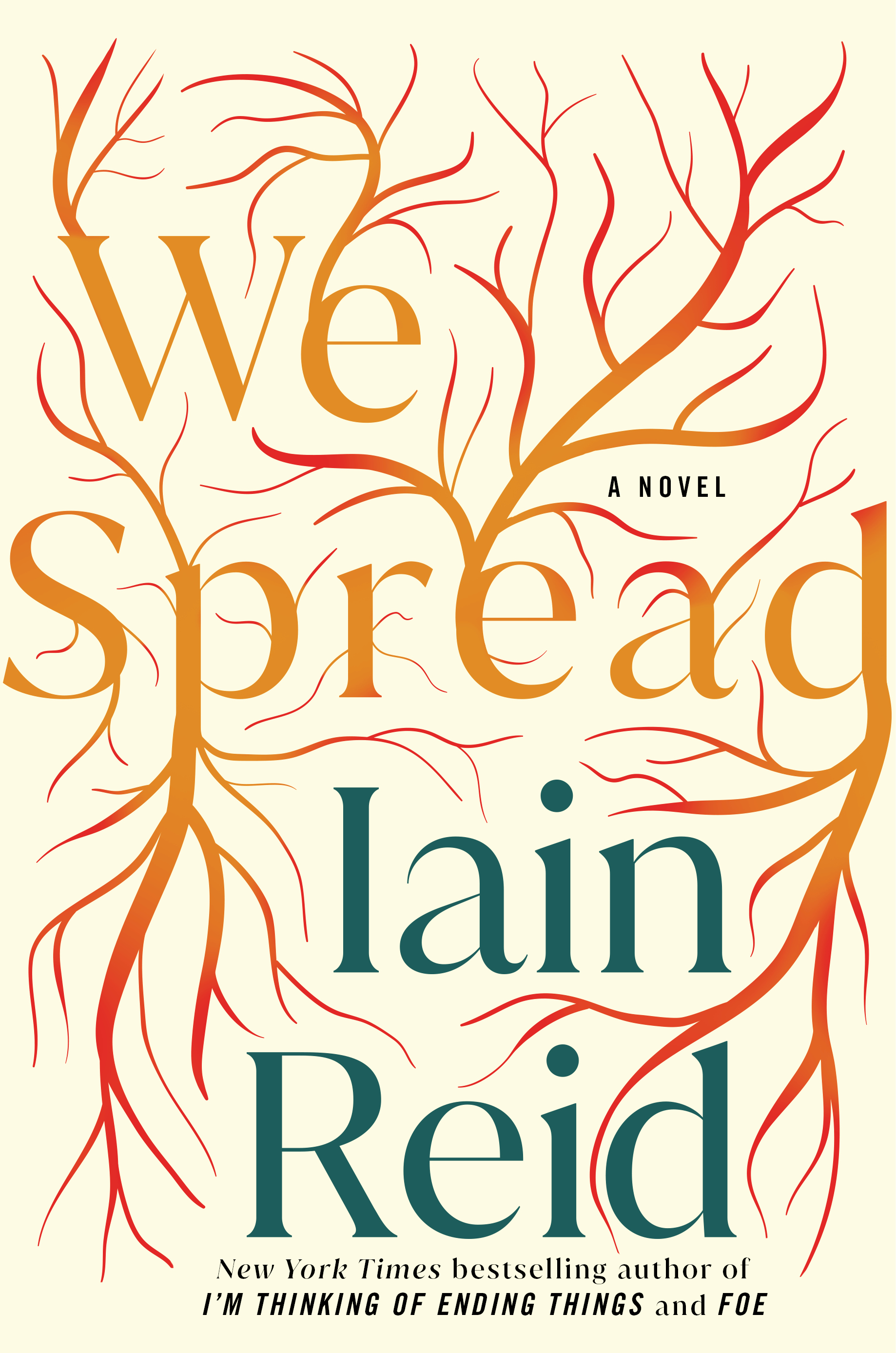
Penny, an artist, has lived in the same apartment for decades, surrounded by the artifacts and keepsakes of her long life. She is resigned to the mundane rituals of old age, until things start to slip. Before her longtime partner passed away years earlier, provisions were made, unbeknownst to her, for a room in a unique long-term care residence, where Penny finds herself after one too many “incidents.”
Initially, surrounded by peers, conversing, eating, sleeping, looking out at the beautiful woods that surround the house, all is well. She even begins to paint again. But as the days start to blur together, Penny – with a growing sense of unrest and distrust – starts to lose her grip on the passage of time and on her place in the world. Is she succumbing to the subtly destructive effects of aging, or is she an unknowing participant in something more unsettling?
We Spread is a beautifully written book told entirely from the point of view of Penny, a woman in her eighties who may be being gaslighted, or may be losing her mind, or may simply be getting old. It’s hard for her to tell. Whatever the cause, her growing anxiety as she feels herself losing control of her life is palpable.
After having lived alone in the same apartment where she spent her entire life with her now-deceased partner, Penny finds herself in a small, luxurious elder care facility, apparently arranged in advance by her partner. The facility is a grand old house with very few residents. It is in a remote location surrounded by a forest Penny is not permitted to enter and run by a scientist with an interest in delaying or preventing ageing.
The story is structured around Penny’s changing sense of self. It starts with Penny in the apartment that has been her home for decades, reflecting on the loss of passion and meaning that comes with being old. Then moves on to a sense of being overwhelmed and helpless and afraid of a loss of agency. The move to the elder care facility brings with it the novelty and comfort of being looked after and this mostly hides all the small but disturbing things that seem off about the facility and the people in it. Slowly, comfort becomes unease which becomes quiet, hard to specify but omnipresent menace. The progression is beautifully executed. I loved that the text remains ambiguous, leaving it to the reader to decide how much of the threat that Penny perceives is real and how much is a sign of her cognitive decline.
Although I’m only in my sixties and so twenty years younger than Penny, many of her observations about ageing seem to me to be so accurate they hurt. Despite their, to me, obvious truth, I’ve seldom seen these thoughts written so starkly. Here are some examples of Penny’s thoughts from when she was still in her apartment, that resonated with me
Here Penny looks at the things that she has accumulated in the apartment over the decades and observes:
“There are piles of notebooks and sketch pads, drawings and photographs. The first piece of art I ever owned is buried in here somewhere. A gift from my father. It’s a tiny framed print of the tree of life that’s small enough to fit one hand. I never hung it because I didn’t want anyone else to see it.
There are two bookshelves full of paperbacks. I’m losing my attention span; it’s hard to read novels now, or books of any kind. I used to read a book or two a week. Literary fiction, historical novels, comedies. I devoured books on science and nature. There is a box under the coffee table full of small, ceramic sculptures. I made them in my midtwenties. I have all these records, but I don’t listen to music anymore.
At one time, it wasn’t just stuff. It all meant so much to me. All of it. Marrow that has turned to fat.”
That last sentence, “Marrow that has turned to fat” feels like a painful truth.
Here’s Penny trying to see her home as others might see it and observing:
“I scan the living room again. Everything’s so old-fashioned. Even I can see that. Outdated. Worn out. This used to actually be a room for living. Now it’s no more than a mangy depository. A shabby and confined storehouse for old newspapers, random trinkets, carpet stains, and me.”
This is Penny handling the art books that so excited her in her youth and observing:
“I can remember with such specificity the feelings I had then, a private, internal frenzy of potential. Where is that now? Frames of mind aren’t built to last. They aren’t dependable. Even the sturdiest eventually dissolve and disappear.”
Penny shifts her attention to the physical aspects of ageing and shares these two observations:
“Another long night of tossing and turning in the dark. Nights shouldn’t feel as long as days. Nights are meant to go by in the blink of an eye. I’m supposed to wake up feeling rested and refreshed. But I never do”.
“That’s what has always worried me most. Cognitive decline. Fading memories. Lost days. An uncertain present.”
What happens to Penny when she moves into the assisted living facility is hard to assess because Penny herself can’t keep track, but the emotions that she experiences are vividly described and deeply unsettling.
It seems to me that, as well as being a very personal story about Penny, We Spread offered a sober consideration of whether living forever has any meaning and whether or not we are more than our memories. I’m still thinking about my own answers to those questions.

