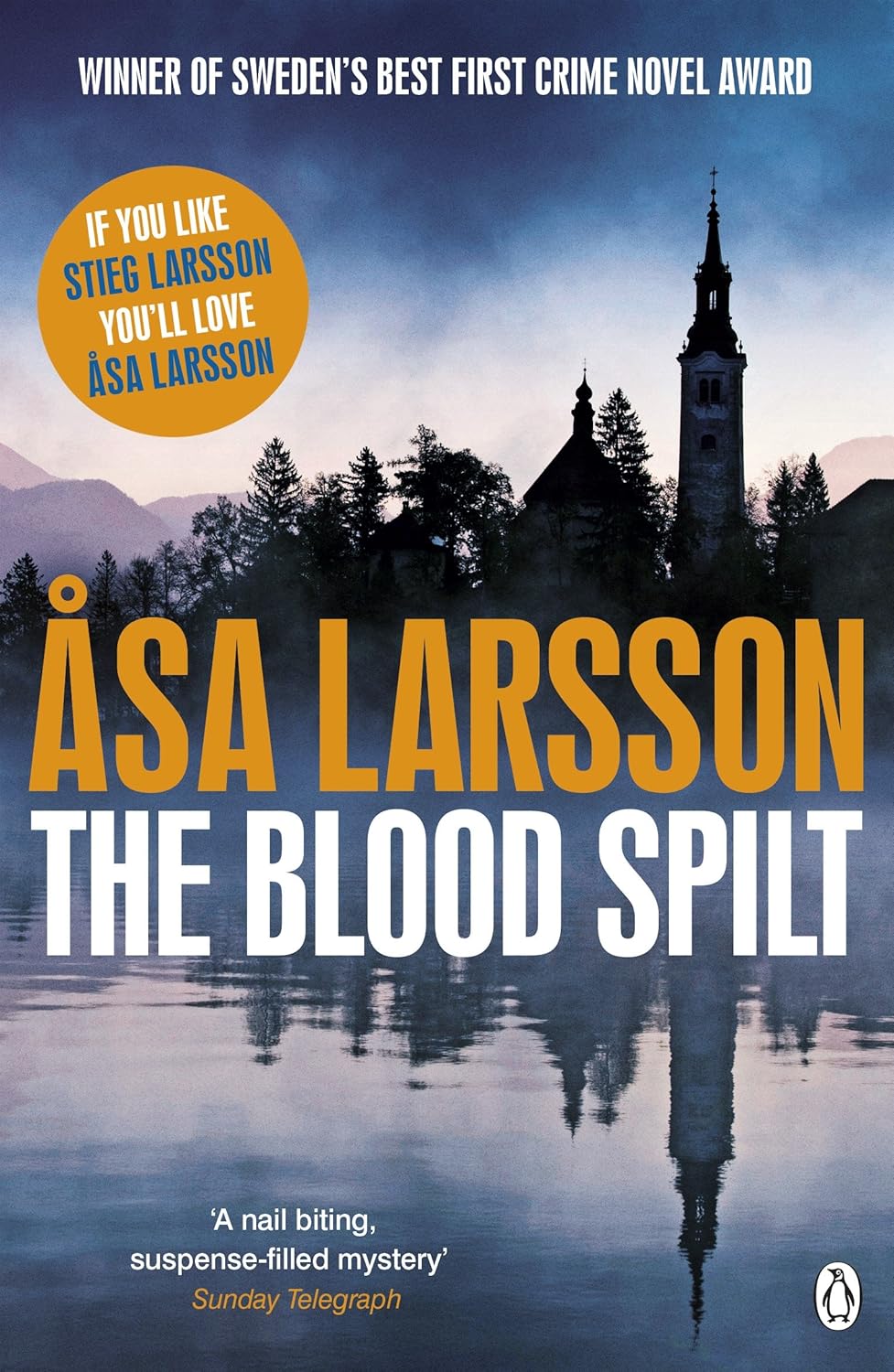
It is midsummer in Sweden – when the light lingers through dawn and the long winter comes to an end. Now, in this magical time, a brutal killer has chosen to strike, and the murder of a female priest sends shockwaves through the community.
It has been almost two years since attorney Rebecka Martinsson returned to her birthplace, Kiruna, in order to stop an eerily similar murder spree. Now she is back in Kiruna, where a determined policewoman works on the case and the people who loved or loathed the victim mourn or revel in her demise. As Rebecka is drawn into a mystery that soon will claim another victim, the dead woman’s world consumes her: a world of hurt and healing, sin and sexuality, and above all, of lethal sacrifice.
IN A NUTSHELL
This was a powerful, dark but very human story about the pain caused by misogynistic violence silently endorsed by the local patriarchy in a small village in the north of Sweden. I loved that this wasn’t a tract about social issues but a story about the emotional impact of the violence on the women and men touched by it. I also liked that Rebecca Martinsson, instead of being the intrepid amateur sleuth unearthing dark secrets, spent most of the book as walking wounded looking for a place of safety that reminded her of her childhood home while she tries to move on from the violence that ended the first book ‘The Savage Altar‘.
The Blood Spilt’ is the second book in the Rebecka Martinsson series I started last month with ‘The Savage Altar‘.
If you judge it by its content, this is a dark book, that starts with a vicious, vengeful killing and goes on to uncover a climate of violent misogyny, endorsed and encouraged by the most powerful men in the village, including the local priests. Yet, for me, this was a story about women surviving trauma and overcoming hate by finding a way to stand together and being true to themselves It was fuelled by a love of the rural setting and the possibility of serenity and community that it offers.
It takes place two years after the events of ‘The Savage Altar’ and I liked that Rebecka was still traumatised by her actions at the end of the first book and is questioning what her future holds. Circumstances bring her north on business, close enough to her home town to feel familiar but far enough away for her to be anonymous. I enjoyed reading the well-crafted description of Martinsson’s gradual awakening to the idea that leaving Stockholm behind and returning to the home of her childhood might offer her peace. I particularly liked that participating in a successful professional services sales pitch given by an experienced Partner, was instrumental in pushing her away from her old life. The description of the pitch was realistic, unsensational and just a little distasteful.
The pace of the storytelling appealed to me. It wasn’t a mystery where someone races from suspect to suspect asking “What am I missing?”. It was more like a hunter in a hide, still, quiet, attuned to the forest and waiting for whatever emerges. This tense, purposeful stillness was added to by having Rebecka so focused on finding her path to the future rather than finding the killer, that she unintentionally becomes a tethered goat, set to catch a tiger. The hunting is being done by Anna Maria, the indomitable local detective, who we met in the last book, when she was heavily pregnant and allegedly on maternity leave. Now she’s the mother of a young baby and back at work. I was captivated by Anna-Maria’s interview technique, It was non-confrontational but relentless and cunning.
Looking back, when all had been revealed, it struck me that what was different about the way Åsa Larsson told the story was that she wasn’t focused on the mechanics of solving the mystery of who killed the priest but on describing the impact of the priest’s life and her death on the people around her. Åsa Larsson shows the void she left in the lives of the people who loved her and the outrage, fear and hatred she evoked in the men she challenged. The priest wasn’t painted as a saint. She had flaws. She had an agenda. She was deliberately and sometimes joyfully provocative but most of all she was shining with a life. Larsson shows the darkness that spread when that light was violently extinguished.
Åsa Larsson weaves into the narrative a second story, detailing the life of a female wolf called Yellow Legs. Yellow Legs plays no active role in the human mystery although humans in the story encounter her from time to time. One of the reason’s the murdered priest was hated was that she championed the protection of wolves. I found myself immersed in Yellow Legs’ story. I knew I was supposed to be drawing a message from it that would add a perspective to the struggles of the women in the main story but, except at the most abstract level, the connection escaped me.
‘The Blood Spilt‘ was a pleasure to read. I’m hooked on this series now. I’ll be reading the next book, ‘The Black Path‘ later this month.

