Having someone else support your bad decision feels kind of good.
After volunteering to run a rescue mission, Murderbot realizes that it will have to spend significant time with a bunch of humans it doesn’t know.
Including human children. Ugh.
This may well call for … eye contact!
(Emotion check: Oh, for f—)
If you love being in Murderbot’s head, then this ‘family road trip from hell’ novella has a lot to offer. I like Murderbot, but I felt this story was a little thin. I enjoyed most of it, but it didn’t leave me with a “Now THAT’S what makes Murderbot special!” feeling.
At the start, I wasn’t sure that this novella was going to work. The beginning felt a little flat to me, which was odd because Murderbot is plunged into action from the first page. The mechanics of its infiltration into the space station were fully imagined and vividly described, but I didn’t feel engaged. I think it took too long to discover why Murderbot was there and what it was so angry about.
Once I had the context, the story began to work for me. I enjoyed seeing Murderbot having to get up close and personal with human children and finding that not everything about it was as bad as it had imagined. I liked the idea that it had installed an Emotion Check software module that it thought of as if it were in the same category as its Risk Assessment module, the difference being that it trusted its Risk Assessment module.
The giant planet-circling Taurus the action was set in, was spectacular and fun. I loved that the sort of majesty that Niven or Banks gift to the engineers of these massive constructs was constantly undermined by the petty rivalries, poor maintenance, invasive advertising and the vulgarly grandiose design choices of the Corporates who own the station. By placing the grand but tatty Taurus around a once-habitable planet that had been mined to extinction for profit, Martha Wells turned the whole place into a symbol of the destructive, divisive venality of competing Corporates.
The action scenes worked well. The baddies were allowed to demonstrate that they deserved to be terminated before Murderbot was unleashed on them. That Murderbot sometimes chose not to kill them was either a sign that it is developing emotionally or that it’s being contaminated by long-term exposure to liberal-minded humans.
The humans in the story were thinly drawn (perhaps because Murderbot found watching them less interesting than watching media), but the kids were cute, and the frat boy pirates were easy to hate.
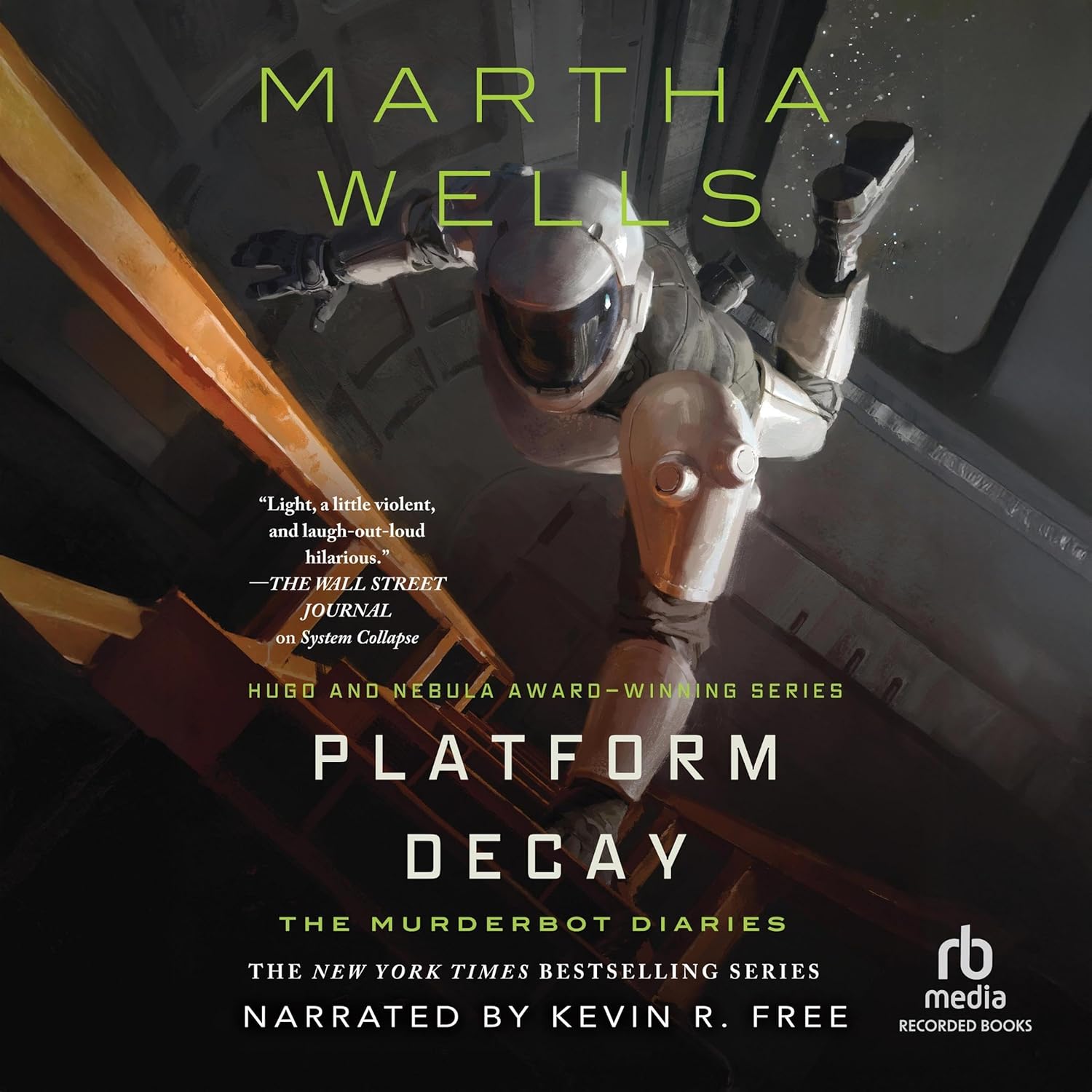
I listened to the audiobook version of ‘Platform Decay’. I enjoy the tone of Kevin R. Free’s narration. The only downside is that his narration makes me think of Murderbot as a ‘him’ rather than an ‘it’. Click on the YouTube link below to hear a sample.
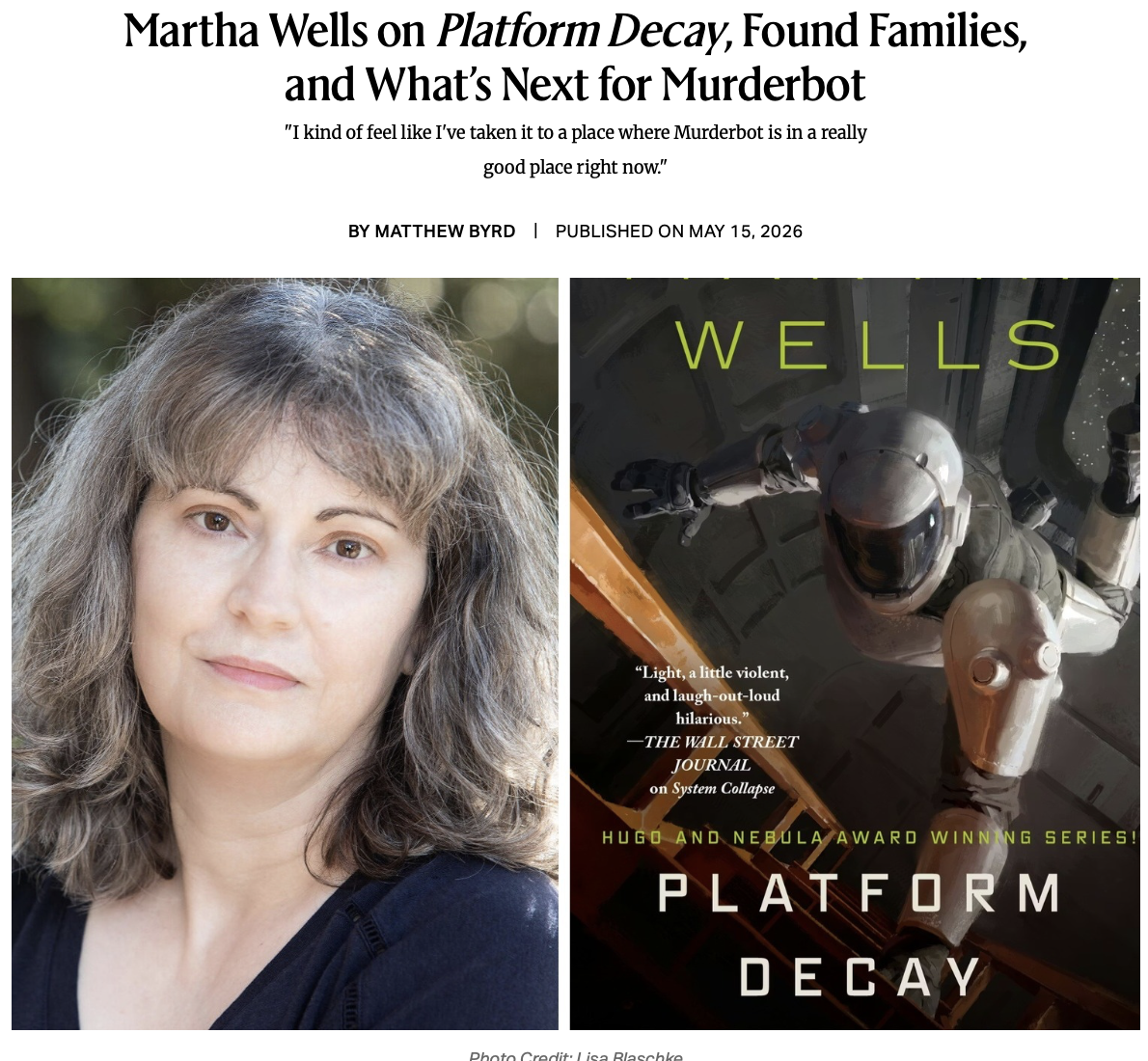
If you’re a Murderbot fan, I recommend reading THIS interview with Martha Wells on Tor’s Reactor magazine.