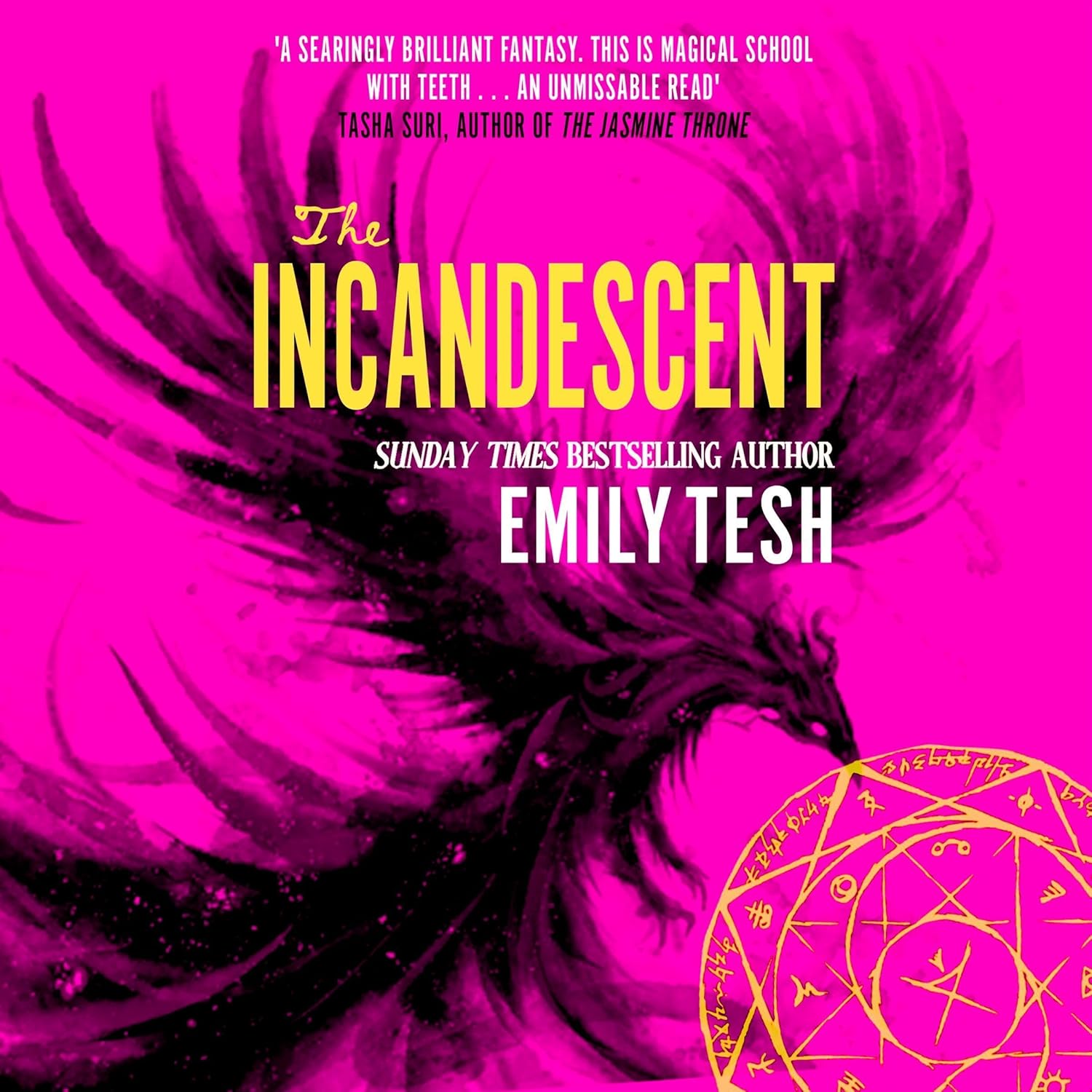
Dr Walden is the Director of Magic at Chetwood School and one of the most powerful magicians in England. Her days consist of meetings, teaching A-Level Invocation to four talented, chaotic sixth formers, more meetings and securing the school’s boundaries from demonic incursions.
Walden is good at her job – no, Walden is great at her job. But demons are masters of manipulation. It’s her responsibility to keep her school with its six hundred students and centuries-old legacy safe. But it’s possible the entity Walden most needs to keep her school safe from . . . is herself.
I didn’t fully understand what ‘The Incandescent’ was about until after I finished reading it. It’s not that the book was confusing or obscure; it was accessible, engaging and disarmingly familiar. It read like a solid, albeit conventional, fantasy about an elite boarding school for magically gifted children that is under threat from the demonic realm. The story is told from the point of view of Dr Walen, the school’s Director of Magic. She is a prominent academic specialising in the control and use of demons and their magic, and an extremely powerful practitioner in her own right.
The story was strongly grounded in Walden’s day-to-day experience of teaching in a Public School and so shaped by her understanding of herself and her world that I became completely immersed in her point of view, unconsciously sharing her blind spots and accepting her assumptions. Only when the action was over was I able to take a breath, look back and see what had really been going on.
Walden and her school were so realistically drawn that I felt as though I was reading a mainstream novel with the addition of demons, an elaborate system of magic, and some scary violence to add colour. Looking back, I think this was partly camouflage and partly to make it clear that we in the real world may also share Waldon’s error, although it would manifest differently.
’The Incandescent’ isn’t just an action thriller with magic-weilding heroes, duplicitous demons, talented but reckless students, and political subplots, although it has all of those. Behind all that, ‘The Incandescent’ is an invitation for the reader to think about what it means to have a self, how many of them we have, whether all of them are true and why and how they change. It stress tests these concepts by having Walen rethink who she wants to be while facing off with powerful demons who, in addition to being hungry for power, yearn to reify in our world by gaining enough complexity to develop a sense of self.
Throughout the book, Walden refers to herself as if she were mulitple people, The self who is Dr Walden, Director of Magic, the ever-present ghost of her teenage self who is still shrouded in trauma generated guilt, the Saffy Walden who was a scarily powerful controlller of demons, wooed by the CIA, and the mild-aged, mostly solitary Saffy, who is mildly bemused by her attaction to a sword-wielding, armour-wearing, Warden with scant education but a lot of focused power. Each of these selves was so well-drawn that I failed to see how fractured Walden was. Which was the point of course. It made her blind to her own hubris and the real nature of the demonic threat.
I enjoyed reading ‘The Incandescent’ and thinking about it afterwards. It’s not a fast-paced supernatural thriller. Nor is it a young magician coming of age and saving the world, School of Magic plot. It’s the story of the downfall of an accomplished woman, at the height of her powers, who has retained an ‘incandescent’ adolescent confidence in her abilities, unaware that this is the main source of her vulnerability.
I read ’The Incandescent’ because it’s a finalist for the 2026 Hugo Award for Best Novel. I’m impressed with Emily Tesh’s writing, so I’ve bought her debut novel, ‘Some Desperate Glory’ (2023), which won the Hugo Award for Best Novel.
I recommend the audiobook version of ‘The Incandescent’, narrated by Zara Ramm. Click on the YouTube link below to hear a sample.
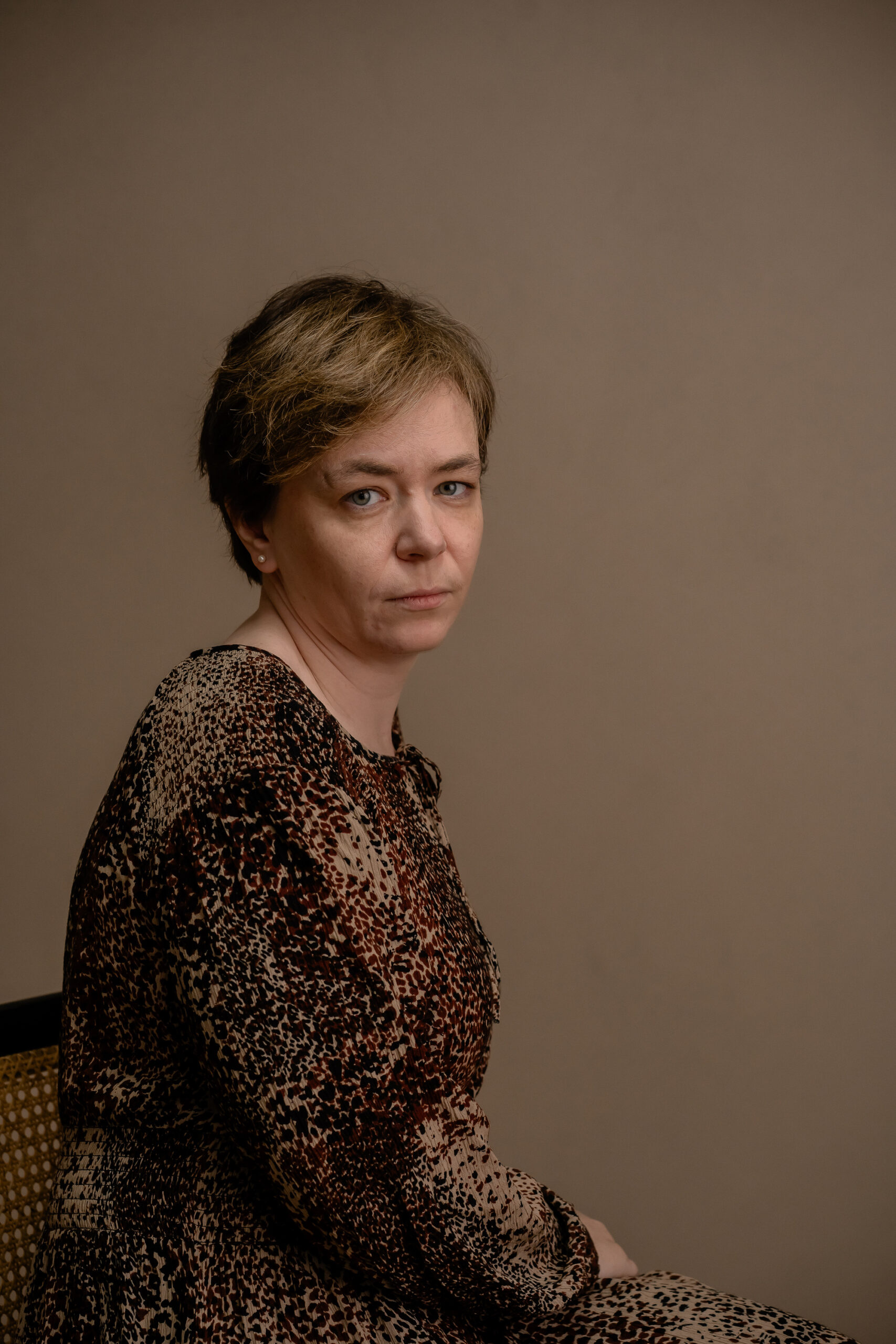
EMILY TESH is a UK-based author of science fiction and fantasy.
Her first novella Silver in the Wood (2019), the first book of the Greenhollow duology, won her the 2021 Astounding Award for Best New Writer
Her debut novel, Some Desperate Glory (2023), won the 2024 Hugo Award for Best Novel.
The Incandesent (2025) is currently shortlisted for the 2026 Hugo Award for best novel.
 Mike Finn's Fiction