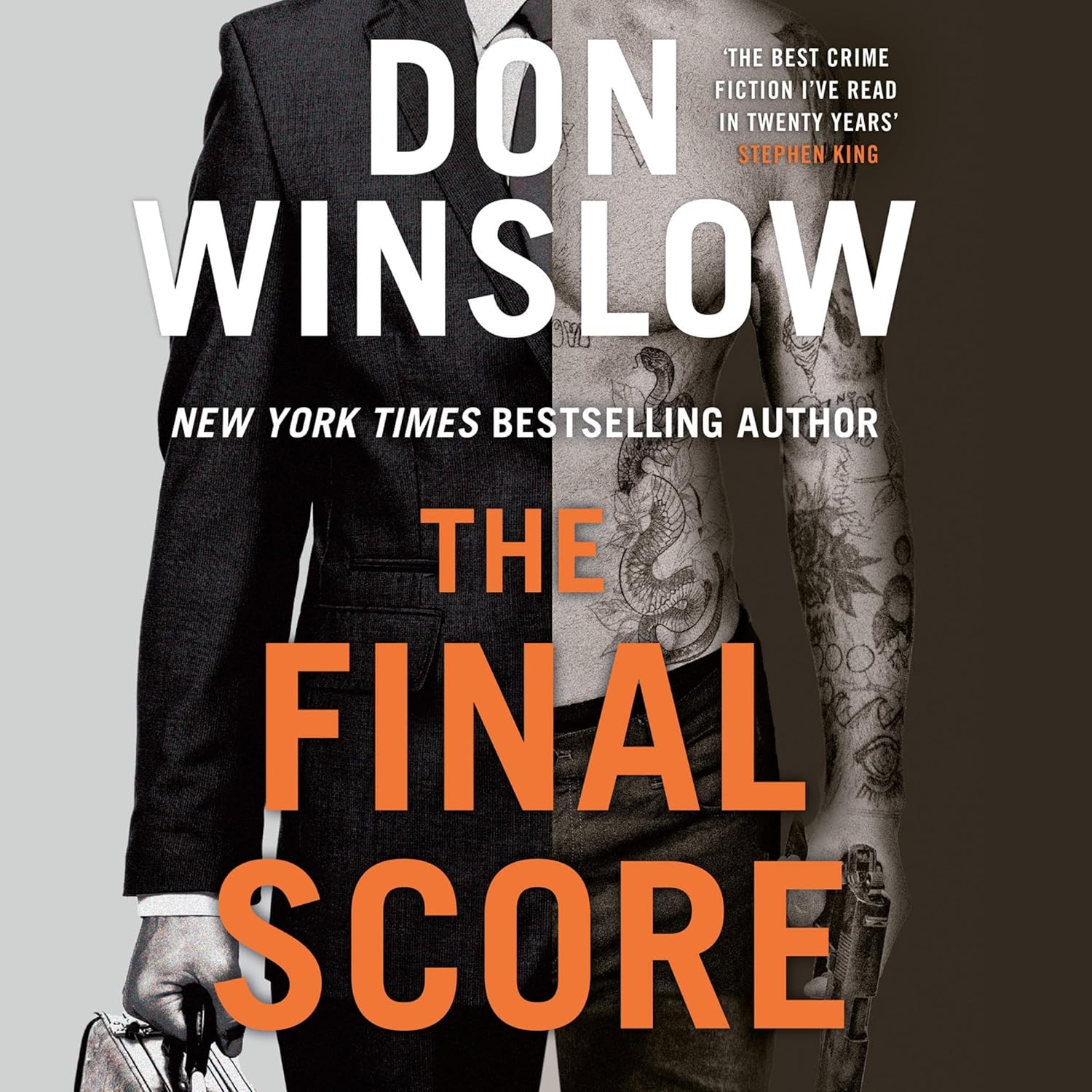
This collection of six short crime novels is an impressive piece of writing. Don Winslow’s range is enormous. The six stories vary in pace and tone. What never varies is the high quality of the writing and the incisive clarity with which the characters are drawn.
Don Winslow delivers: a slick heist story, a nostalgic coming of age story that has the power of autobiography, a pitch perfect story told entirely as a conversation between two old style Mafia men, a doom ladened but empathetic story of a slow motion fall from grace of a police officer, a laid back tale of surfers playing bodyguards and changing the life of a young actress and a grimly brutal tale of what happens when a rising star manager has to adapt to being in prison for voluntary manslaughter.

This was pure entertainment. A slick, fast-paced heist story that hit all the expected bases and still managed to surprise. I liked that the surprises came not from hard-to-believe twists in the narrative, but were a predictable consequence of the character of the man planning the heist. This was a fun story, made even better by the depiction of believable characters.
A nostalgic story that reminded me of some of Stephen King’s coming-of-age-in-rural-Maine stories, only without the woo-woo factor. I liked that this felt so real that it seemed autobiographical. The people were all easy to believe in, if not always easy to like. It wasn’t a soft focus piece. The boy in the story was placed in a difficult position and could have seen his life fall into a pattern that he’d have hated. I liked that the story managed to be hopeful and empathetic without becoming unreal.

A story about the slow erosion of integrity and disintegration of identity that the slow grind of systemic corruption pulls even well-intentioned people into. This is a tragedy in which our hero faces a doom where, instead of falling from grace in a dramatic act, he slowly cuts himself off from who he had wanted to be, selling his soul a slice at a time, not from greed but from a sense of responsibility that those around him weaponise. It’s a sad story, skillfully told.

A masterclass in using dialogue not just to tell a story but to build a whole world out of a conversation. Don Winslow kept me fascinated with a story that was just two old Mafia guys, still working but knowing that they are now dinosaurs trying to hold their ground in a world that no longer operates the way it used to, but what can you do?
You could almost mistake these two for harmless New Jersey Italian American old timers, swapping stories about “Whatever happened to so and so?” or topping one another with “The worst thing I ever seen was…” stories over breakfast. Their stories are told in a raconteur style. They appear to meander, to be filled with unnecessarily detailed but possibly inaccurate references to people and places they both know and to veer off topic at random intervals. But these men are not harmless and their stories not only have a point, but they will, when breakfast is over, have lethal consequences.
I loved how this story embraced the dialect and the mindset of these men. I was glad I was listening to the audiobook so that Peter Giles could render the accents perfectly for me.
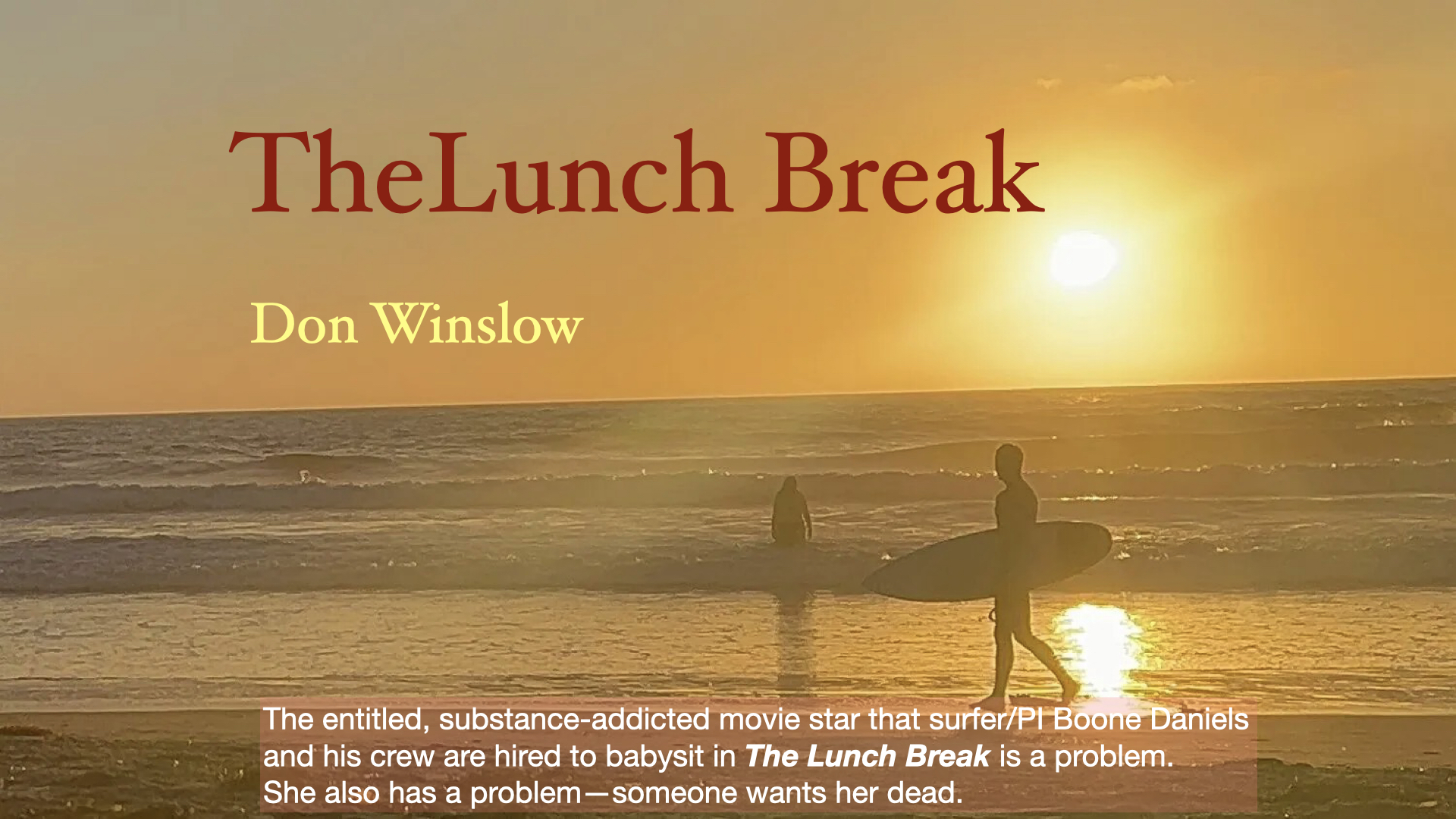
Don Winslow’s stories about the ragtag group of surfers in the Dawn Patrol are my least favourite of his offerings, but this one worked for me. My main problem with these characters is that, although I’m meant to find them amusing or charismatic, I find them hard to empathise with or care about.
Don Winslow changed that for me in this story in two ways. Firstly, he gave them a movie star with a brattish reputation to protect. By comparison to her, the surfer guys seemed conventional and responsible. They were also very good at being protective. Secondly, he let the dynamic in the group change and one of the main characters develop from what I’d always seen as a hedonistic man-child into someone a little more grown up.
In the midst of all this, Don Winslow slipped in amusing stories about Hollywood, taught me more about surfing and kept me guessing about who, if anyone, was threatening the movie star.
This was the longest story in the collection. It was also the only one that I struggled with. It didn’t help that, even before our devoted family man made the mistake that sent him to prison, I didn’t like him much. The stupidity and recklessness of the action that sent him to prison didn’t make me like him any better. But what happened to him when he was in prison was so disproportionate, and his choices were so bleak that I finally started to feel sorry for him.
The description of prison life was hard to take. It wasn’t exploitative or sensationalised, just grimly brutal and with a ring of truth about it.
I almost set the story aside then. Here’s what I wrote at the time:
“This final story is brutal. That seems to be the point, to show the violence and despair designed into American prisons. It’s well done, but I’m not sure I’m going to make it through this one.”
I stuck with it because the writing was so good and because I hoped that Don Winslow would take me somewhere unexpected.
He did. The brutal violence never went away. Our hero didn’t emerge unscathed. The collision between his family life, his corporate persona, and the man who made the hard choices and did the violent things needed to survive in prison changed him irrevocably. But his life and his marriage went on. So did the twists in the plot which kept him from leaving his prison personna behind.
In the end, I was glad I stuck with this story. I still didn’t like the guy, but I felt I understood him and his choices. I liked that the plot was clever and that the people felt frighteningly real. The picture of the US prison system was depressing but believable. I liked the way the story got across that none of us is just one thing and that we may not discover what we are willing to do or to become unless the multiple worlds we live in collide.


Terrific review! I discovered Winslow through his brutal crime trilogy that started with the Power of the Dog. These are terrific on audio, narrated by Ray Porter. Little did I know when I started that first book that I had discovered a favorite author and narrator.
LikeLiked by 1 person
He’s a great find. A huge range and talented at short stories as well as novels.
LikeLike