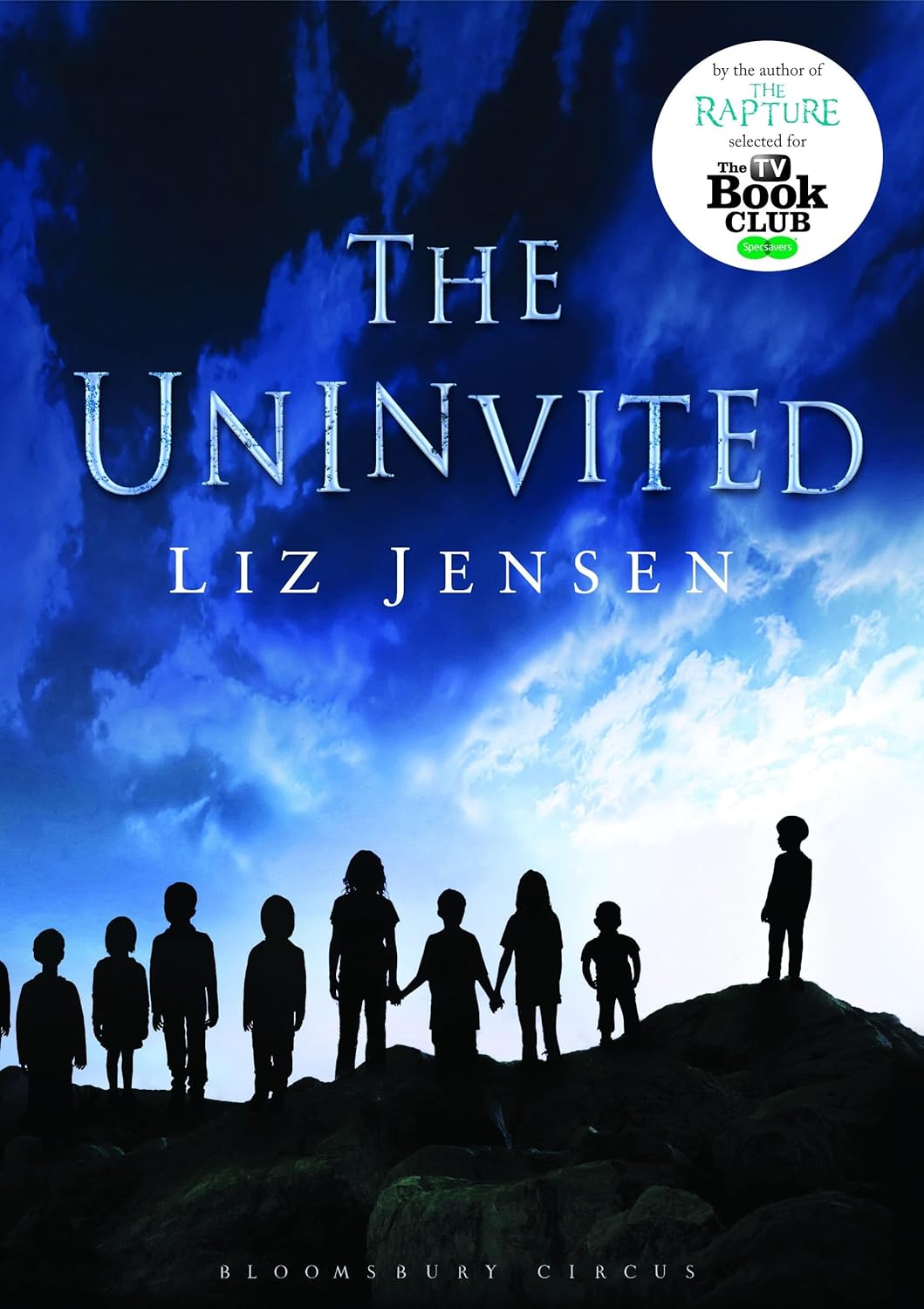
A seven-year-old girl puts a nail-gun to her grandmother’s neck and fires. An isolated incident, say the experts. The experts are wrong. Across the world, children are killing their families. Is violence contagious?
As chilling murders by children grip the country, anthropologist Hesketh Lock has his own mystery to solve: a bizarre scandal in the Taiwan timber industry. Hesketh has never been good at relationships: Asperger’s Syndrome has seen to that. But he does have a talent for spotting behavioural patterns, and an outsider’s fascination with group dynamics.
Nothing obvious connects Hesketh’s Southeast Asian case with the atrocities back home. Or with the increasingly odd behaviour of his beloved step-son, Freddy. But when Hesketh’s Taiwan contact dies shockingly and more acts of sabotage and child violence sweep the globe, he is forced to acknowledge possibilities that defy the rational principles on which he has staked his life, his career and, most devastatingly of all, his role as a father.
’The Uninvited’ was a bold take on the end of the world as we know it, both in terms of the nature of the apocalypse and the description of its progress. Liz Jensen gave me an insider’s view of the rapid, uncontrolable slide from “I need to analyse a few incidents of anomalous behaviour”, through “This looks like a global pandemic of violence that we need to contain and then neutralise” on to “The world I knew has been fundentally and irrevocably changed and there’s nothing I can o about it. I may not even be able to explain it”, finishing with counting the personal cost of living with the new normal.
That description may make this sound like a conventional techno thriller. Liz Jensen’s decision to tell the story from the point of view of Hesketh Lock, an investigator whose brilliance at seeing patterns that others miss is partly a function of his neurodivergence. Filtering events through Hesketh’s perspective was like refracting light or echoing sound; it created nonlinear associations and stimulated a form of emotional dissonance as I read.
At the start of the book, although the events Hesketh was investigating were bizarre, the world he was moving through felt familiar and real, which served both to ground the story and to highlight some of Hesketh’s atypical responses and behaviours.
As the scale and pace of the crisis increased, it was Hesketh’s personal situation, especially his relationship with his common-law stepson, that kept me engaged.
As the pieces of the apocalypse-in-progress puzzle came together, I was fascinated to see that Hesketh’s analytical strengths – reviewing factual data to establish causal links- created blind spots that hindered his understanding. His unwillingess/inability to fabulate meant that some patterns were effectively invisible to him.
I enjoyed this book for the boldness of its ideas and the clarity of the protagonist’s world view but, for me, it never became a page-turning I-have-to-know-what-happens-next thriller. It reminded me of listening to 1970s high-concept rock albums: I admired what they were doing and the ideas lit up my mind, but nothing got my foot tapping.
 Mike Finn's Fiction