2026
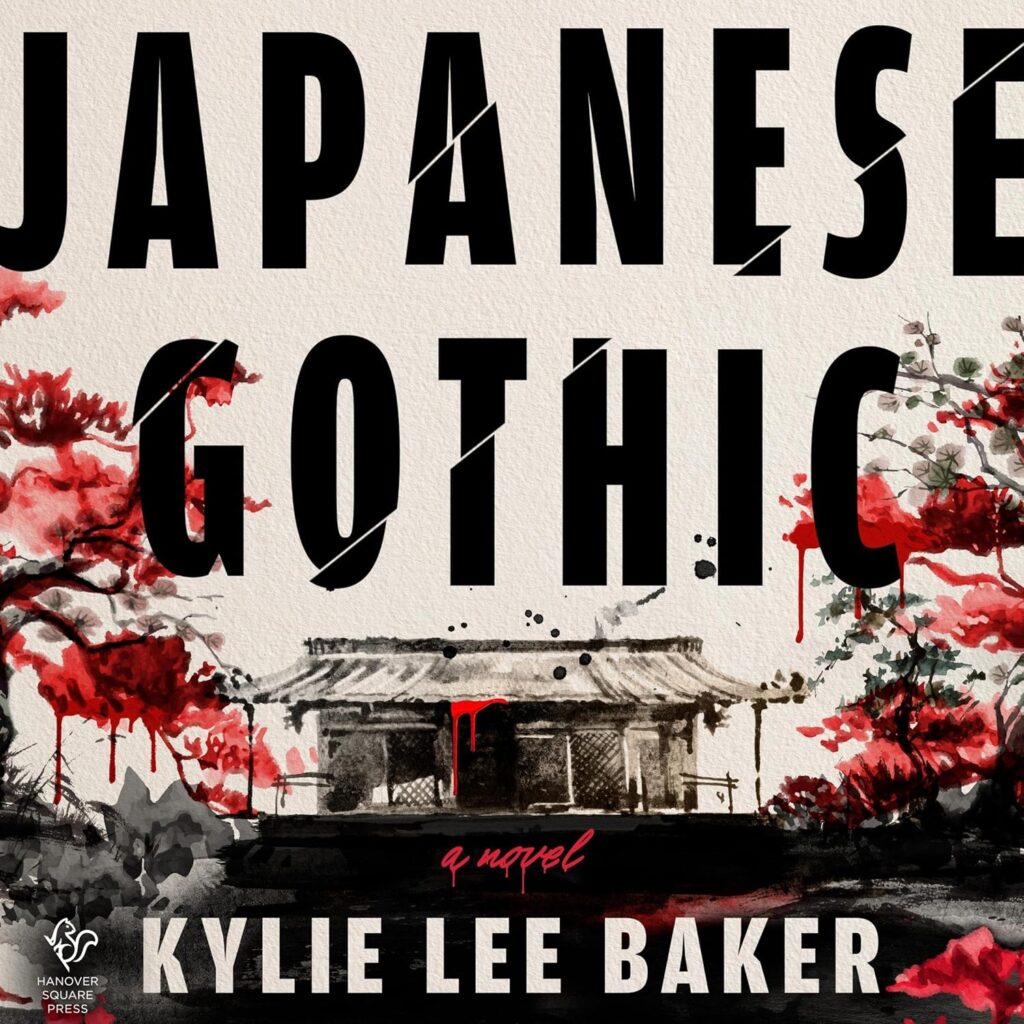
Lee can’t remember exactly where he hid the body, but he can remember the blood. Hiding out at his father’s centuries-old home in Japan, Lee knows something is wrong with him, and he knows it has something to do with his mother’s disappearance almost a decade ago.
1877
A female samurai, Sen, stalks the borders of her home to protect her family from slaughter after the abolition of the samurai class. She’s not sure how they’ll ever survive, not without her father, who has returned from war with a different soul behind his eyes.
When Lee and Sen find one another through a door between their worlds, they’re both looking for answers. But what they find in the creaking old house they share is beyond what either of them could imagine…
IN A NUTSHELL
‘Japanese Gothic‘ is a grim, bloody, complicated, mesmerising story about identity, abuse, loyalty and the choices we make about letting ourselves become the people our parents tried to shape us into.
I’d been waiting for ‘Japanese Gothic’ since I read Kylie Lee Baker’s ‘Bat Eater and Other Names for Cora Zeng‘ (2025) back in March. It was a story about a female Samurai and a haunted house in Japan, told with characters from 1877 and 2026. It was by a writer I knew who writes well. I thought it would be perfect for the Portal Square in Halloween Bingo.
Yet it wasn’t the book I’d expected it to be. It was something much more original, challenging and emotionally powerful.
I was engrossed in ‘Japanese Gothic’ from the beginning but, at times, I felt my grip on what was going on slipping, not because the text was poorly written but because it took me too long to let go of my expectation that this was a Portal novel where the physical connection between timelines would have some kind of pseudo-scientific explanation. None of the explanations I could think of made any sense. It turned out I needed to think bigger, much bigger, and stop worrying about the small stuff.
‘Japanese Gothic’ was a story about two broken people, from different times and cultures, both carrying crippling burdens imposed on them by a parent during their childhood. Both are young. Both are outsiders. Both are emotionally indebted to a parent. Both are killers.
By the normal rules of reality, they should never have met, should never have known one another’s stories, should never have had a chance to influence events in each other’s lives. Yet somehow, by occupying the same space centuries apart, they become entangled with one another.
Often, when I read a dual timeline book, one timeline interests me much more than the other. That wasn’t the case here. I was as engaged with the life of the American boy who has fled to Japan to escape punishment for a murder he believes he committed but cannot fully recall, as I was with the Japanese girl being raised by her Samurai father to fight and die in one last struggle against the authorities.
‘Japanese Gothic‘ isn’t speculative fiction using dual timelines to extrapolate the consequences of contrasting ways of life. It is gothic horror: fantastic, inexplicable, bleak, disturbing and soaked in pain. I’ve never read anything quite like it.
I recommend the audiobook, narrated by Natalie Naudus. Click on the YouTube link below to hear a sample.

