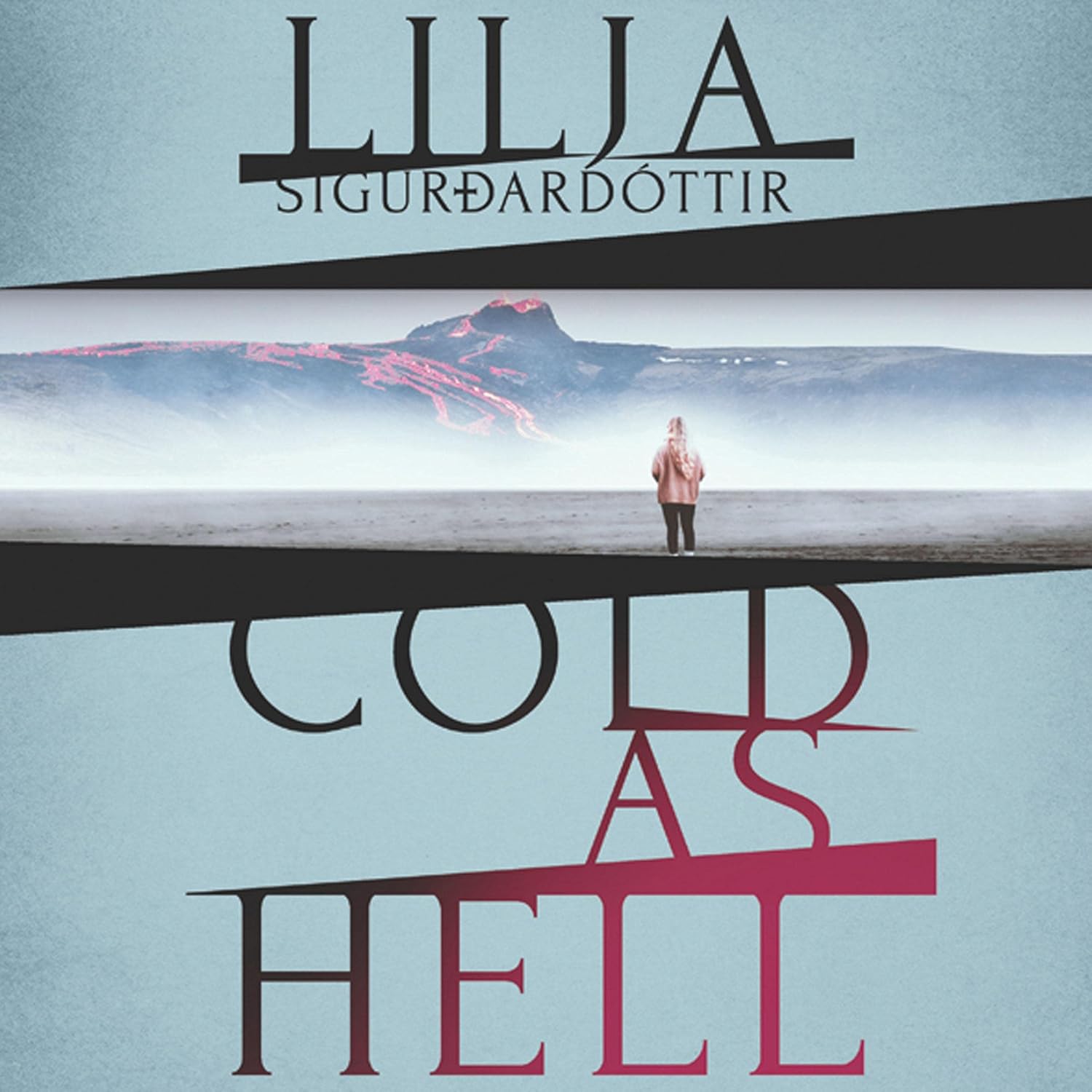
Icelandic sisters Áróra and Ísafold live in different countries and aren‘t on speaking terms, but when their mother loses contact with Ísafold, Áróra reluctantly returns to Iceland to find her sister. But she soon realises that her sister isn’t avoiding her…she has disappeared.
As she confronts Ísafold’s abusive, drug-dealing boyfriend Björn and begins to probe her sister’s reclusive neighbours, Áróra is led into an ever-darker web of intrigue and manipulation. Baffled by the conflicting details of her sister’s life and blinded by the shivering bright midnight sun of the Icelandic summer, Áróra enlists the help of police officer Daníel, as she tries to track her sister’s movements and begins to tail Björn – but she isn’t the only one watching….
IN A NUTSHELL
For most of the novel, it was the plot that sustained my interest. It was well constructed and went to interesting and surprising places, not by virtue of tricky plot twists, but because the motivations of the characters were not what they initially appeared to be.
I liked the examples of how Áróra’s mix of Icelandic and British culture sometimes left her feeling stranded between the two countries, feeling at home in neither.
The narrative style was initially too arms-length for me, but in the last third of the novel, I gained a better view inside Áróra’s head, which gave the novel some much-needed intimacy.
I’m hoping that Áróra’s character will develop in the subsequent books. I’m curious enough about her that I’ll be reading the second book, ‘Red As Blood’ (2020), later this year.
‘Cold As Blood’ is the first book of what is currently a five-book mystery series (so far, the first four have been translated into English) featuring Áróra Jónsdóttir, a self-taught financial investigator who tracks down money that people are trying to hide. Born in England to an English mother and an Icelandic father, Áróra now lives and works in Edinburgh. At her mother’s request, she travels to Iceland to find out why no one has heard from her older sister, Ísafold, for some weeks. As she investigates her sister’s disappearance, Áróra stumbles on a large-scale fraud that could earn her a substantial fee if she can find where the money is being held. This book uses a murder mystery plot to introduce Áróra and her complicated family history and to describe the challenges of being a dual national from a family with close ties in both countries.
I had mixed emotions about this book. By the end, I was glad that I’d read it and I’m invested enough in Áróra that I want to read the next book in the series. Initially, I struggled with the narrative style.
Even though the story was told from multiple points of view and those points of view were skillfully interwoven to hook my curiosity and create tension, the writing felt strangely arms-length, almost like stage directions / notes to actors rather than intimate insights into the minds of the characters. I felt that the story was carrying me on curiosity rather than emotional engagement.
As the story unfolded, it reminded me of the Ann Cleeve books that I’ve read, which make excellent television because that medium retains the strength of the plot, brings the stunning scenery alive and allows the actors to add depth to the characters.
It wasn’t that the book was badly written. It was just that most of it worked in a I-don’t-have-to-listen-very-hard-to-keep-up way that I didn’t find satisfying.
The passages that I liked least were the ones handling the mild lust/romance between Áróra and the he’s-not-really-my-uncle-and-I-don’t-care-that-he’s-fifteen-years-older-than-me policeman who helps her look for her sister. I thought the quality of the prose dropped, delivering a set of going-through-the-motions clichés with no individuality to them.
The passages that I liked the most were the ones where I finally got inside Áróra’s head and shared her memories of the often stressful, sometimes wonderful times that she’d spent with her sister. These passages punctuated the exposition, giving it context and adding emotional texture. I’d like to have seen more of them.
I thought the mystery was a solid one. I was given multiple plausible candidates for the murderer and couldn’t choose between them. The mix of Icelandic and British culture was cleverly used to develop Áróra’s character, create a stronger sense of place and explain things about Iceland that foreigners would not know.
What I liked most about the plot was that it went in directions that surprised me, especially as these surprises arose not from authorial sleight-of-hand, but from the complex and often unexpected motivations of the characters.
I was disappointed in the details of Áróra’s financial investigations. They seemed naive to me. The first problem was how Áróra got access to a Swiss Bank Account by copying a password. Even in 2015, Swiss banks had much better password security than the book describes. In addition to a password, there would always be a link. Certainly not a single, unchanging password that you could copy and reuse. The money laundering scheme was also a little lame. Agatha Christie used the same money laundering trick in ‘At The Bertram’s Hotel’ in 1965. It may still work, but it stretches plausibility for a woman who tracks money for a living to need to have this trick explained
What I liked most about Áróra was that she was complicated and sometimes conflicted. She had a strong sense of self, but she recognises that she doesn’t feel fully at home either in Edinburgh or Reykjavík. Her behaviour when she stumbles across a fraud that could deliver her a significant profit is both unethical and illegal, but she’s doing what comes naturally to her. Her relationship with her sister felt real to me: it was a deep connection that was sometimes tempestuous and difficult but was fundamentally unbreakable.
I recommend the audiobook version of ‘Cold As Hell’. Colleen Prendegast did a great job, and I found it very helpful to hear the Icelandic names and phrases rather than to read them. Click on the YouTube link below to hear a sample.
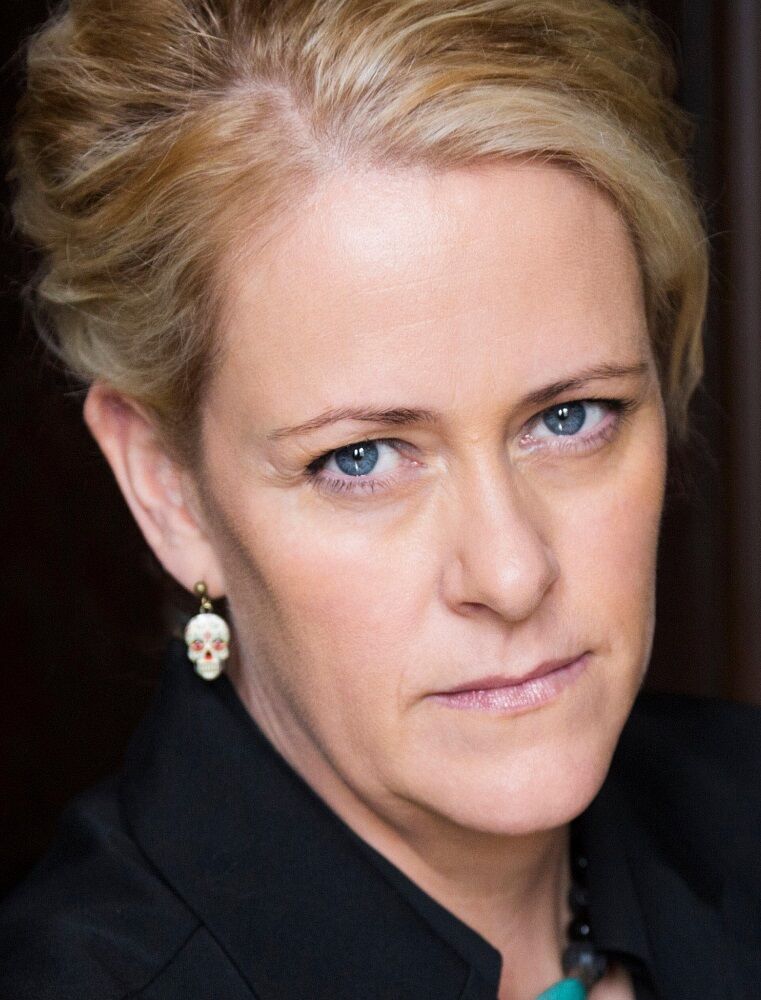
Icelandic crime-writer Lilja Sigurdardottir was born in the town of Akranes in 1972 and raised in Mexico, Sweden, Spain and Iceland.
An award-winning playwright and screenwriter, Lilja has written eleven crime novels, many of which have been translated into multiple languages and hitting bestseller lists worldwide.
She lives in Reykjavík, Iceland, with her partner but also spends considerable time in Scotland.
 Mike Finn's Fiction