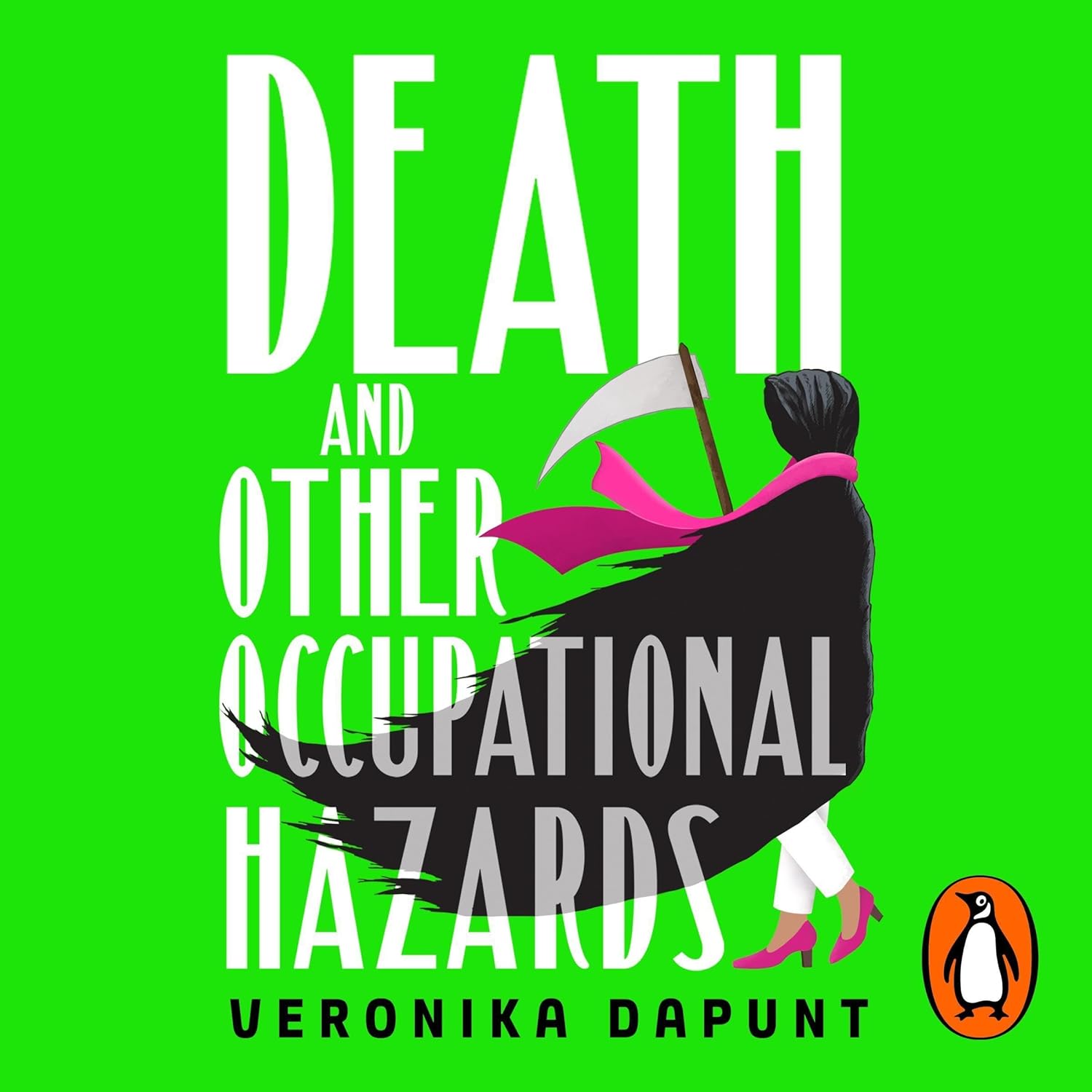
People have a few ideas about Death, and the worst by far is a skeleton in a black potato sack. If she’s lucky, she gets a scythe. The truth: she’s just a woman doing a job and she’s very good at it.
Until she takes time off to live as a human and everything falls apart. Someone’s killing people not on her schedule (well, not yet anyway) and with no thanks to the Temp she left in charge, it’s up to her to make things right.
With the help of her oh-so-sanctimonious sister, Life, and a charming (sexy) parasitologist, Death must stop the killer before it’s too late. But that’s if she can defeat her greatest challenge yet: human bureaucracy.
IN A NUTSHELL
‘Death and Other Occupational Hazards’ felt like a risk when I bought it. A debut novel with high concept fantasy based partly on Judeo-Christian mythology, with a murder mystery at its heart and humour on its tongue, was either going to be awful or great. Fortunately for me, this fell clearly into the great category. It had a plot that kept my attention, engaging characters, humour that made me smile and a talented narrator who brought it all to life.
‘Death and Other Occupational Hazards’ wasn’t the satirical comedy that the title and the cover led me to expect. It was often funny, but its intent was serious. The story is told from the point of view of Death, who has decided she needs to spend some time on Earth in a human body to gain a better understanding of what humans expect of her. Her sister, Life, provides a body, and her Temp understudy will cover her duties during her sabbatical.
The action of the plot is driven by Death’s discovery that unplanned deaths are occurring while she is on Earth. All deaths should happen according to The Plan. Unplanned deaths shouldn’t be possible, but if they occur, they start to tear holes in reality. So Death sets about investigating the unplanned deaths. The complexity of the plot kept my attention. I couldn’t see where it was going, but I wanted to find out.
I liked that the investigation wasn’t just about solving a mystery; it was a vehicle for prompting Death to reassess her identity and her relationships with her sister, her boss and with the Devil (with whom she once spent a drunken and now regretted night and who is constantly plotting to take her job). I was impressed that Veronika Dapunt succeeded in making Death into an engaging character whom I wanted to succeed, without turning her into a mushy human caricature of herself. Writing the story from Death’s point of view and then having her point of view ‘contaminated’ by the human body she’s temporarily occupying worked to make Death relatable while still establishing her as a non-human entity who is billions of years old.
The humour made me smile and sometimes laugh, but would probably get the book banned in any American State where Christian Fundamentalists do book-banning as a hobby. A lot of the humour was generated by Death’s struggle to understand the behaviour and motives of the humans she meets, but some of it came from the reimagining of characters from Judeo-Christian mythology: The Boss (God), The Human Communications Director (Jesus Christ) and the VP for Pandemonium & Perdition (the Devil). The reimagining is not satirical or irreverent in its intent. Rather, it’s an insider’s view of the figures who humans would revere and or fear, but it’s a reimagining that might have Fundamentalist Christians reaching for crosses to set alight on the author’s lawn.
The ending was a surprise, but not in a ‘Wow, what a plot twist’ way. The solving of the mystery and the saving of the world part of the plot worked in the way I expect a thriller to work. It was fun, but it wasn’t the end. The full denouement caught me off guard by being more philosophical than I’d expected. It felt the ending worked and spoke to a lot of Death’s questions about herself and her role in The Plan.
I strongly recommend listening to the audiobook version of ‘Death and Other Occupational Hazards’ I loved Chiara Goldsmith’s narration. She brought all the characters to life and delivered the humour with perfect timing. I thought giving the Human Communications Director (Jesus) the voice of an Australian surfer was an inspired choice and fitted the character perfectly. Click on the YouTube link below to hear a sample.
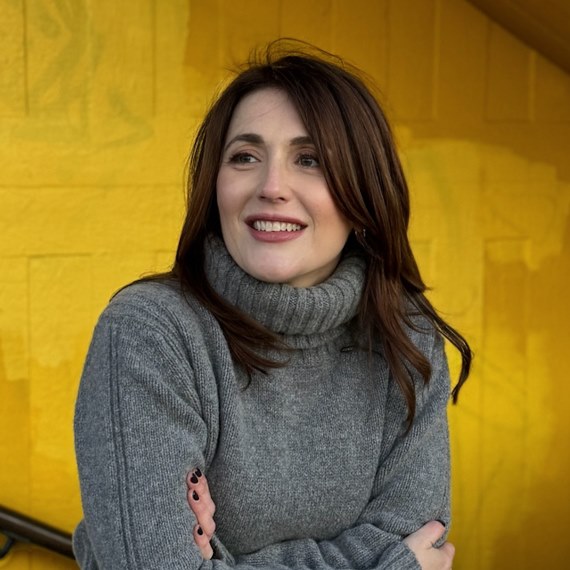
Veronika Dapunt is a British-Austrian writer.
Her debut novel, Death and Other Occupational Hazards, was a runner-up for the 2023 Comedy Women in Print Prize.
She has always had a love of the darkly comic and the absurd, quite possibly the reason why her first career was in law.
Veronika holds a degree from the University of Oxford and currently lives in London.
Bio quoted from penguin.co.uk
Photo credit: Simon Bejer