There’s a dead body in my living room.
I’ve not called the police because it was I who stabbed him. Seven times in all. The truth is, it’s surprisingly difficult to dispatch someone with a vegetable knife.
In case you’re wondering, the dead man is not my husband. I do resent our pitiful sex life and his woeful lack of ambition, but I wouldn’t murder him for it. Not yet, anyway.
Right now, I have far more pressing concerns: scheming to get my daughter into the perfect school; buying my dream home in Hampstead; and disposing of a corpse.
A woman’s work is never done. I’ve created the perfect life – and I’ll kill to keep it.
IN A NUTSHELL
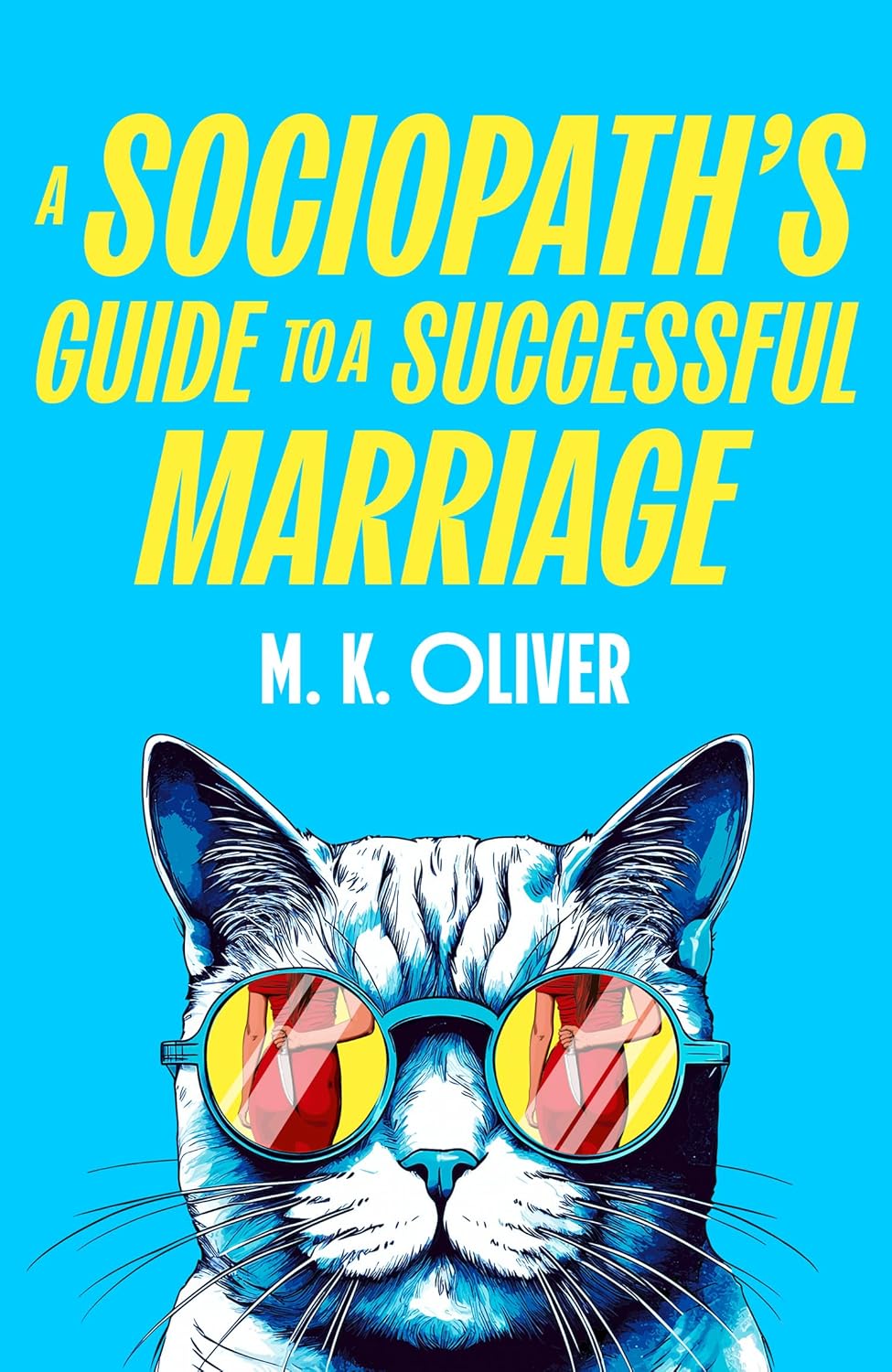
I’d expected ‘A Sociopath’s Guide to a Successful Marriage’ to be a witty dark comedy, to be enjoyed for its anti-patriarchy antics, but not to be taken too seriously. To me, the title and the cover said, ‘read me with an evil grin on your face’. It turned out to be something quite different and much more interesting. It was a good thriller with a truly original realistically drawn protagonist who was not played for laughs and who, to my surprise, I wanted to succeed, even though she was a ruthless killer.
What I liked most about ‘A Sociopath’s Guide To A Successful Marriage’ was that the protagonist’s sociopathy was played straight rather than for laughs. Seeing the world from her point of view was quietly disturbing and pleasantly unpredictable. This was not a satire. Lala was sincere in her desire to build and keep a successful marriage and to secure her family’s future. Lala was goal-oriented. Her goals were simple: get her husband to make Partner, buy a house in Hampstead, and get her almost certainly sociopathic daughter into prep school. Lala plans. Her days are driven by ticklists. Ticklists that sometimes include tasks like “Dispose of body in freezer”. She puts in the work, even when the work involves killing someone who is threatening her family’s future. The longer I lived in Lala’s head, the more reasonable she seemed, which was a little alarming, actually.
Lala knows that she is not like the people around her, but she has learnt to predict and mimic their behaviour so that, although she’s sometimes seen as a little odd, most of the time she passes for normal, albeit a slightly driven, perfectionist normal. Lala is comfortable in her own skin. She has no desire to change. She knows what she wants. The rest is simply a matter of figuring out what she needs to do to get it. Over time, I started to feel that her approach was both honest and rational. She was making the best of what she had. M. K. Oliver carefully engineered my empathy for Lala with insights into her thoughts like this:
“I do not, as a rule, look backwards. I like the past to be past, I like the dead to be dead. Only the future interests me – what I want, and what I need to do to get it.”
Lala’s past was not a pleasant one, so leaving it behind makes perfect sense.
Then there’s this piece of introspection from Lala about the things she thinks but knows she mustn’t say, which seemed accurate to me:
“I know it’s not fashionable to say this, but we all think things that would cause alarm if we said them in company. More than half our world is left unsaid.”
The other strength of the novel was its intricate plot. The plot is powered by the actions of objectionable and/or weak men. The story opens with Lala having to kill a stranger who has invaded her home and tried to strangle her. The man’s unknown identity and motivation hang above the plot like an axe waiting to fall. Then there is the re-emergence of a man from Lala’s past who threatens her future. Finally, there is her husband, who she loves, at least as well as she can love, but who is too weak to live up to her expectations.
The plot pulled me along by my curiosity, using layers of secrets and hidden agendas and constantly confronting Lala with apparently insurmountable obstacles to achieving her goals. The plot kept me turning the pages eagerly. By the time I was a third of the way through the book, I was cheering Lala on every time she came up with a clever way of getting her way, even when her solutions were ruthless.

M.K. Oliver is a former English teacher and headteacher originally from Liverpool.
He long dreamed of becoming a writer and after many years of working in schools, he took the exciting decision to put down the whiteboard marker, take up the keyboard, and give it a go.
He enjoyed writing courses at Curtis Brown, Faber & Faber, and the Royal Court Theatre and now lives with his family and talkative cat in North London.
Source: Simon & Schuster

