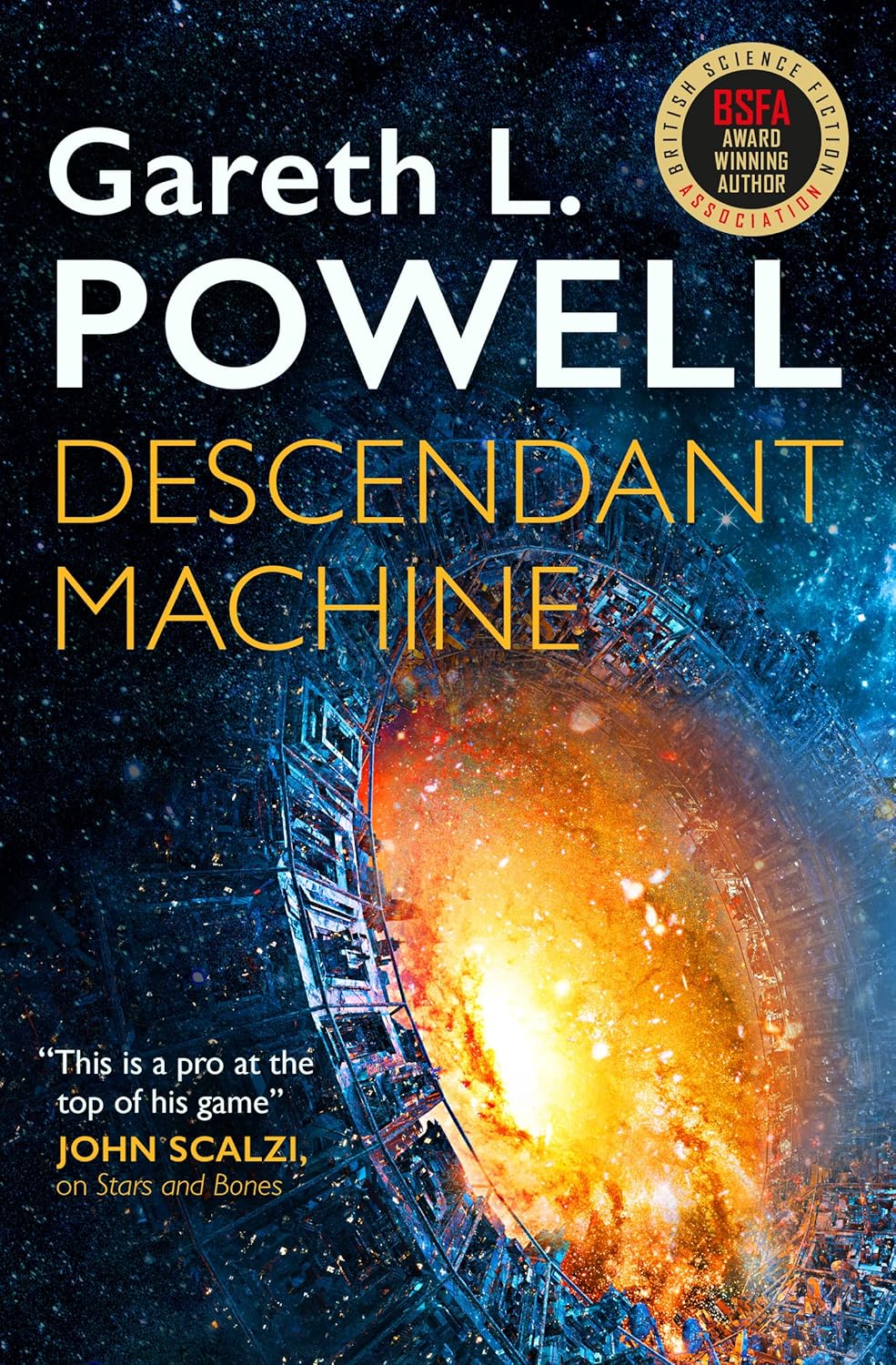
When Nicola Mafalda’s scout ship comes under attack, she’s left deeply traumatised by the drastic action it takes to keep her alive. Months later, when an old flame comes to her for help, she realises she has to find a way to forgive both the ship and her former lover. Reckless elements are attempting to reactivate a giant machine that has lain dormant for thousands of years. To stop them, Nicola and her crew will have to put aside their differences, sneak aboard a vast alien megaship, and try to stay alive long enough to prevent galactic devastation.
‘Descendant Machine’ was an exciting-without-being-traumatising Space Opera that was fun in a ‘Star Trek’ with attitude sort of way.
Gareth Powell thinks big. Mind-blowingly big. The whole universe is about to be destroyed big. Even so, he keeps the story human and relatable. The pairing of a kickass, introverted, fierce, foul-mouthed human female navigator with a calm, urbane, sentient ship was inspired. I enjoyed the two academics, one a human with a brilliant mind and penchant for writing to his lover as if he and she were in a Nineteenth Century romance, the other an alien who is delighted finally to be able to solve the puzzle he’s devoted his life to, even if solving it may prove fatal. The rantings of the alien leader confidently leading everyone towards what he thinks will be a restoration of the rightful supremacy of his people but which might just obliterate everyone, felt very contemporary.
The plot was complex but never confusing. The atmosphere was more challenge and hope than fear or doom but I enjoyed the lightness of it.
Gareth Powell’s humour made me smile, and his action scenes rocked.
‘Descendant Machine’ is the second book in Gareth Powell’s Continuance series. You don’t need to read the first book, ‘Stars and Bones’, to read ‘Descendant Machine’. They take place in the same universe but fifty years apart. I enjoyed ‘Descendent Machine’ much more than ’Stars and Bones’.

