The United States. 2030.
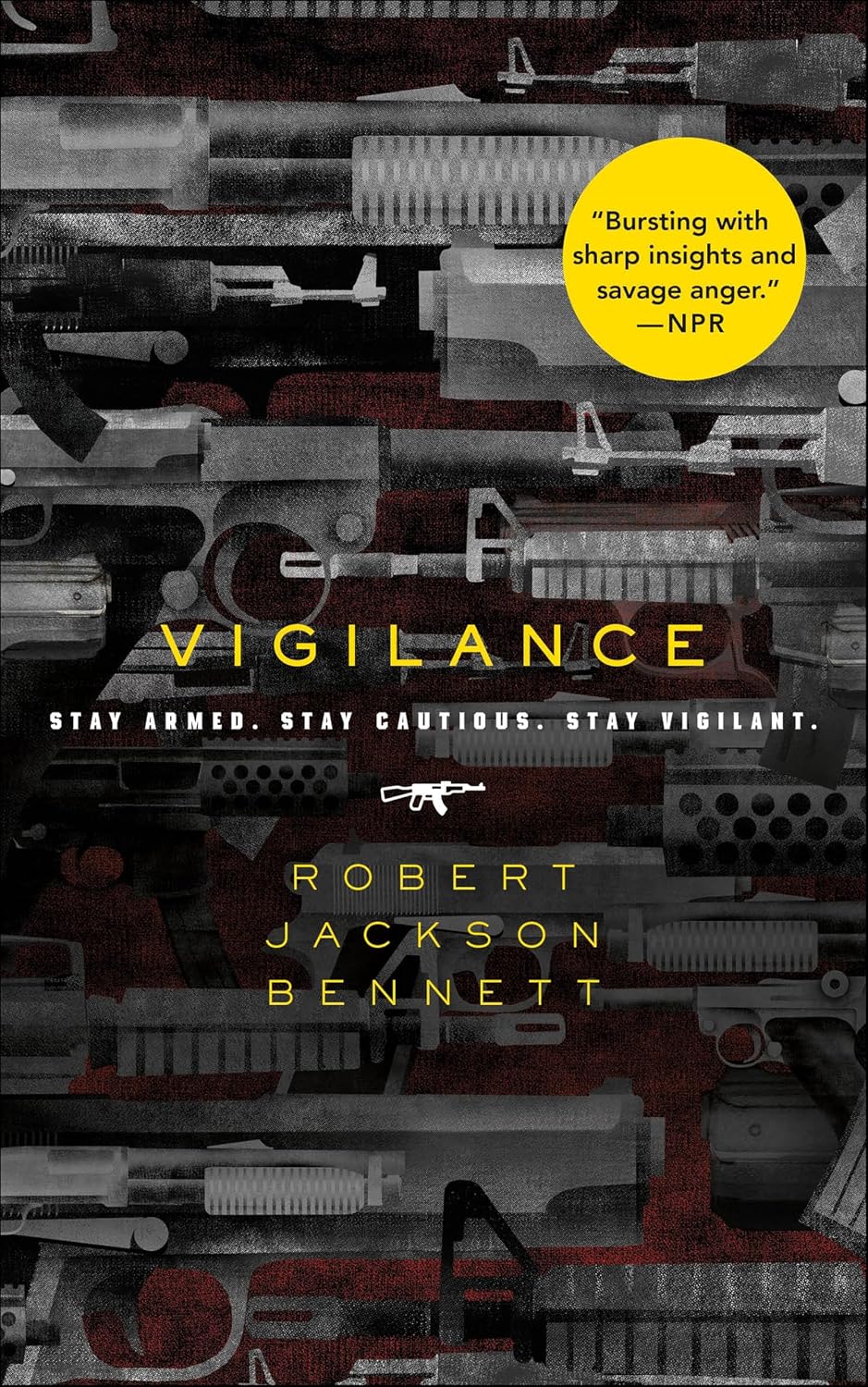
John McDean executive produces Vigilance, a reality game show designed to make sure American citizens stay alert to foreign and domestic threats. Shooters are introduced into a “game environment,” and the survivors get a cash prize.
The TV audience is not the only one that’s watching though, and McDean soon finds out what it’s like to be on the other side of the camera.
I enjoyed Robert Jackson Bennett’s innovative Shadow of the Leviathan fantasy murder mystery novels, starting with ‘The Tainted Cup‘ (2024), so I searched his back catalogue and found his 2019 dystopian nightmare novella, ‘Vigilance‘.
Wow, what a dark ride!
It’s very different from his fantasy novels in everything except its originality and its ability to imagine betrayal, subterfuge, and creatively violent deaths.
This novella imagines a 2030 America where, despite (or perhaps because of) being in steep economic decline, engaged in multiple foreign wars, plagued by fires and floods and weakened by net emigration, people still cling to their guns and their belief in an American exceptionalism that the rest of the world is constantly threatening and trying to undermine.
Pouring gasoline onto this bonfire in order to maximise advertising revenue, John McDean has launched a live TV active shooter ‘game’ enhanced by AI fakes and made addictive by AI-scripted bots on Social Media.
The result is devastating and impossible to look away from.
The story was told from two contrasting points of view: John McDean’s perspective as the driving force behind ‘Vigilance’ and Delyna, a young barkeep at a downtown bar, who hates the show but who happens to be working on an evening when the show comes to her town,
McDean is bright, driven, venal and arrogant. He has the data to give him deep insights into his target demographic and the algorithms to weaponise the show and social media to maximise the viewing numbers. He holds his target audience in contempt even as he panders to their appetites, fears and prejudices. High on insight, low on empathy and driven solely by an unexamined, taken-for-granted compulsion to win, McDean has no qualms about turning killing into entertainment to generate advertising revenue.
On the first page, we learn that McDean’s Ideal Person is “between sixty-four and eighty-one years old. Their average net worth is $202,900, and they are male, Caucasian, and increasingly burdened with medical debt.” He knows their fantasies, their fears and the things that need to happen on screen to trigger a record level of “target market activation responses”.
This is a story about guns, why people carry them and what they’re ready to use them for. Here’s what McDean wants most:
“But the final thing, the core quality that John McDean’s Ideal Person must have, just absolutely must have, is that they must, must, must own a gun.
Preferably a pistol rather than a rifle. McDean has confirmed time and again that rifles suggest a very different lifestyle than pistols: rifles are for outdoorsmen, rigorous, confident people who are happy to venture beyond their homesteads —not his target demographic, in other words.
Rifles are for people who are going out to do shooting. But a man carrying a pistol—he’s worried about getting shot at.
Pistols are for killing people. Pistols are for urban environments. Pistols are for defense. They are the perfect choice of John McDean’s Ideal Person, isolated within their huge suburban house, wary and suspicious of the outside world, listening to the beautiful women on the television warn them of horrors and depravity in the lands beyond the borders, of corruption creeping into our cities.
Pistols are the choice of the afraid. Pistols are the choice of the vigilant.”
Delyana, our young, black, female barkeep, hates guns and despises the men and women who come to her bar wearing them, especially the ones careless and/or drunk enough to leave a loaded gun in the bathroom. Her revulsion at the show and the reaction of her customers to it, highlighted to corrupting influence of ‘Vigilance’.
I admired how Robert Jackson Bennet wove a story from this situation and these two points of view that kept the tension high without losing sight of the grim reality of what was unfolding. The plot twists and what eventually happened as McDean struggled to keep control of ‘Vigilance’, prevented the novel from descending into an anti-gun polemic and turned it into a tense, dark, disturbingly plausible future America.

