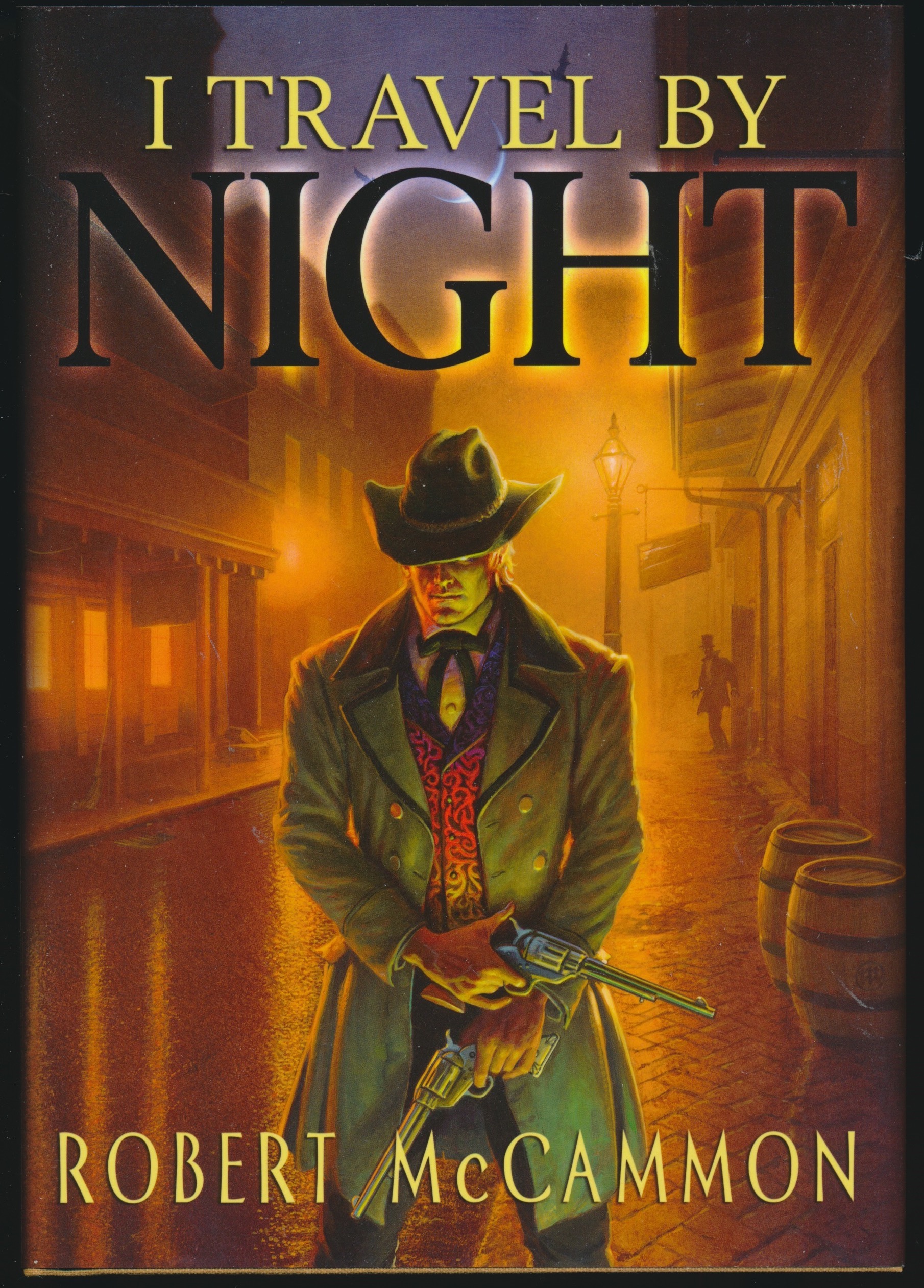
For Lawson, the horrors that stalked the Civil War battlefield at Shiloh were more than just those of war. After being forcibly given the gift of undeath by the mysterious vampire queen LaRouge, Lawson chose to cling to what remained of his humanity and fought his way free of the Dark Societys clutches. In the decades since, he has roamed late nineteenth-century America, doing what good he can as he travels by night, combating evils mundane and supernatural, and always seeking the key to regaining a mortal life.
That key lies with his maker, and now Lawson hopes to find LaRouge at the heart of a Louisiana swamp with the aid of a haunted priest and an unexpected ally. In the tornado-wracked ghost town of Nocturne, Lawson must face down monstrous enemies, the rising sun, and his own nature.
IN A NUTSHELL
Strong Southern Gothic feel. Great visuals. A new twist on vampirism. A dramatic ending. A novella that punched about its weight.
‘I Travel By Night’ was very entertaining. It packed a lot of stylish action into its 152 pages. It was a very visual novella, and what great visuals they were. The kind of visuals that showed up in my imagination not as scenes of real life but as panels in a brilliantly executed graphic novel illustrated by Carlos Ezquerra or Kevin O’Neill.
Robert McCammon knows how to paint memorable scenes, whether it’s fighting a monster on a New Orleans rooftop, or seeing vampires in fine clothes covered in mud and mould dancing in a once grand, now decaying opera house that is sinking into a Louisiana swamp, or a flamboyant card sharp being confronted in a dive bar full of drunken loggers. He knows how to give a story the full Gothic Horror atmosphere.
By setting the story in 1886, two decades after the American Civil War and a decade before Bram Stoker published ‘Dracula ‘, Robert McCammon was able partially to reinvent the vampire concept. Lawson is turned after the Battle of Shiloh, one of the bloodiest in the Civil War. The gore and savagery of that setting contrast with the more traditional ideas of attractive vampires seducing members of the elite with their charisma and sophistication. McCammon also changes the mechanics of being turned into a vampire, making it bloodier and more drawn out and providing a loophole that our hero might be able to use to reclaim his humanity. It also helps that none of the humans in the story have a fixed concept of what a vampire is or what their weaknesses might be.
Every hero needs a sidekick, and Robert McCammon gave Lawson a spectacular one: a brave young woman, gifted with guns, ignorant of vampires, but determined to enter the fight.
The strong emphasis on the visuals delivered great scenes but not much by way of character development. I can live with that. I mean, Stan Lee never spent a lot of time telling us what his heroes were thinking, and I never felt the lack.
Trevor Lawson’s story continues in a novella with the wonderful title of ‘Last Train From Perdition ‘, and I’ll be getting to it soon.

