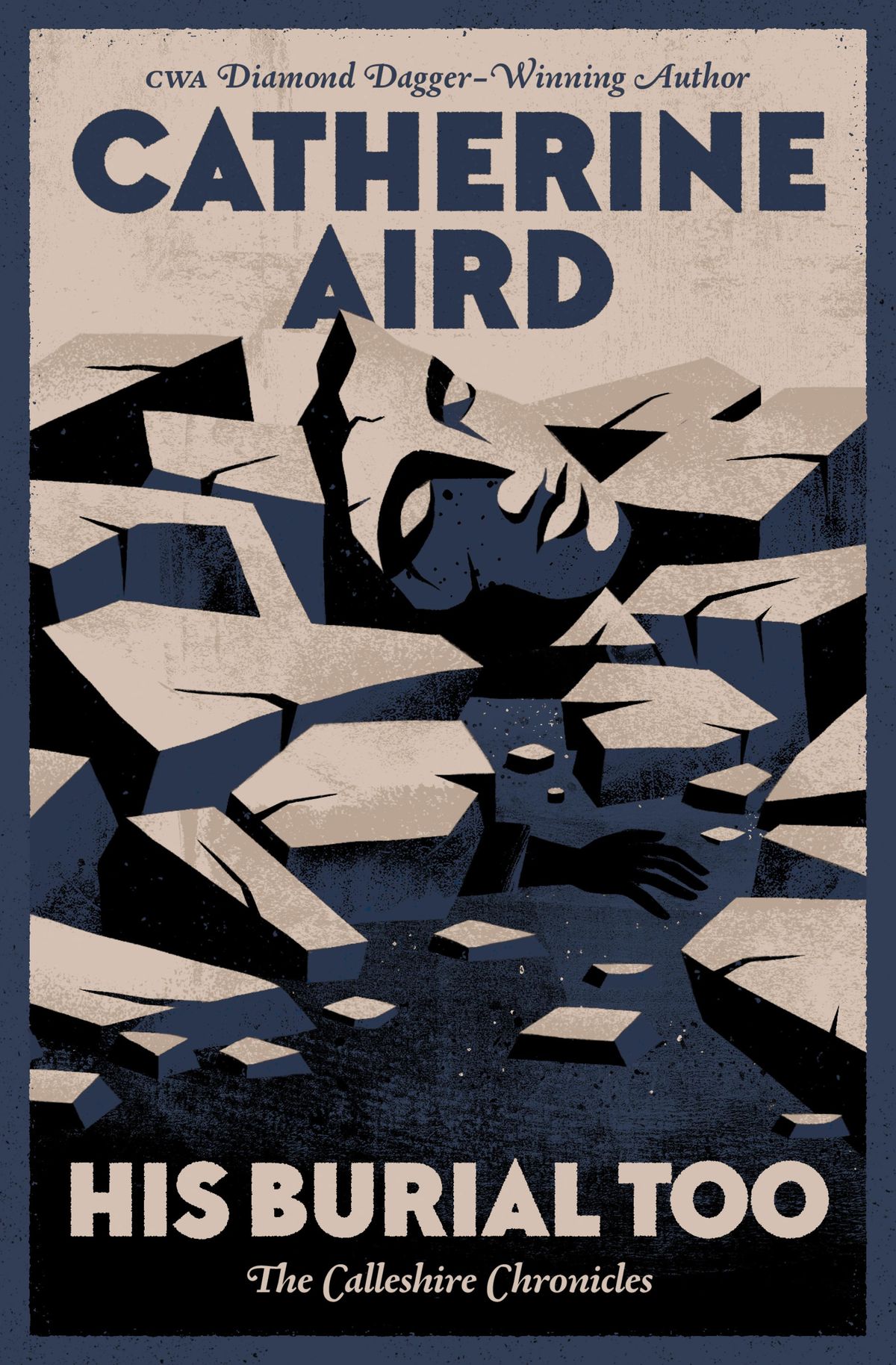
On the hottest day in living memory, Richard Mallory Tindall, the owner of a patent firm, does not return home to Cleete village. When a man is found crushed to death, Tindall’s case goes from missing person to homicide.
In the course of solving murder cases, Detective Inspector C. D. Sloan has seen all manner of ugly death. But there’s something particularly gruesome about this one, the body crushed beneath the marble and iron of an old Saxon church tower. With rubble blocking off access to the crime scene, no one can get close enough to inspect the body. What little evidence is available—a burned match, a black thread, an earring—doesn’t bode well for a quick and easy solution.
Even the legendarily cool-headed great detective might begin to crack when a second body turns up. And then an important file goes missing from Sloan’s office. How does it all connect?
Catherine Aird’s Calleshire Chronicles / Inspector Sloan books are a comfort read of mine. They’re gentle (considering there’s always a dead body or two), calm, quietly amusing, written with self-deprecating erudition and unexpectedly clever. They’re also a window into an England that didn’t survive the advent of digital technology.
The mystery in ‘His Burial Too‘ was a puzzle rather than a thriller. A good puzzle. One that needed physics and a little imagination to solve.
In Catherine Aird’s books, the setting and the social context are as important as the mystery. They not only lubricate the plot and provide the suspect pool, they bring Aird’s keen but kind focus on the warp and weft of a small part of the fabric of English culture.
In ‘His Burial Too’, the setting for the death was the tower of an ancient church in a tiny English village. The kind of place that was so quiet, strangers would be noticed, even in the early hours of the morning, by the two elderly spinster sisters who live near the church; the church warden will know the history of every stone in the building and be happy to share his knowledge at length; and the almost-as-ancient-as-the-church-but-still-sharp-eyed leader of the bell ringers will spot anything that is out of place. The social setting of the mystery extended beyond the little village to the sometimes cut-throat world of the small, specialised engineering companies that power the local economy, introducing another set of changing social mores as the wartime economy transitions to something more global.
The humour was muted but pleasing. Where modern writers of police procedurals might focus on the personal traumas and fraught relationships of the police officers involved, Catherine Aird uses the interplay between the quiet, methodical, pragmatic Sloan, his overbearing boss with his passion for using modern management techniques that he has only the most mangled understanding of, and Sloan’s subordinate who drives fast, thinks slowly and learns rarely.
The characters were mostly plot devices rather than people, but the daughter of the missing man was vividly described, so much so that she felt quite out of place in this quiet English county town and, by being so, brought the county town itself into sharper focus.

